The world is full
of why.
Why do magnets attract? Why does an apple fall? Explore the little wonders of everyday life, with simple explanations, pictures and a healthy dose of curiosity.
Feed your curiosity✧ No background knowledge needed. Just a curious mind.
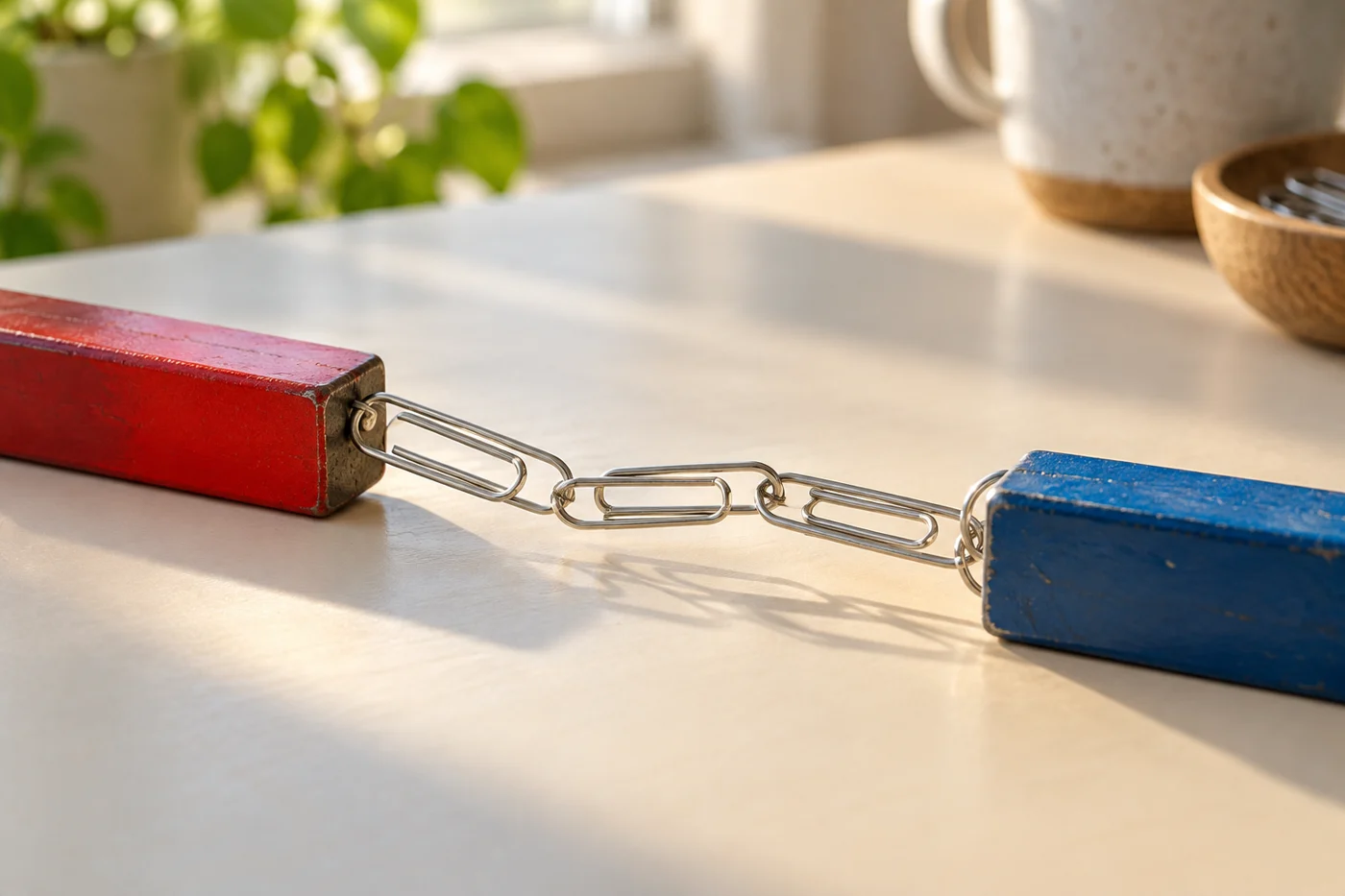
curious!
Small questions.
Fascinating answers.
From your fridge to the blue sky, ordinary things have some extraordinary science behind them.
 At home
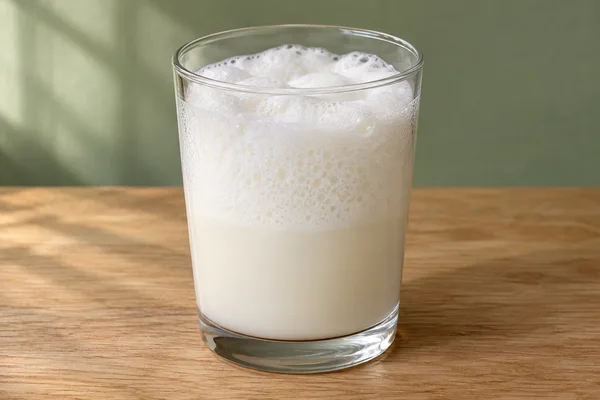
Why does milk foam when you shake it?
Shaking mixes air into the milk. Milk proteins help the little bubbles last longer.
 At home
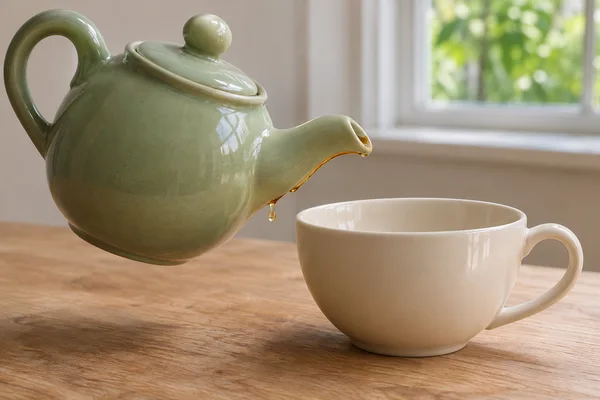
Why does a teapot drip down the outside?
A slow stream can curl around the rim of the spout. Whether it runs down the outside also depends on the shape and surface of the rim.
 Forces & motion
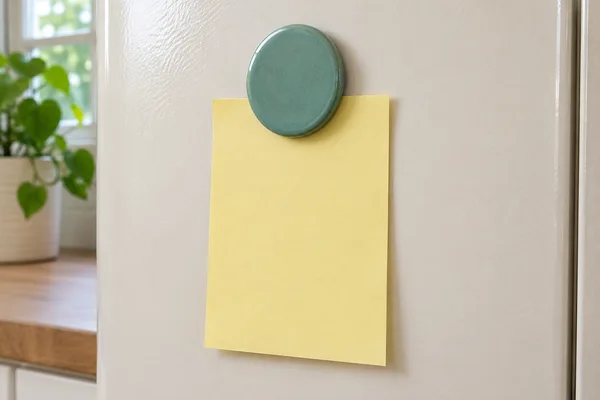
Why doesn’t a fridge magnet slide down?
The door pulls the magnet toward it. Friction keeps the magnet at the same height.
 Forces & motion
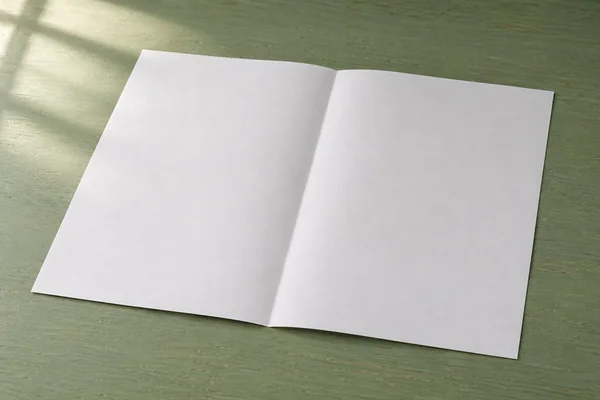
Why does a crease stay in paper?
A gently bent sheet can flatten out again. A sharp fold leaves a lasting change along the crease.
 At home
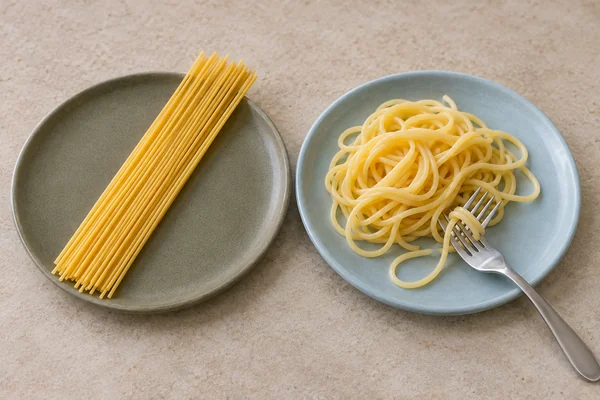
Why does pasta soften when you cook it?
Water makes its way in from the outside. As the starch warms up and swells, the pasta bends more easily.
 At home
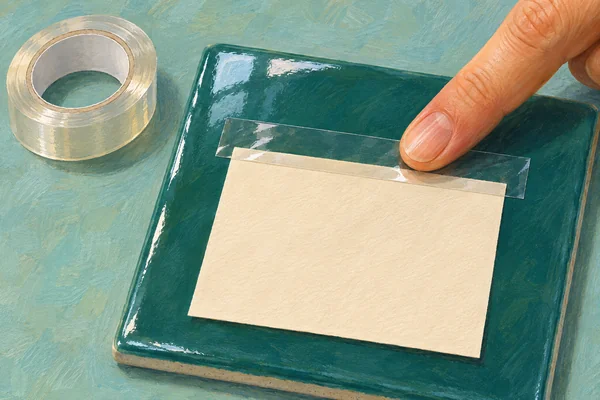
Why does tape stick as soon as you press it down?
A soft layer of adhesive coats the underside of the tape. Pressing the tape down brings that layer into close contact with the surface.
 Forces & motion
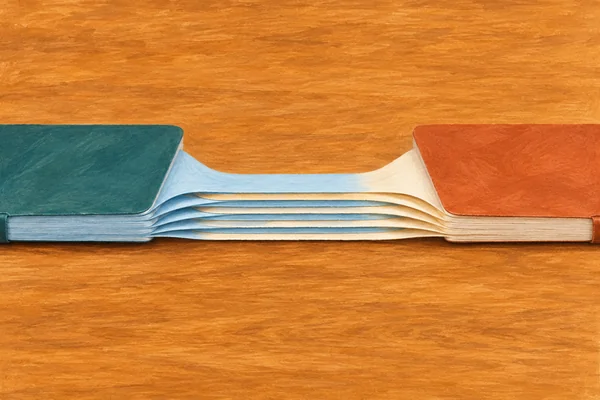
Why are books with interleaved pages so hard to pull apart?
Two notebooks can grip each other surprisingly firmly. When you pull, their slanted sheets squeeze the layers of paper in the middle.
 Forces & motion
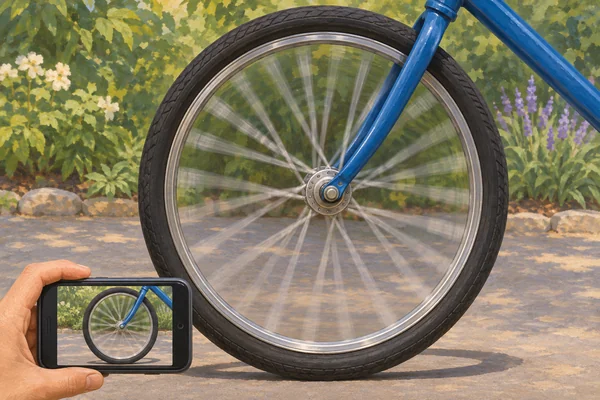
Why do wheels sometimes look like they spin backward on video?
A video is made of separate pictures. Between two pictures, a wheel can turn much farther than it seems to on screen.
 At home
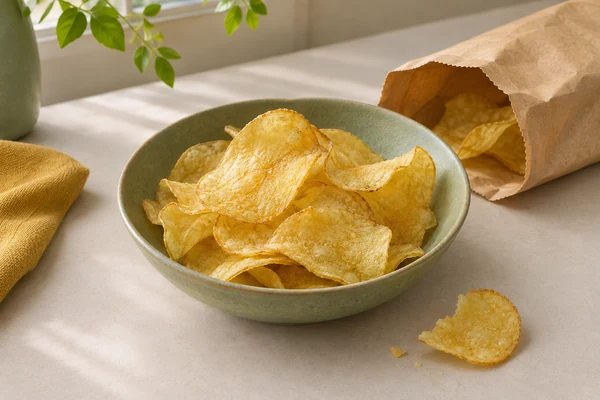
Why do potato chips go soft in humid air?
A chip can take up water from the air. With more moisture, it bends more easily and loses some of its crunch.
 At home
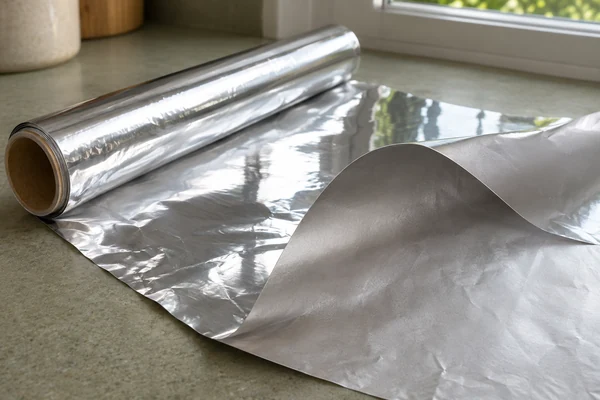
Why does aluminium foil have a shiny side and a dull side?
Two thin sheets pass through the rollers together. They pick up different surface textures, which reflect light in different ways.
 At home
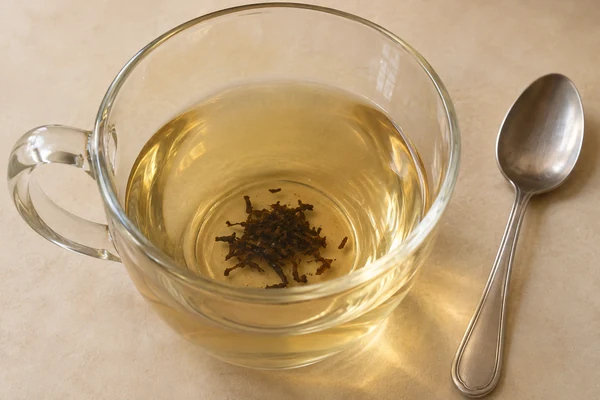
Why do tea leaves gather in the middle after stirring?
The tea spins around the cup. Near the bottom it also flows inward and sweeps the leaves together.
 At home
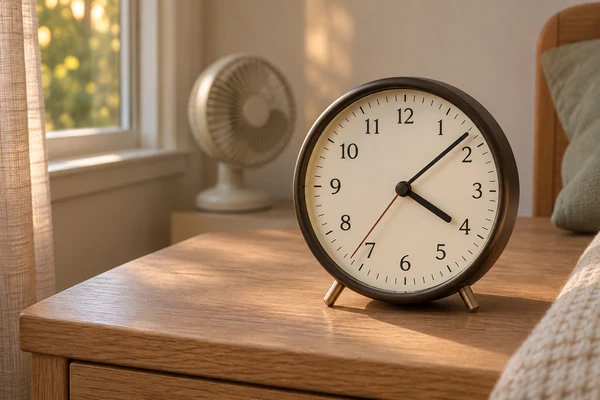
Why is a clock easier to hear in a quiet room?
When a fan switches off, you suddenly notice the clock ticking. How can one sound cover up another?
 Nature & light
Why does a remote control blink on your phone screen?
An infrared remote sends invisible pulses of light. Some phone cameras show them as a bright dot.
 At home
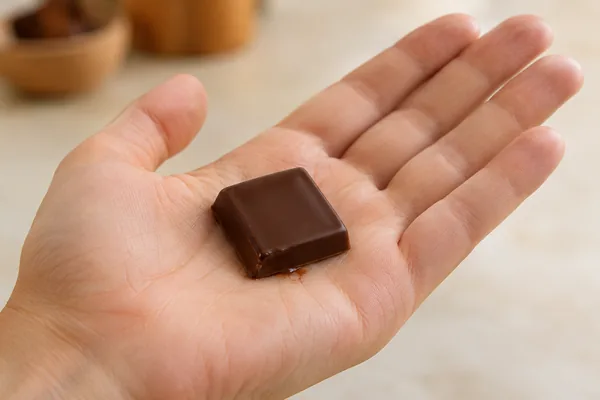
Why can chocolate melt in your hand?
Heat from your hand can turn solid cocoa butter into a liquid. The piece starts to soften where it touches your skin.
 Forces & motion
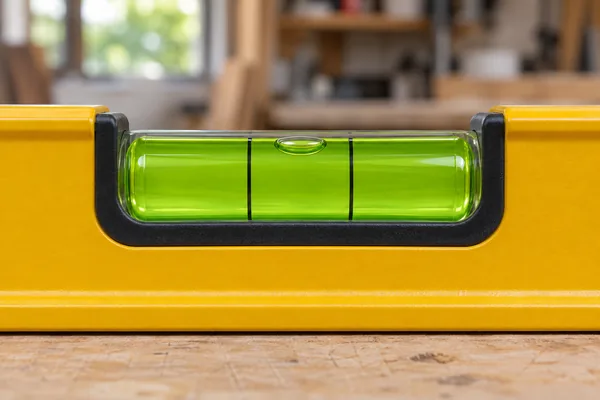
Why does the bubble in a spirit level sit in the middle?
The bubble floats to the highest point inside the tube. Where it stops tells you whether the surface beneath the tool is tilted.
 Nature & light
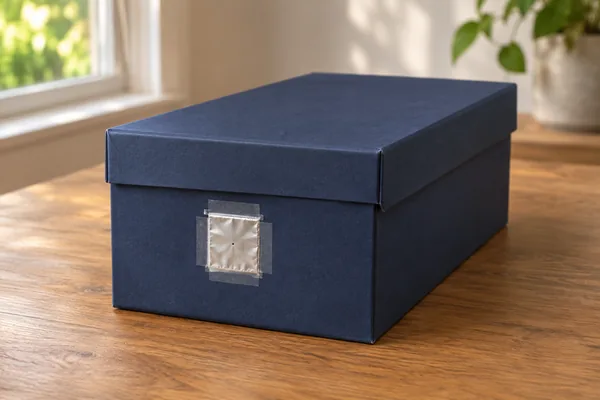
Why does a pinhole camera turn a picture upside down?
Light enters a dark box through a tiny hole. An upside-down picture appears on the paper at the back.
 Forces & motion
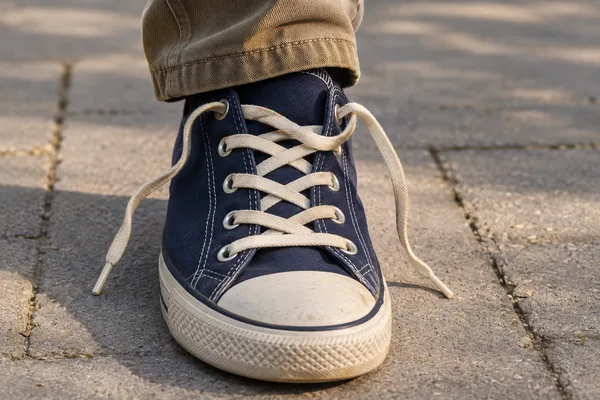
Why do shoelaces come untied when you walk?
Landing jolts the knot. As your foot swings again, the loose ends can slip a little farther out of the knot.
 At home
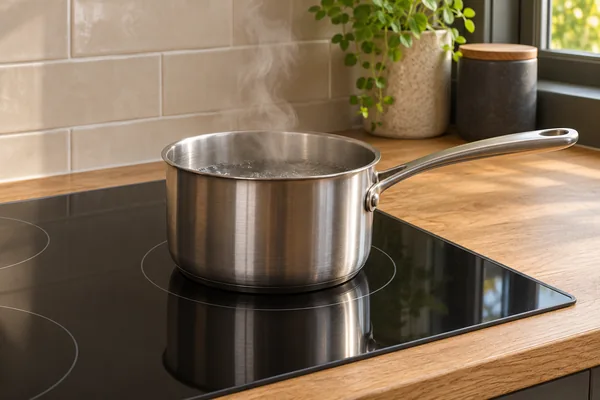
How does an induction hob heat a pan?
A coil under the glass creates a changing magnetic field that makes currents flow in the base of the pan.
 At home
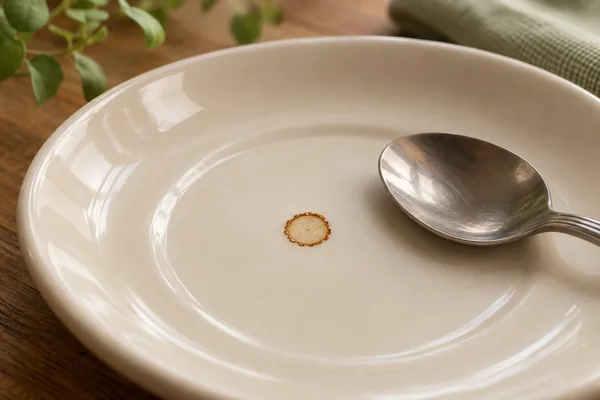
Why does a coffee drop leave a dark ring?
As a drop dries, water flows towards the edge and carries tiny particles with it.
 Nature & light
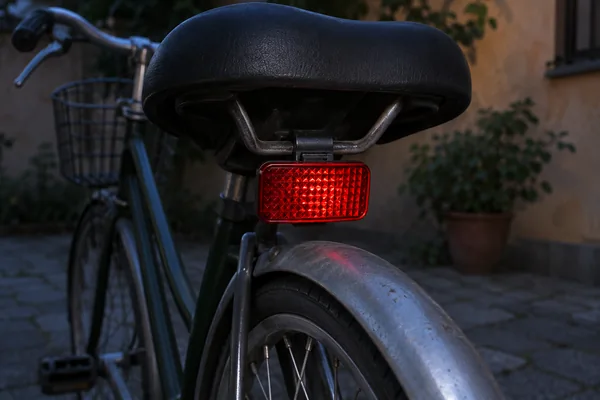
Why does a bicycle reflector shine so brightly?
Tiny corners in the plastic send light back towards where it came from.
 Forces & motion
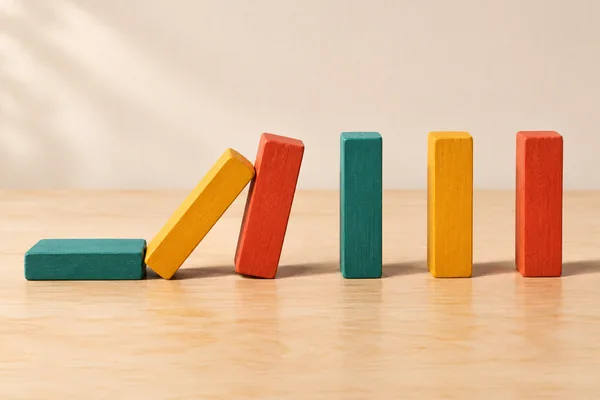
Why can one little push topple a whole row of dominoes?
The first domino nudges the next. The row keeps falling partly because each standing domino starts with its centre of mass high up.
 Nature & light
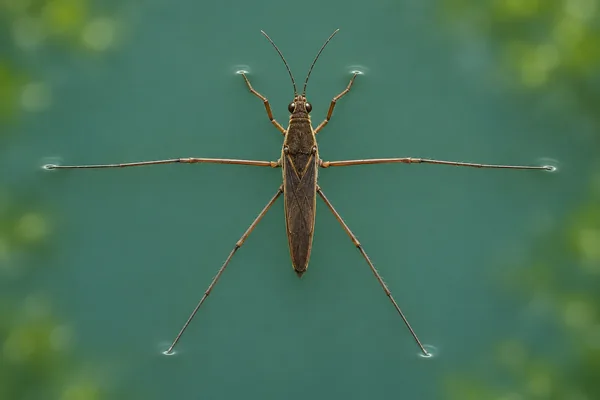
How can a water strider walk on water?
Its legs press little dimples into the water. The curved surface helps support the insect.
 At home
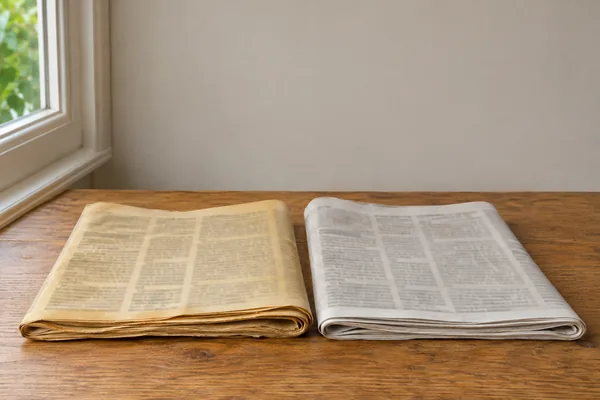
Why does old newspaper turn yellow?
A newspaper left by a window can turn yellow over time. The change starts with a substance already present in wood.
 At home
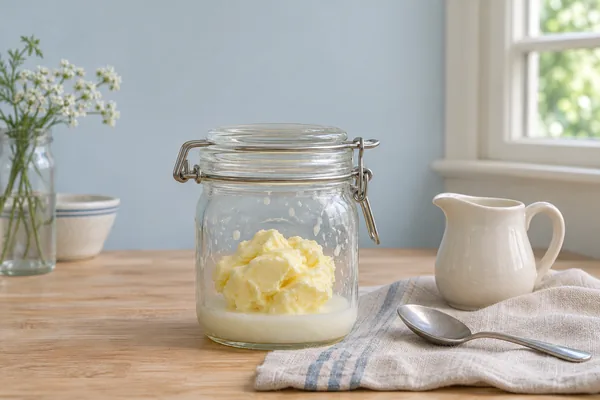
Why does shaking cream turn it into butter?
Liquid cream turns foamy first. Keep shaking and the butter separates from the buttermilk.
 Forces & motion
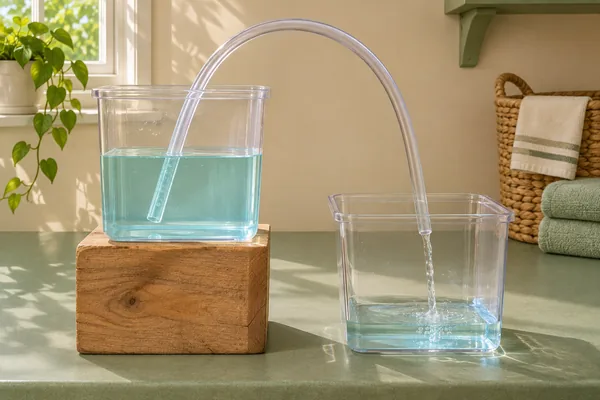
Why does water flow uphill for part of its journey through a hose?
A filled hose can carry water over a bucket’s rim. How low you place the outlet makes all the difference.
 Forces & motion
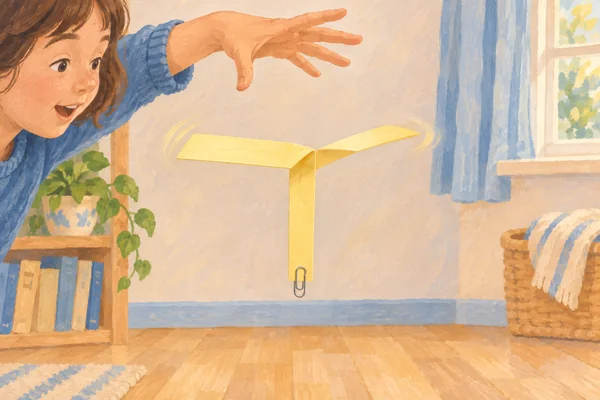
Why does a paper helicopter spin as it falls?
All it takes is two folded blades. As the paper falls, air pushes on them and sets it spinning.
 Nature & light
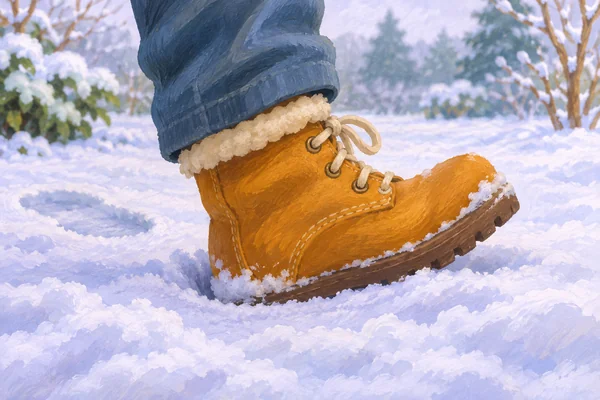
Why does snow crunch under your boots?
One footstep squeezes countless tiny grains of ice together. Very cold snow can make a distinct crunch.
 At home
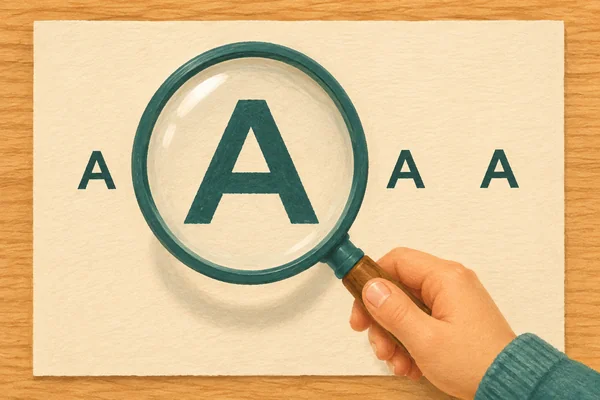
Why do letters look bigger through a magnifying glass?
A curved lens bends light. Held a little above the page, it makes small print look bigger.
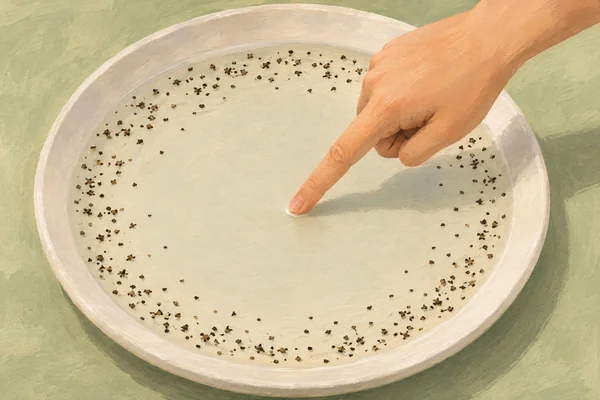 At home
Why does pepper scatter across water when you add dish soap?
A drop of dish soap sets the surface in motion. The pepper shows you where the water flows.
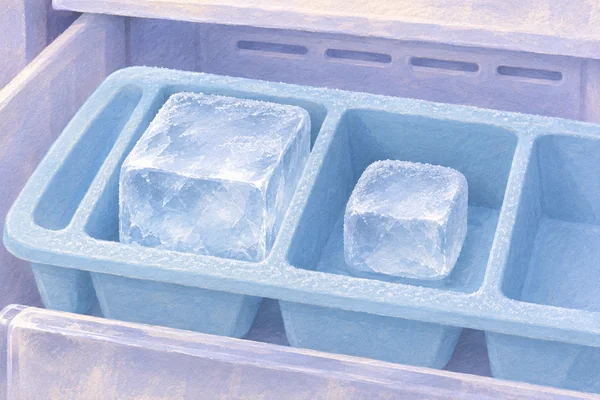 At home
Why do ice cubes shrink in the freezer?
An ice cube can get smaller while staying frozen. Some of the ice passes straight into the air.
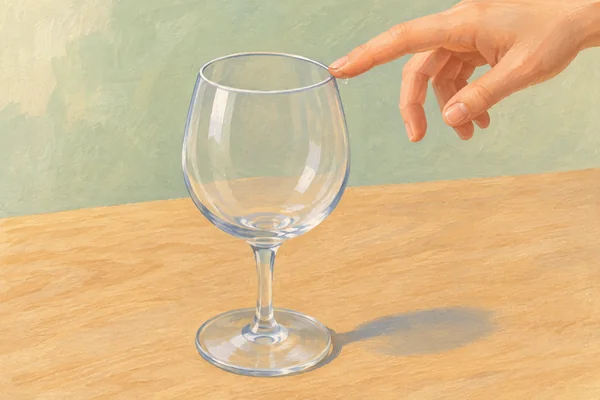 Forces & motion
Why does a glass sing when you rub its rim?
A wet finger and a glass are all you need to make a surprisingly clear note.
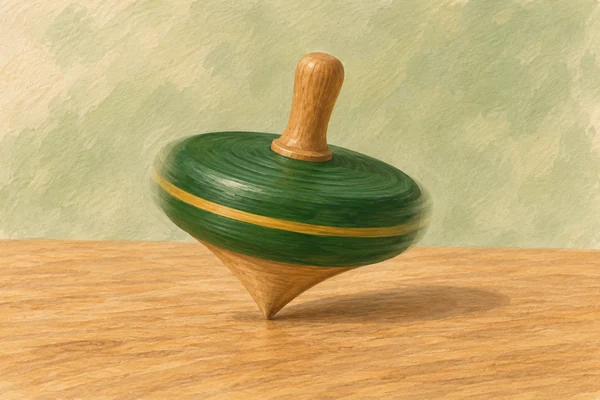 Forces & motion
Why doesn’t a spinning top fall over right away?
A fast-spinning top can balance on its point. When it leans, its handle often traces a circle.
 At home
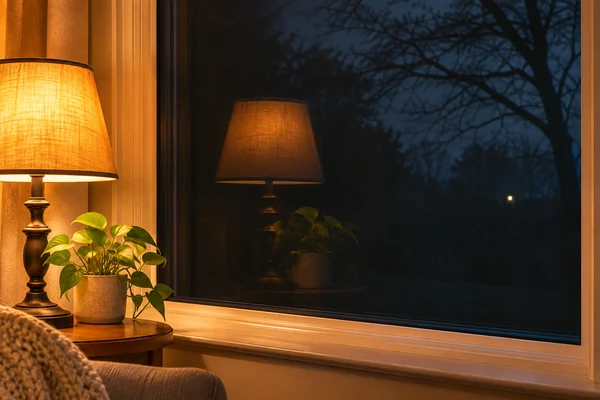
Why does a window look like a mirror at night?
Glass lets light through and reflects a small part of it. The reflection is easier to see when it is bright indoors and dark outside.
 At home
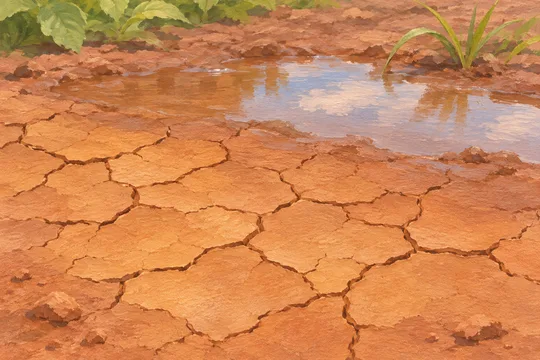
Why does mud crack as it dries?
As clay-rich mud dries, it loses water and shrinks. Cracks can open where the mud cannot shrink freely.
 At home
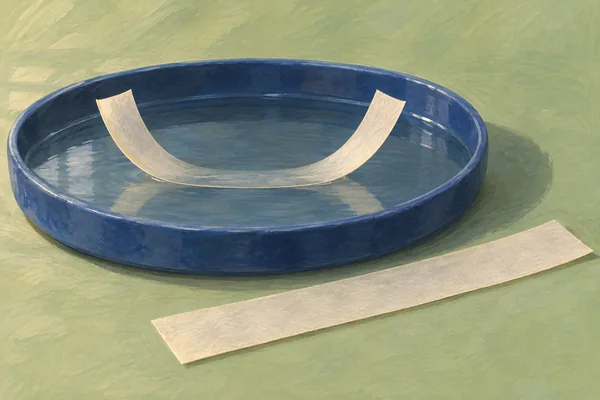
Why does paper curl on water?
Lay thin tracing paper on water and it can bend upwards. The underside gets wet first and expands more.
 At home
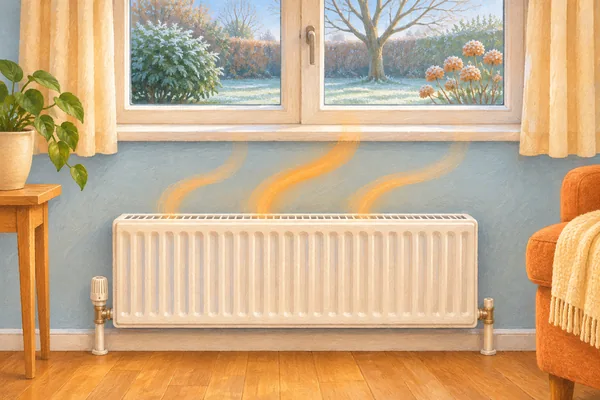
Why does air rise above a radiator?
A warm radiator sets the air moving. The reason has to do with how much space the particles in air take up.
 At home
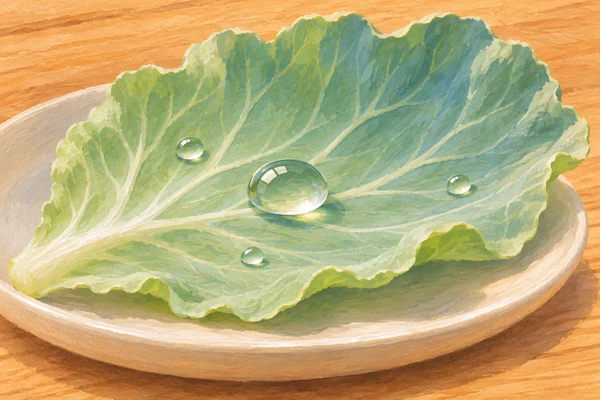
Why does water bead up on a cabbage leaf?
Water sits in rounded drops on some cabbage leaves. A thin layer of wax and tiny bumps help it keep that shape.
 At home
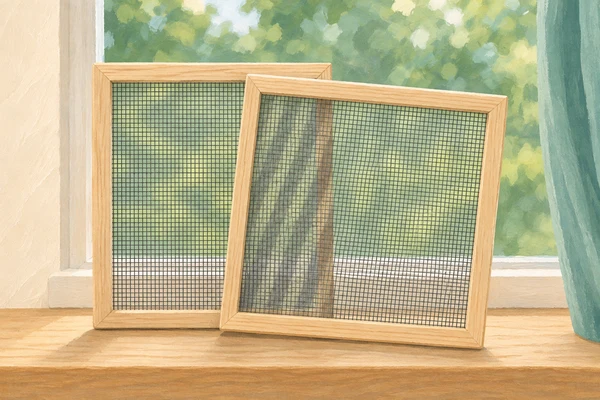
Why do two window screens make broad stripes?
Each screen has a fine mesh. Overlap two of them at a slight angle and a much larger pattern appears.
 At home
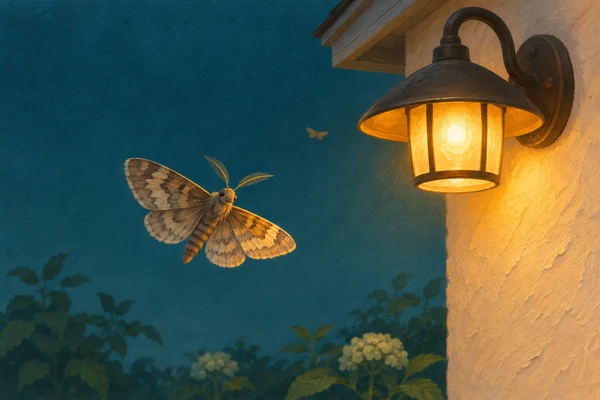
Why do moths circle lamps?
A bright sky helps many moths tell which way is up as they fly. A nearby lamp can muddle that signal.
 At home
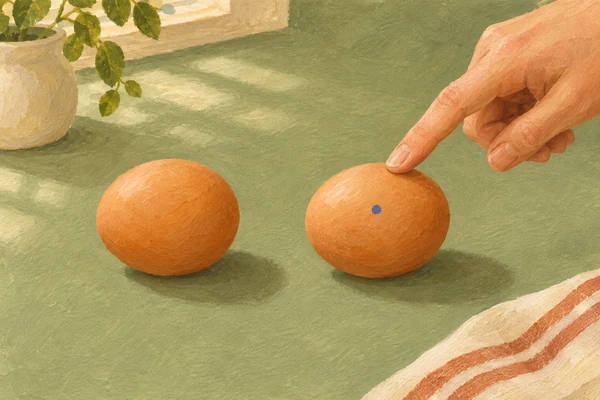
Why does a raw egg spin again after you stop it?
A quick touch stops the shell. What happens inside depends on whether the egg is raw or hard-boiled.
 At home
Why does my voice sound different in a recording?
As you speak, your voice reaches your inner ear through the air and through your body.
 At home
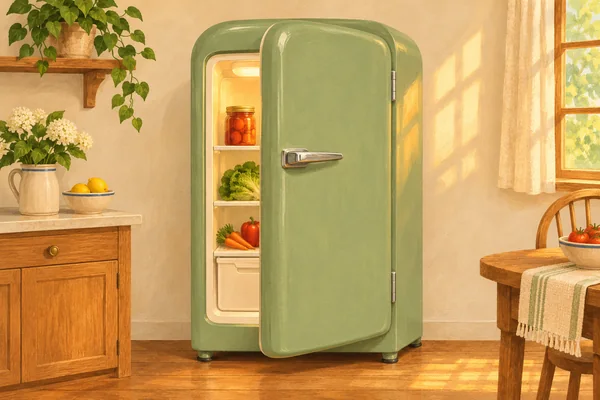
Why does a refrigerator get warm on the outside?
A refrigerator takes heat from inside and releases it into the kitchen.
 At home
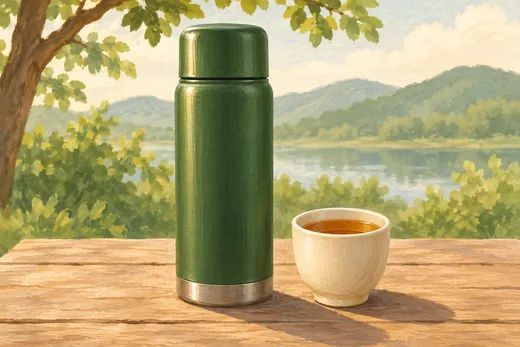
Why does a vacuum flask keep drinks warm or cold?
There’s almost no air between the two walls of a vacuum flask. That slows down the transfer of heat.
 At home
Why does an apple taste different when you hold your nose?
Your tongue can tell an apple is sweet and tart. Your nose helps you recognize it as apple.
 Nature & light
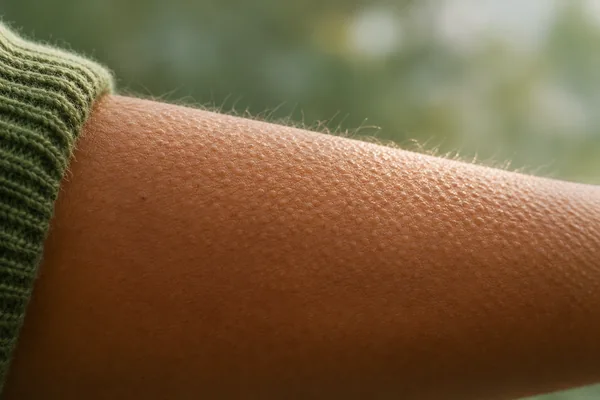
Why do we get goosebumps when we're cold?
A cool breeze can make the hairs on your arm stand up. Tiny muscles in your skin make it happen.
 Nature & light
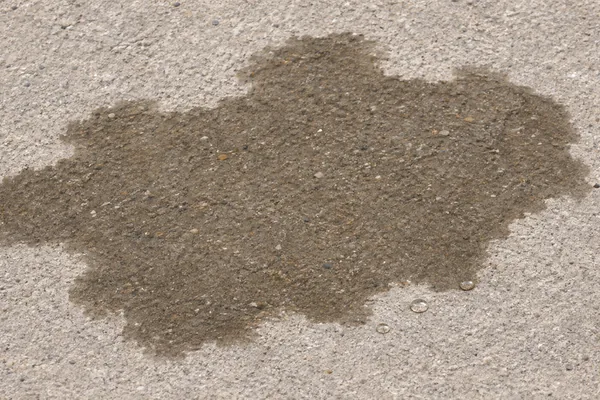
Why does a wet sidewalk look darker?
A few drops of rain can make a gray paving slab look darker. It comes down to where the light goes.
 At home
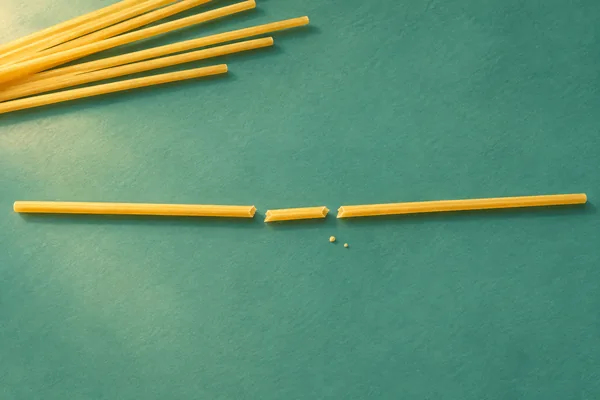
Why does dry spaghetti often break into more than two pieces?
You bend a dry strand of spaghetti, hear a snap and suddenly have three pieces. The first break can set off another.
 At home
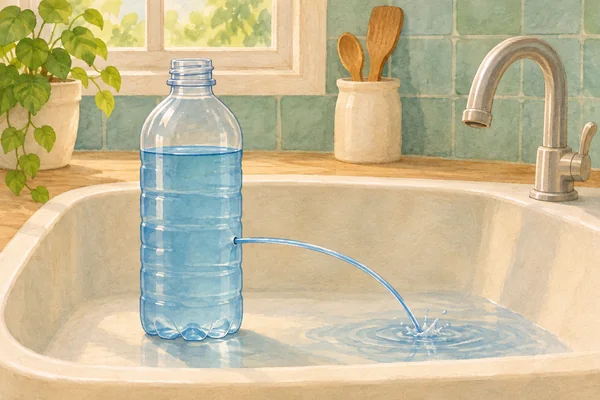
Why does water shoot out faster from the lower hole?
Two holes of the same size in a water bottle can make very different jets. What matters is how high the water stands above each hole.
 At home
Why does a low gear make cycling uphill easier?
In a low gear, you travel less distance with each turn of the pedals. On the same slope, you can push less hard.
 At home
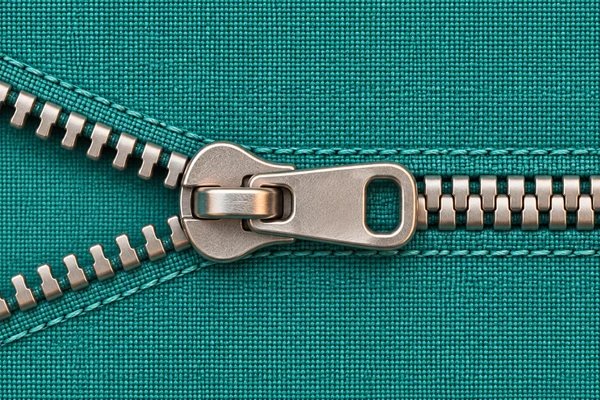
How does a zipper stay closed?
One tug turns two open rows into a single closed chain. The slider guides the teeth through a Y-shaped channel.
 At home
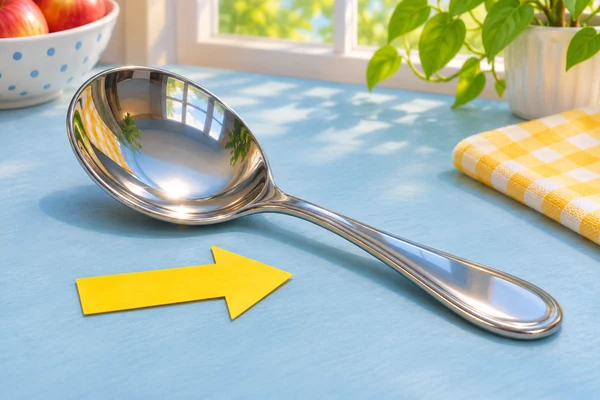
Why do you sometimes look upside down in a spoon?
A shiny tablespoon can turn your reflection upside down. Turn it over and your reflection stays upright.
 At home
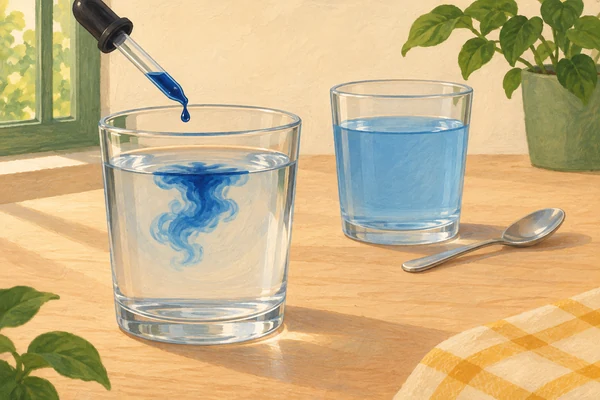
Why does food colouring spread through water?
Coloured streaks appear without a spoon. Two kinds of movement help explain them, and we should distinguish the two.
 At home
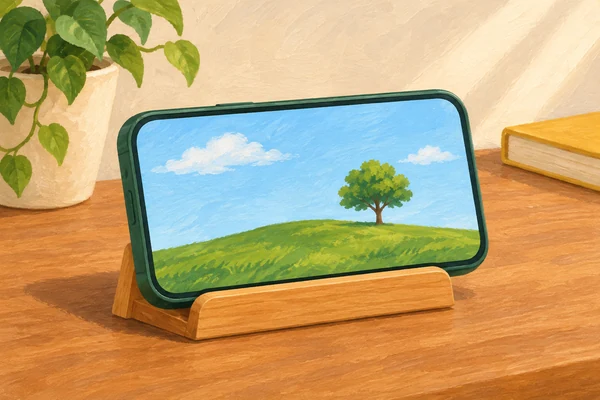
How does a phone know when to rotate its screen?
Turn a phone sideways and its picture can turn to match. Tiny sensors provide clues about the device's orientation.
 Nature & light
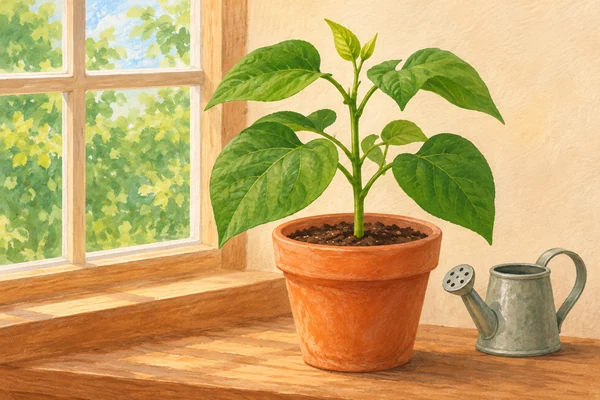
Where does a houseplant get its food?
We eat bread or fruit. A green houseplant makes its own sugar using light, water and a gas from the air.
 At home
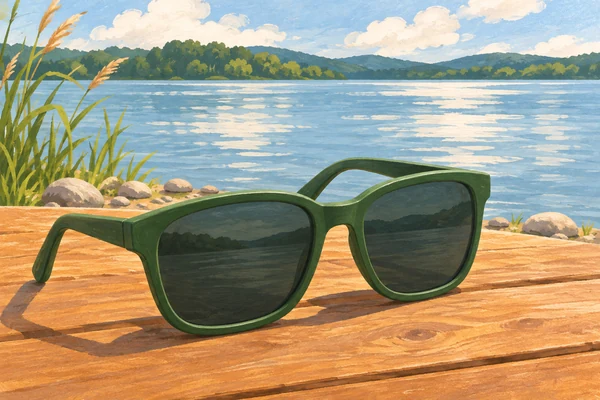
Why do polarised sunglasses reduce glare?
A bright reflection on water can hide what is below. A special filter makes use of a property of light waves.
 Nature & light
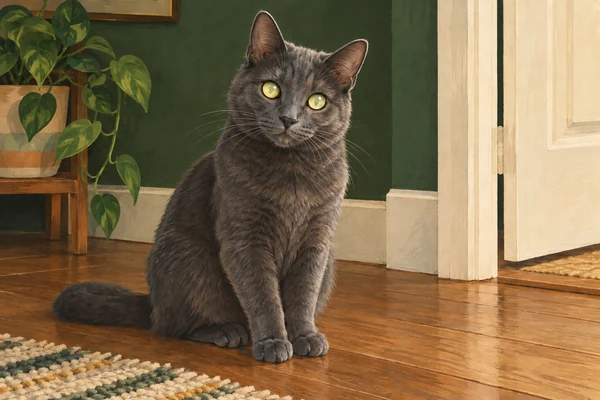
Why do cats' eyes shine in the dark?
In a photograph, a cat's eyes can look like little lights. Incoming light takes a special route inside the eye.
 At home
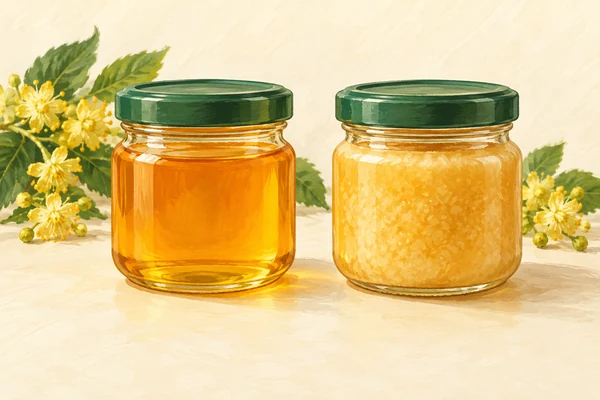
Why does honey form crystals over time?
One honey is clear and runny; another is grainy and firm. Where do those little grains come from?
 At home
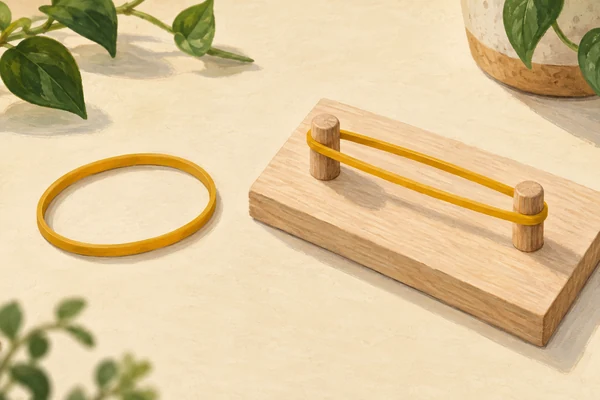
Why does a rubber band become shorter again?
You gently pull a rubber band longer. Ease off the pull, and it becomes shorter again. What changes inside the material?
 At home
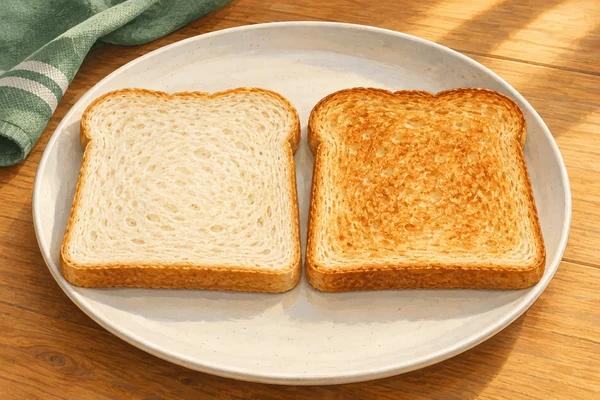
Why does toast turn brown?
The same slice becomes warm and crisp, with a new aroma. What does heat change inside the bread?
 Nature & light
Why don't clouds simply fall out of the sky?
A cloud looks like a giant cushion. How does all that water stay above our heads?
 At home
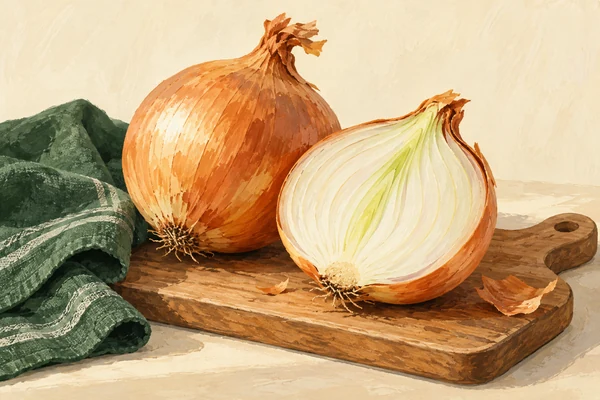
Why do onions make us cry when we cut them?
An onion sits on the board – and suddenly our eyes water. How does something in a vegetable affect our eyes?
 At home
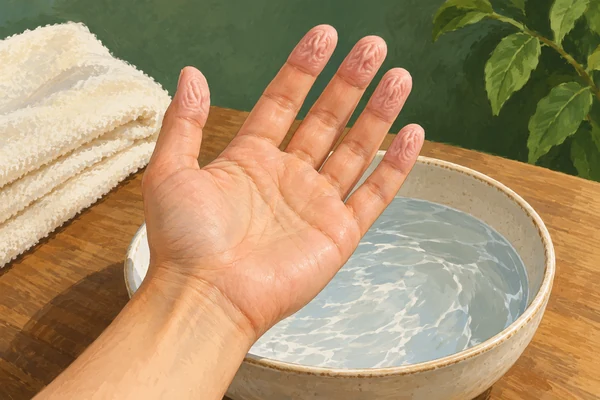
Why do fingers wrinkle in water?
After a long bath, new folds appear on our fingertips. An active response inside the body helps produce them.
 At home
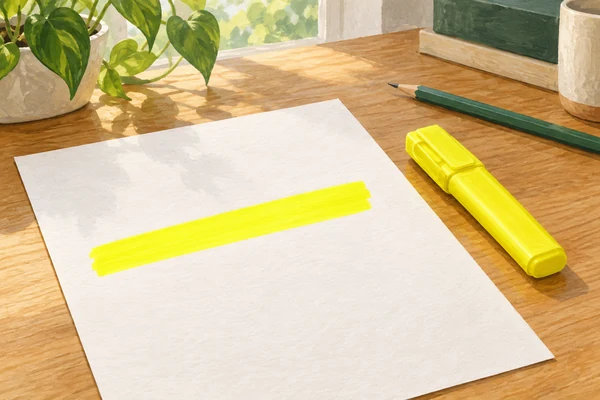
Why do highlighters look so bright?
A yellow mark stands out on the page. Many highlighters contain more than ordinary colour: they use fluorescence.
 At home
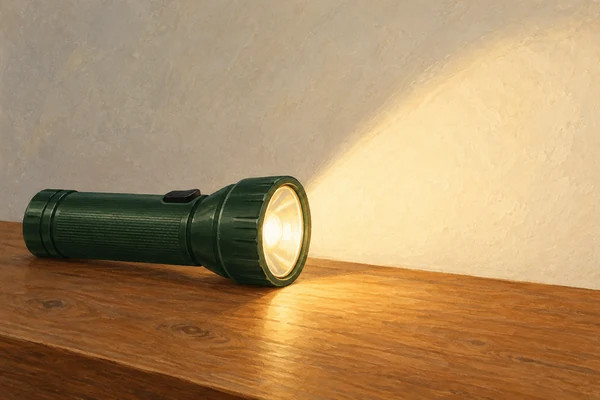
Why does a lamp need a closed circuit?
Click, light on! A flashlight helps us explore why electric current needs a complete path.
 At home
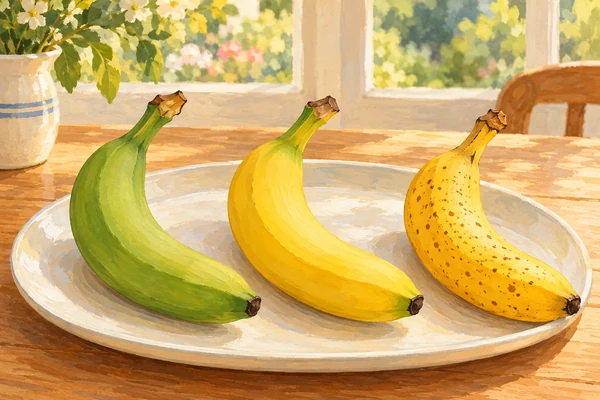
Why do bananas become sweeter as they ripen?
First green and firm, later yellow and sweeter: much more than the peel changes as a banana ripens.
 At home
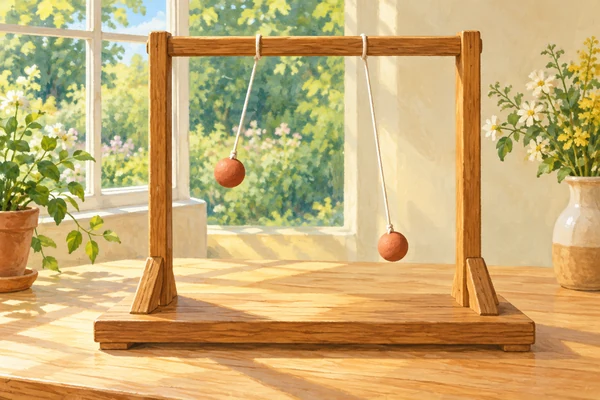
Why does a longer pendulum swing more slowly?
A playground swing moves back and forth. A small object on a string does too. Why does a longer string mean more time for the same round trip?
 At home
Where does candle wax go?
A burning candle gets smaller. Some wax drips down, but where does the rest go? The answer starts with a tiny fuel delivery system.
 At home
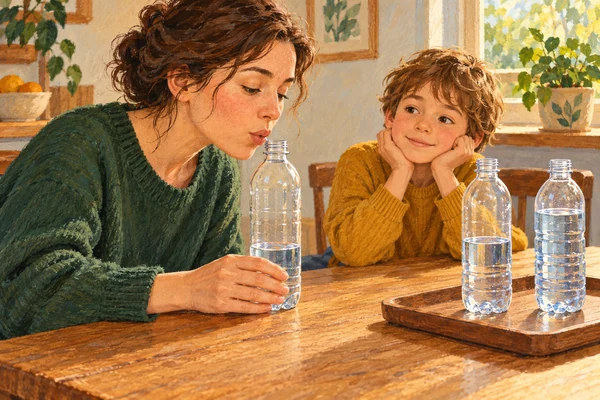
Why can a bottle make a note?
Blow across an open bottle at the right angle and you may hear a low note. Adding water can make that note higher. How does it work?
 Nature & light
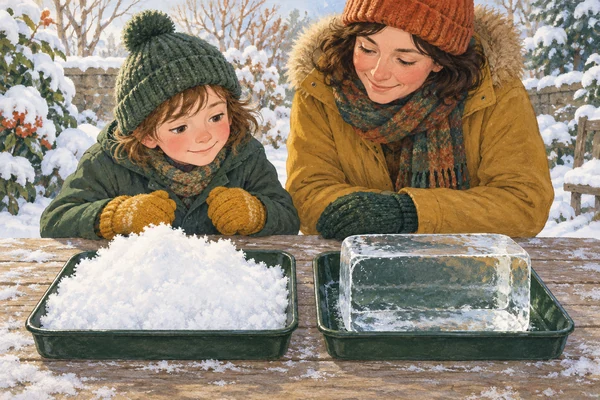
Why is snow white?
You can see through a clear piece of ice, but a thick layer of snow looks white. Both are frozen water. What makes the difference?
 Nature & light
Why is winter colder?
In winter you often need a thick coat. The midday Sun is lower in the sky, and darkness arrives early. How are these things connected?
 Nature & light
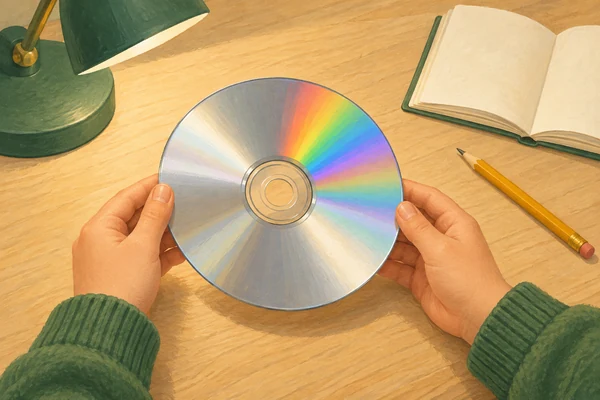
Why does a CD shimmer with rainbow colours?
The underside of a CD looks silvery. Tilt it under a white lamp and colourful bands seem to travel across it. Where do they come from?
 At home
Why does a passing siren often drop in pitch?
A vehicle approaches, passes and moves away. The same emitted tone can sound higher at first and lower afterwards.
 Forces & motion
Why do many bridges have expansion joints?
Sometimes a narrow strip of metal and flexible material crosses a bridge. Why not join everything rigidly at that spot?
 At home
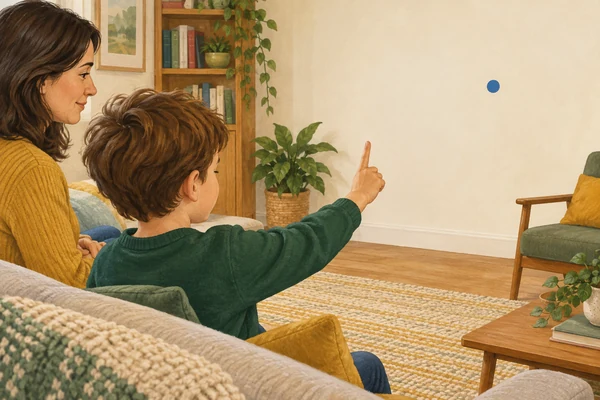
Why does your finger jump when you switch eyes?
You hold a finger still and look with one eye at a time. Suddenly it lines up with a different part of the wall. How does that happen?
 Nature & light
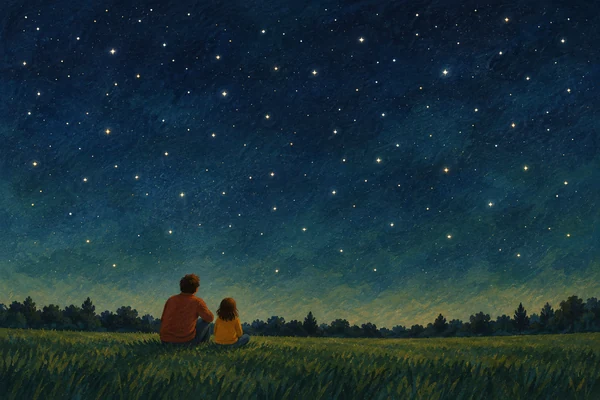
Why do stars twinkle?
A bright point in the night sky keeps looking a little brighter and dimmer. Is the star itself blinking?
 Forces & motion
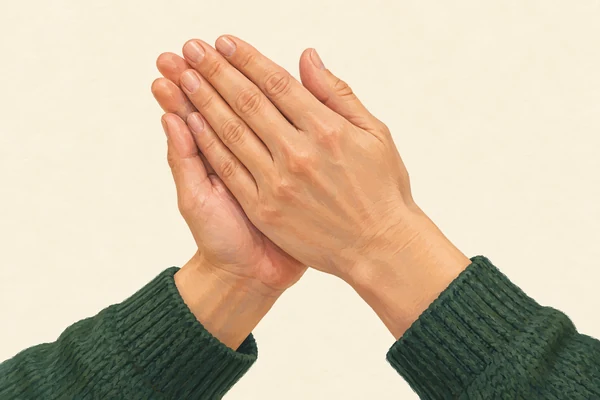
Why do your hands warm up when you rub them?
You slide your palms past each other. Soon they often feel warmer. Where does that energy come from?
 Nature & light
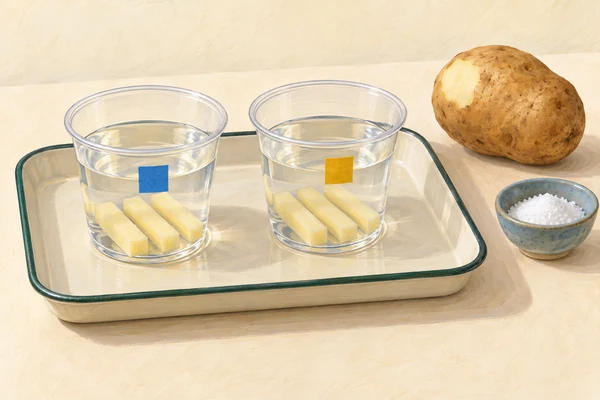
Why do raw potato pieces soften in salt water?
A raw potato stick starts out firm. After a soak in strong salt water, it often bends more easily. What has changed?
 Nature & light
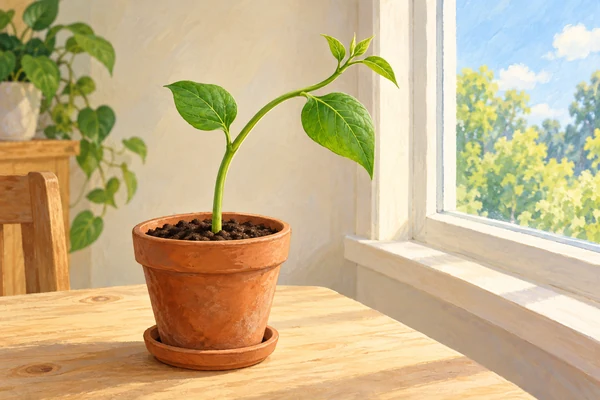
Why do young shoots grow towards a window?
A young stem starts out upright. A few days later, its tip leans towards the bright window. How does that curve form?
 Forces & motion
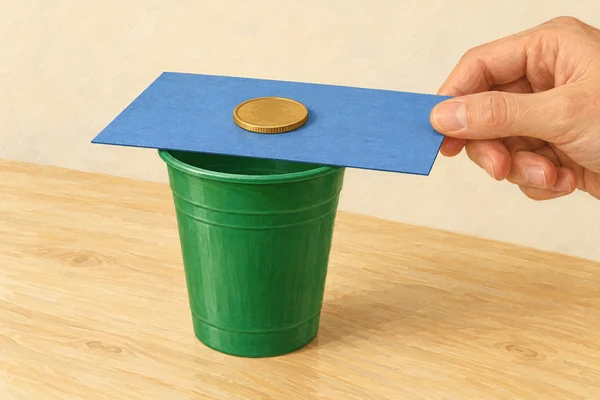
Why do you move forwards when a bus brakes?
You are travelling along calmly. Then the bus brakes and your upper body moves forwards. Why does this happen?
 At home
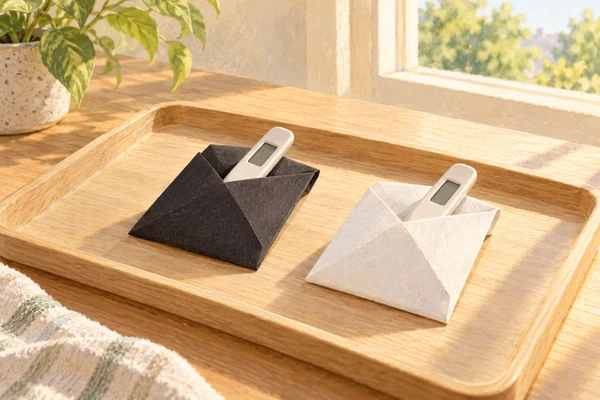
Why do black surfaces often get warmer in the sun?
A black sheet and a white sheet sit in the same sunlight. Why might the black one warm up more?
 At home
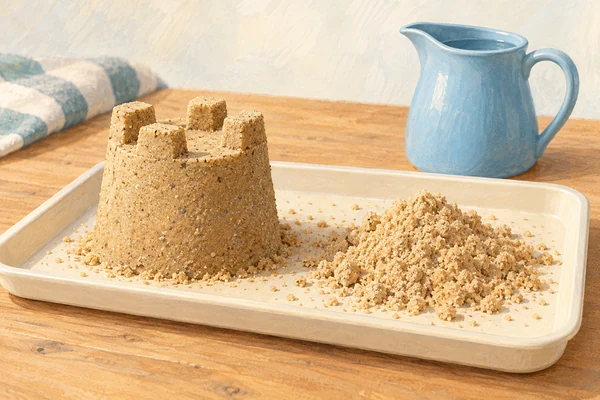
Why does damp sand hold a sandcastle together?
Dry sand spills out of a mould. Add a little water and small towers and walls can stand. What holds the grains together?
 At home
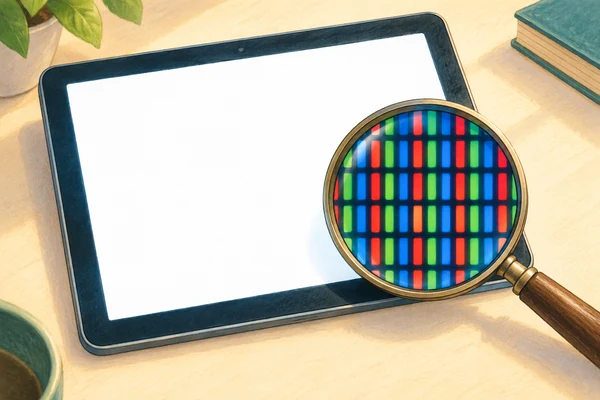
Why can a screen make white from red, green and blue?
A white area on a screen can come from many tiny red, green and blue areas. How does that work?
 Nature & light
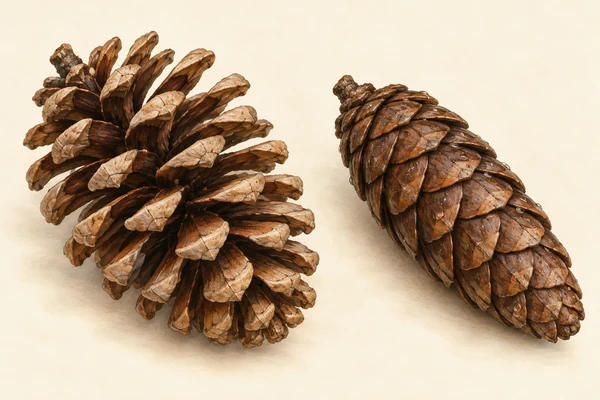
Why do pine cones close when wet?
A dry cone has wide-open scales. In water, they can move closer together. How does it move?
 Nature & light
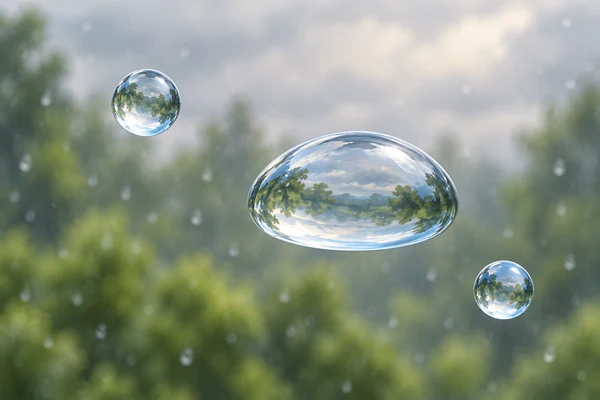
Why aren't raindrops teardrop-shaped?
Drawings often give raindrops a pointed tip. In the air, they usually look different. Why?
 Forces & motion
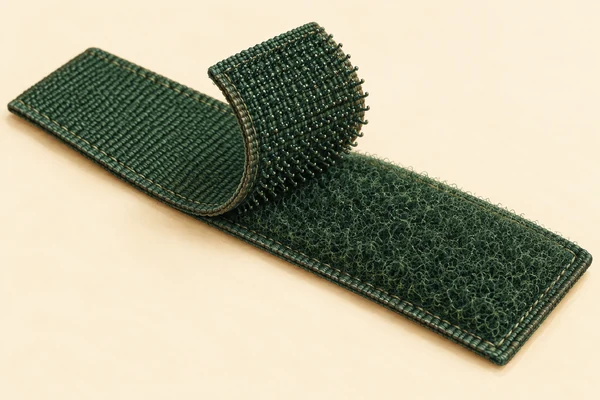
Why does a hook-and-loop fastener hold?
A quick press keeps a shoe closed. What holds those two textured pieces of fabric together?
 At home
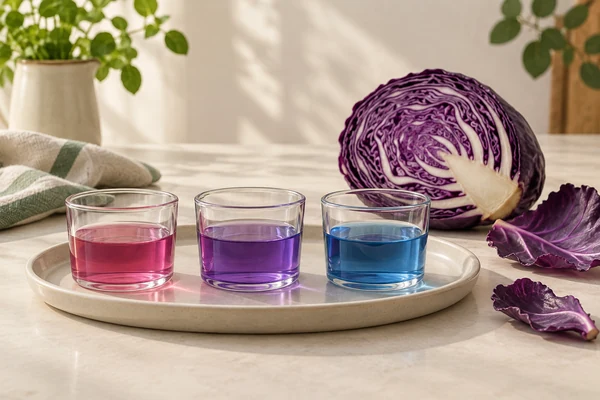
Why does red cabbage juice change colour?
The same violet juice can produce pink or blue samples. What causes the colour change?
 At home
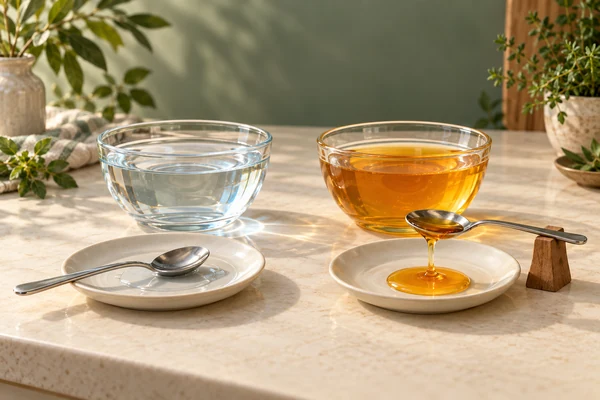
Why does honey flow more slowly than water?
Water quickly runs off a spoon. Honey often trails in a long thread. What holds it back?
 Forces & motion
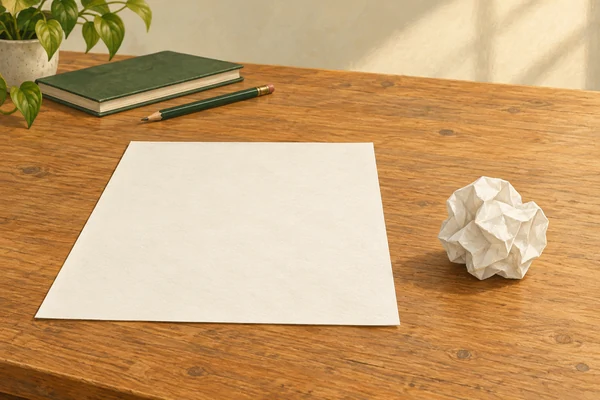
Why does crumpled paper often fall faster?
A sheet flutters while a paper ball drops quickly. Has crumpling made the paper heavier?
 At home
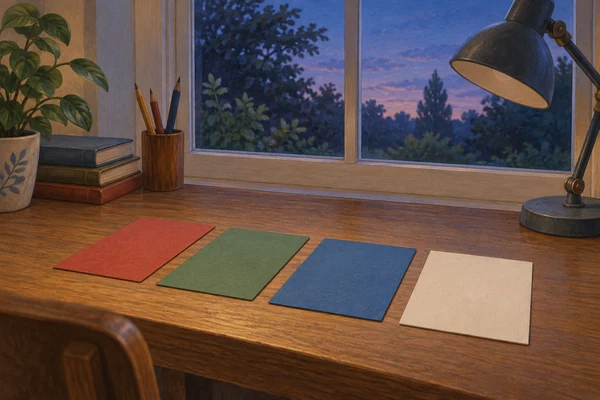
Why do we see fewer colours at dusk?
The red toy is still there. Yet its colour is harder to recognise in dim light. What happens in your eyes?
 At home
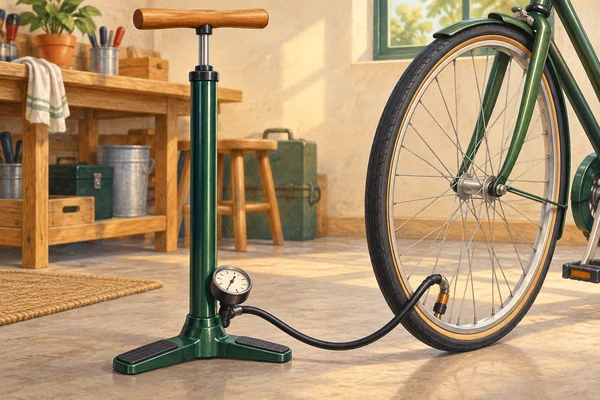
Why does a bicycle pump get warm?
The tyre gains air and the pump gets warmer. Where does that energy come from?
 At home
Why can a metal ship float?
A piece of steel sinks, yet a huge steel ship can float. How does its shape help?
 At home
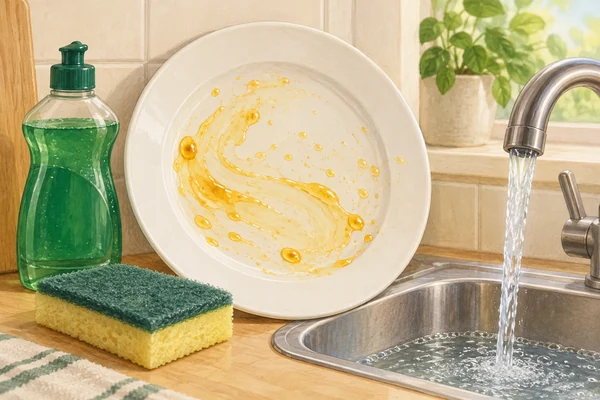
Why does soap help wash away grease?
Water alone is poor at carrying away cooking oil. Soap helps the two work together.
 At home
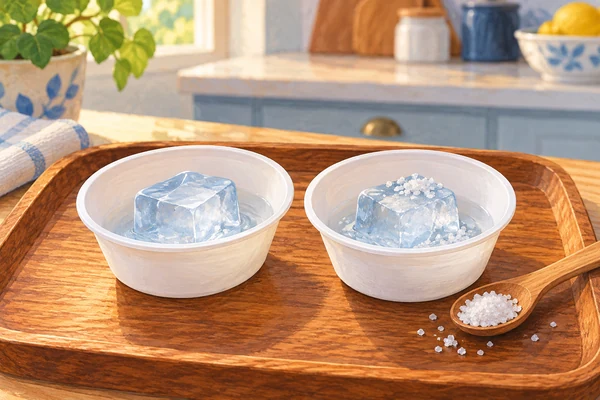
Why does salt help ice melt?
Salt can help ice melt. It does not have to make the ice hot to do so.
 Nature & light
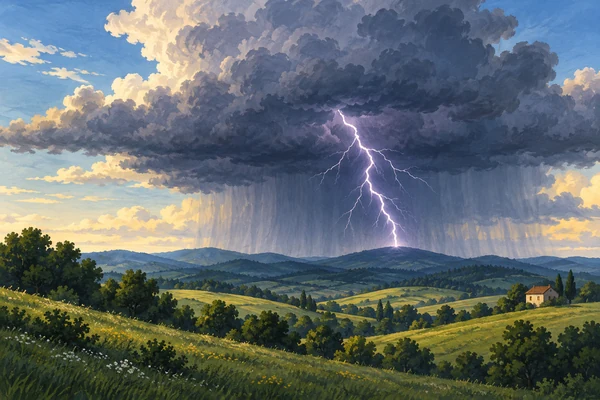
Why do we see lightning before hearing thunder?
First the sky lights up, then it rumbles. The gap tells us something about how light and sound travel.
 At home
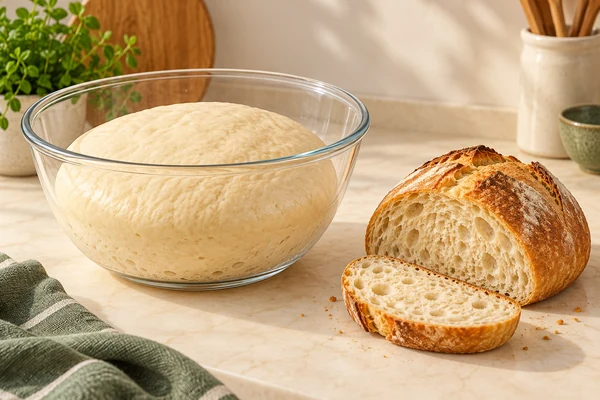
Why does yeast dough rise?
Dough rests in a bowl and grows larger. Tiny yeast cells and a stretchy network work together.
 Nature & light
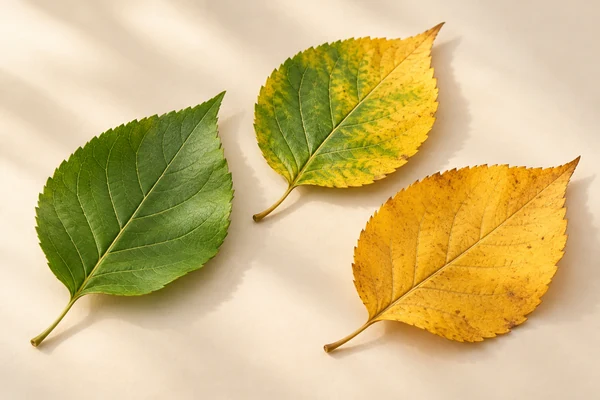
Why do leaves turn yellow in autumn?
One tree suddenly carries green and golden leaves together. A look at its pigments explains the change.
 At home
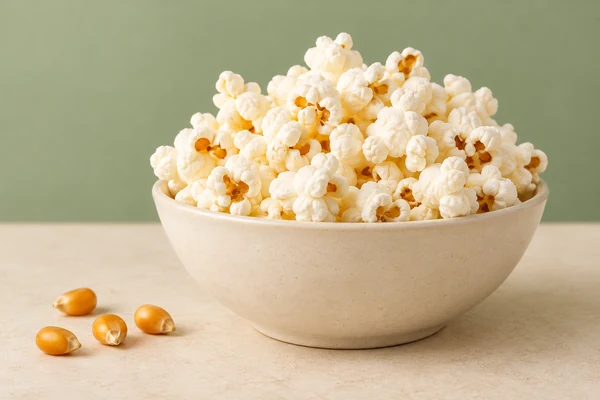
Why does popcorn pop?
A firm corn kernel becomes a large, light flake. The ingredients for this transformation are already inside the kernel.
 Forces & motion
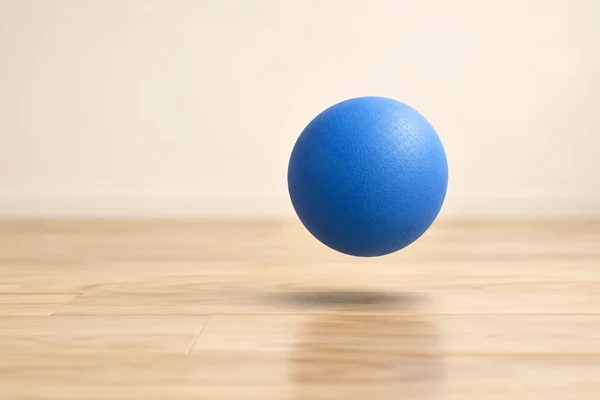
Why does a ball bounce back off the floor?
A brief contact, a small change of shape and the ball is rising again. Its energy takes a detour.
 Forces & motion
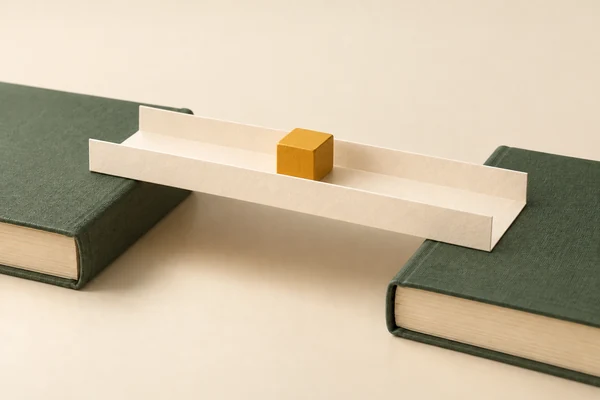
Why does folded paper hold more?
One sheet stays one sheet. Yet two upright edges can turn it into a much stiffer little bridge.
 Forces & motion
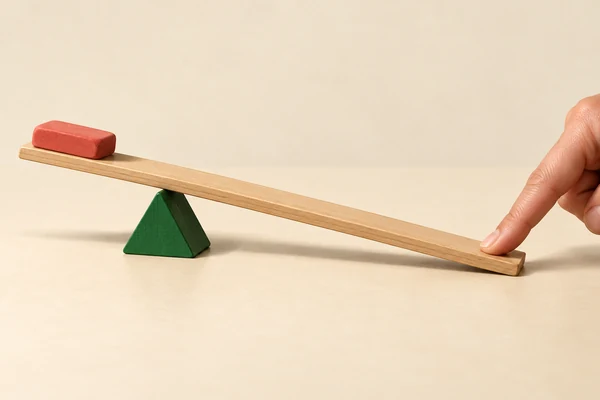
Why does a long lever make lifting easier?
A ruler seesaw shows that force matters, and so does its distance from the pivot.
 Nature & light
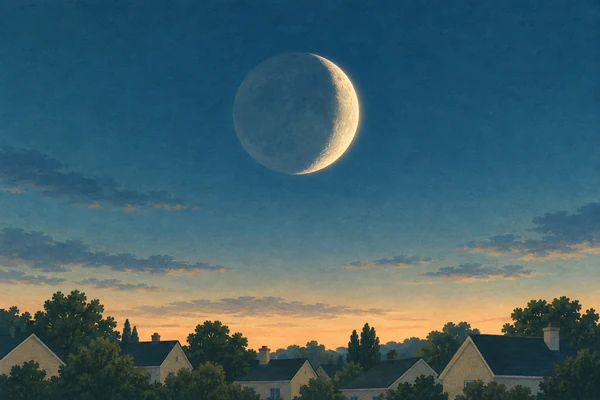
Why does the Moon appear to change shape?
Sometimes a crescent, sometimes a bright circle: the Moon stays round. What changes?
 At home
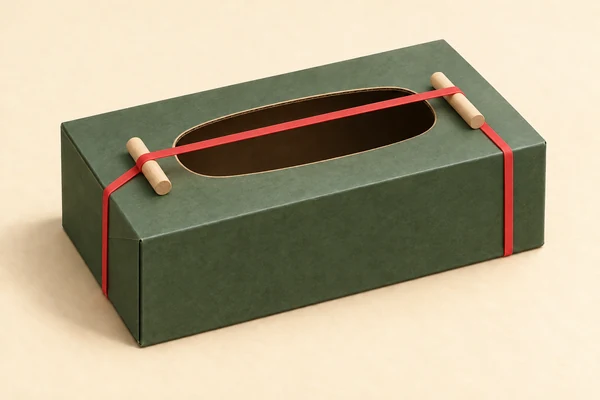
Why does a rubber band make a sound?
One little pluck, one brief twang. How does the movement reach your ear?
 At home
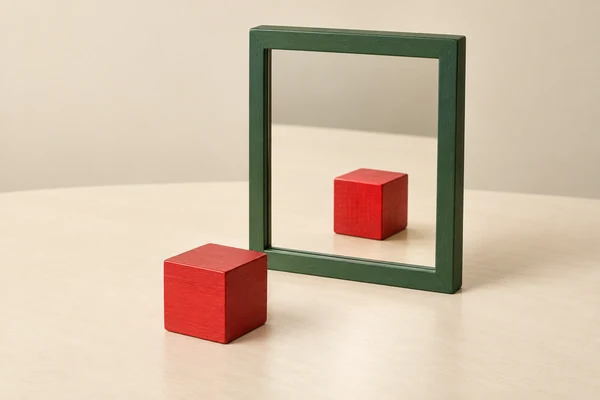
Why does a mirror show an image?
A second cube seems to stand inside the mirror. How does its image get there?
 At home
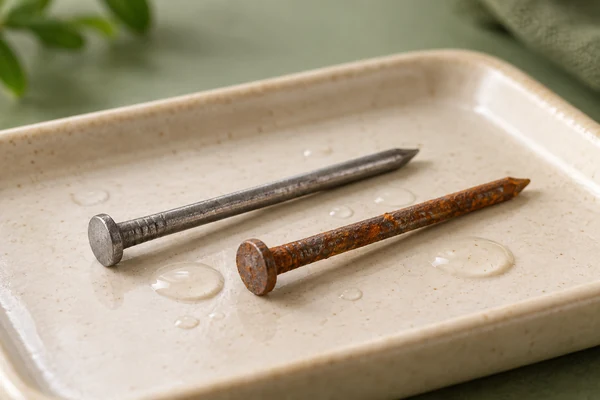
Why does iron rust?
A nail turns orange-brown outdoors. Is that just dirt, or is the metal itself changing?
 At home
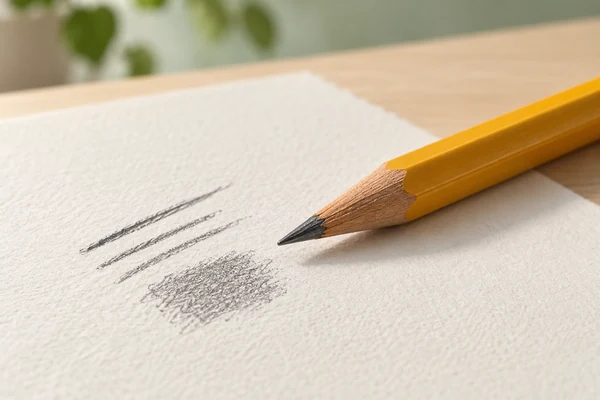
How does a pencil write without ink?
A pencil leaves gray lines without any ink flowing out. What stays on the paper when you write?
 At home
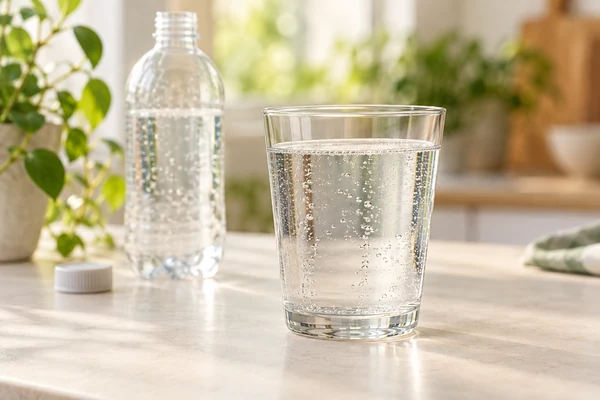
Why does sparkling water fizz when opened?
First the bottle hisses, then little bubbles rise. Where does the gas in sparkling water come from?
 At home
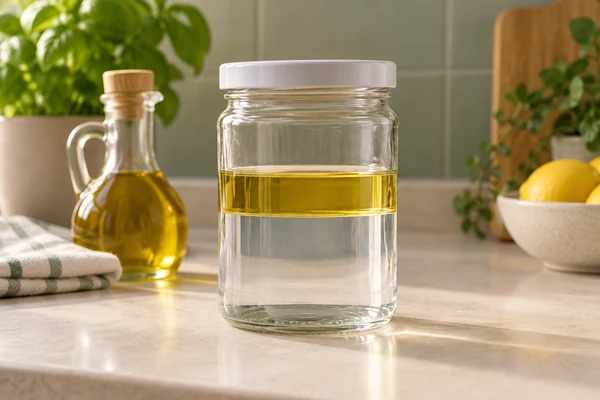
Why don't oil and water mix?
Shake water and cooking oil together. For a moment they look mixed. Why do two layers form again afterward?
 At home
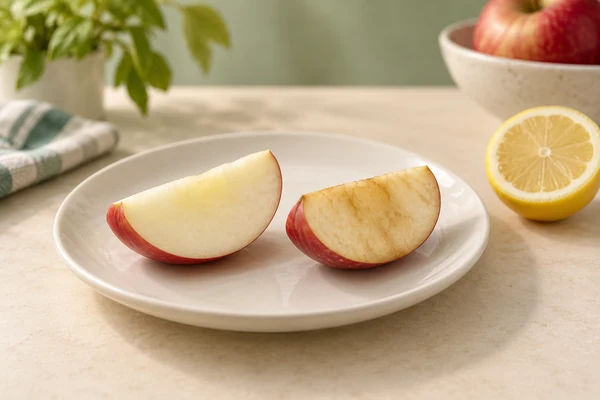
Why does a cut apple turn brown?
The flesh was pale a moment ago. After a while, the cut surface turns brownish. What is changing there?
 At home
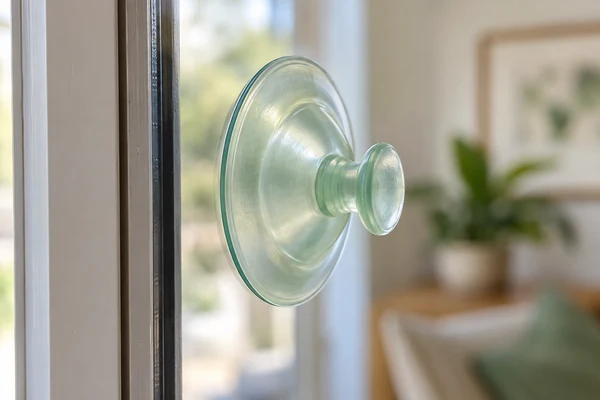
Why does a suction cup stick to glass?
Press it on and it stays put. Lift its rim and it comes off easily. What part does the air play?
 At home
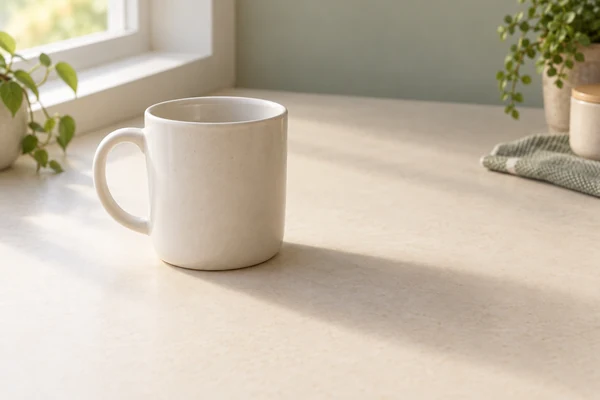
Why are shadow edges sometimes soft?
The mug has a clear edge. Its shadow fades gradually. What makes this transition?
 At home
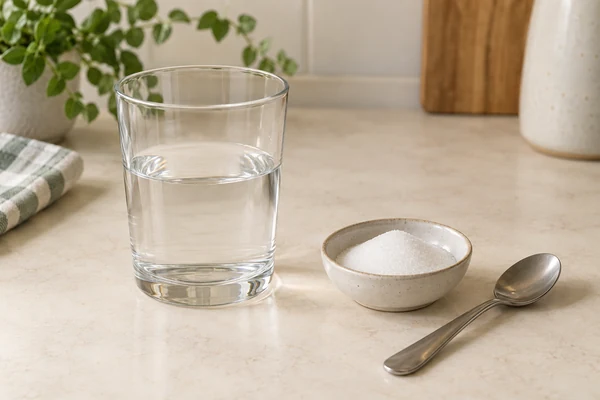
Where does sugar go when it dissolves?
A little sugar, a glass of water and a few turns of a spoon. The grains are gone. Is the sugar gone too?
 At home
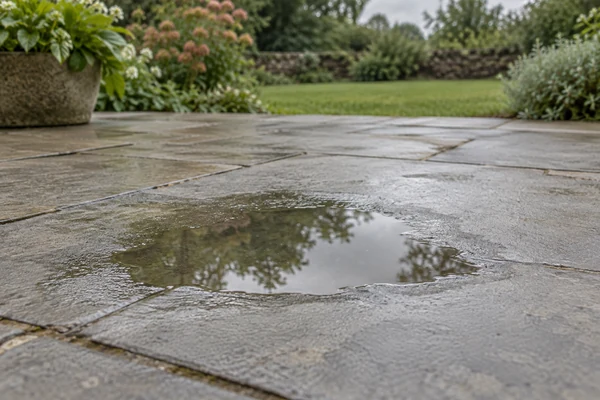
Why does a puddle dry without sunshine?
Clouds have hidden the sun. Yet the puddle is shrinking. Where is the water going?
 At home
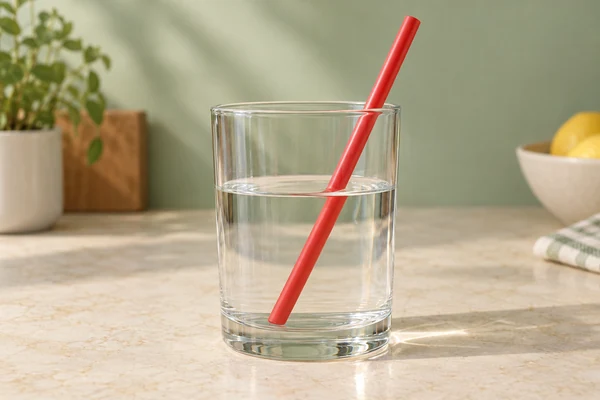
Why does a straw look bent in water?
The straw is straight. Yet its dry and wet sections sometimes seem to miss each other when you look at them.
 At home
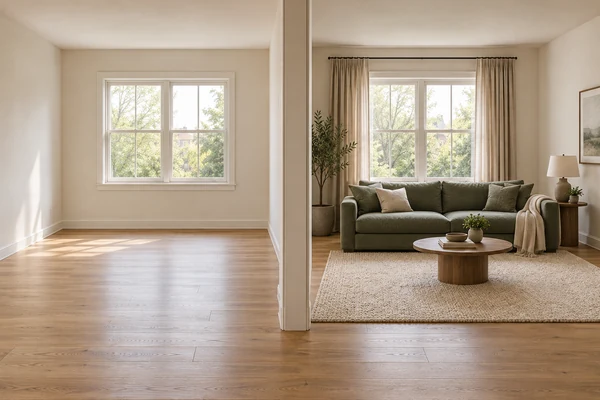
Why does an empty room sound echoey?
A brief clap can linger after your hands have stopped moving. The walls have a part to play.
 At home
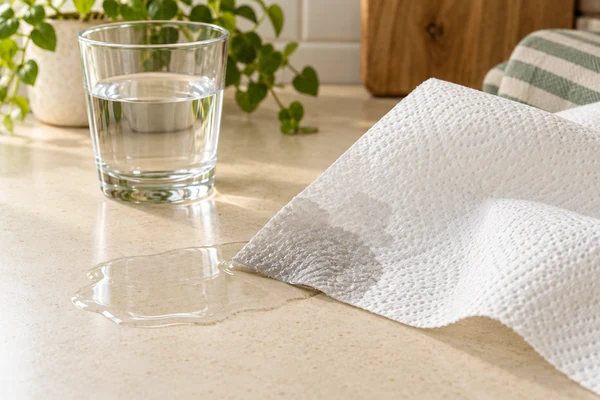
Why do paper towels soak up water?
A paper towel touches water and the wet patch spreads. It needs no pump and no hand squeezing it.
 At home
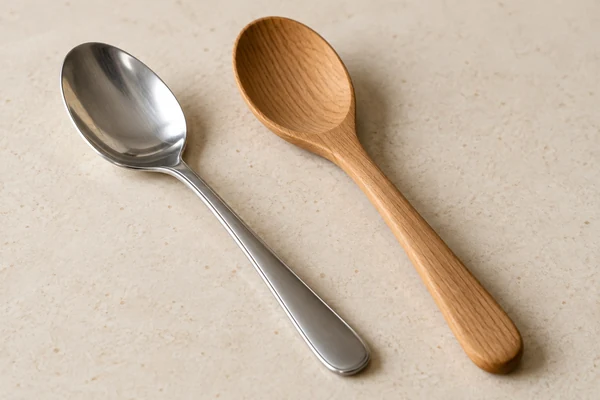
Why does metal feel colder than wood?
Two spoons sit in the same room, yet one feels colder. The difference is in how heat travels.
 Forces & motion
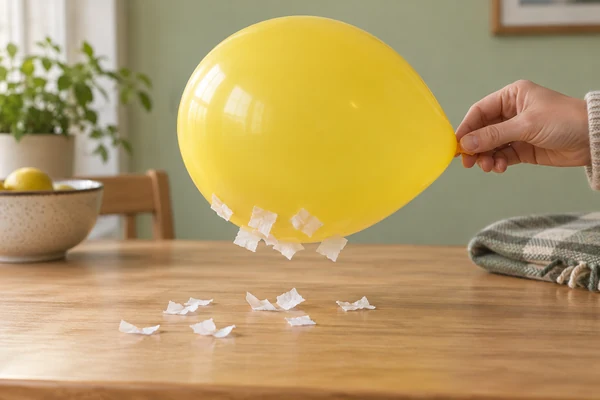
Why does a rubbed balloon attract paper?
Rub a balloon, and tiny paper scraps can jump towards it. Invisible electric charge is behind the surprise.
 At home
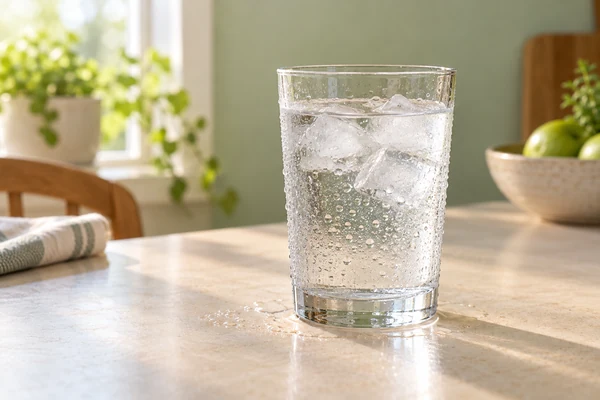
Why does a cold glass get wet on the outside?
Your drink is inside. Little droplets grow outside. That water comes from the air, where it starts out invisible.
 At home
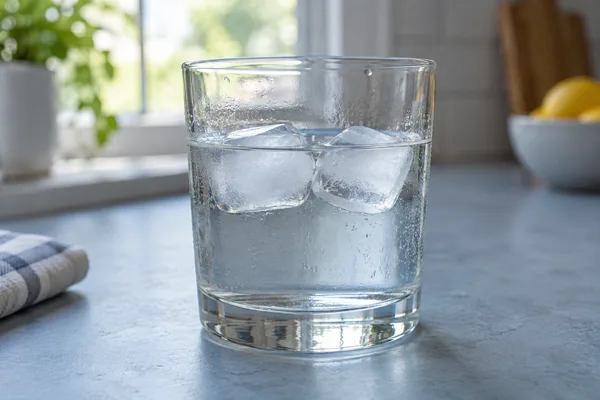
Why does ice float on water?
An ice cube is solid, yet it doesn't sink. Water does something unusual when it freezes.
 At home
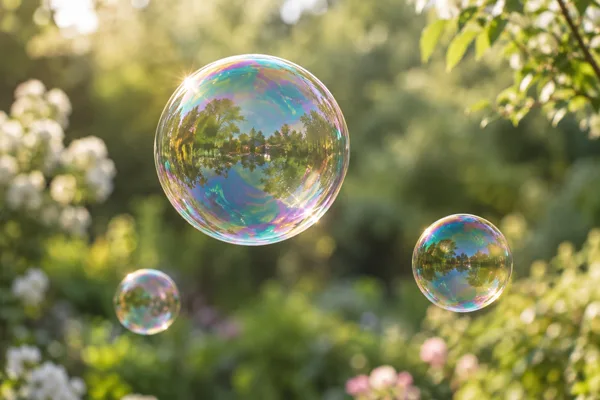
Why are soap bubbles round?
Whatever shape the wand is, a free bubble becomes round. Its thin skin has a good reason.
 Nature & light
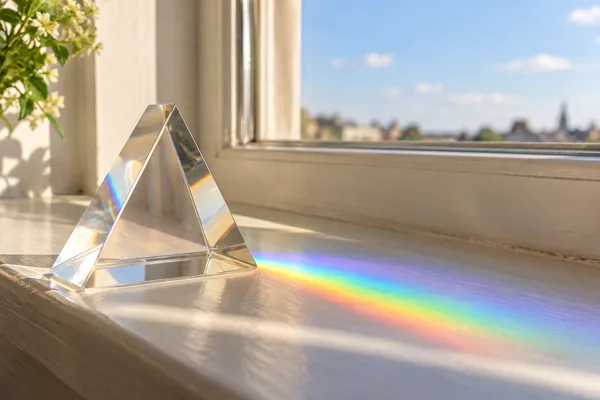
How does a rainbow form?
The Sun comes out after the rain and a colourful arc appears. Those colours were there all along.
 Nature & light
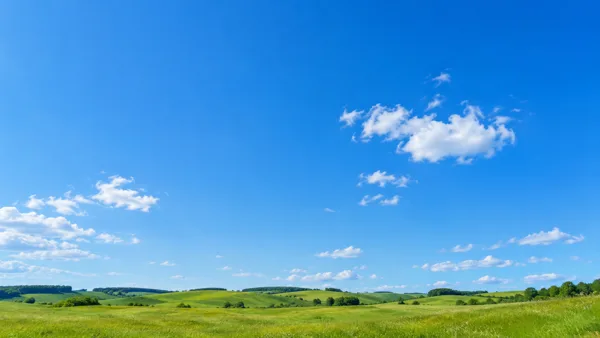
Why is the sky blue?
Air is transparent. Sunlight looks white. So why does a blue sky glow above us?
 Forces & motion
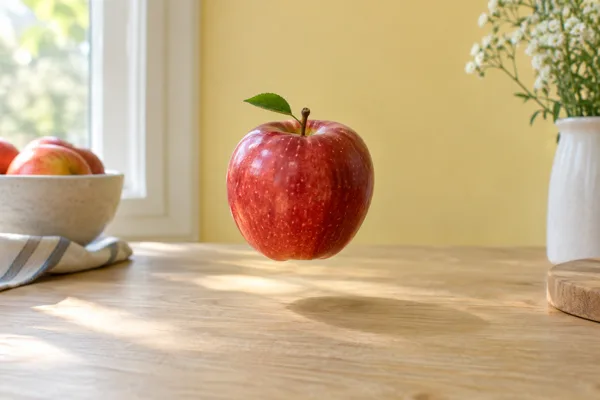
Why do things fall down?
A pen slips off a table and lands on the floor. Why doesn't it simply float toward the ceiling?
 Forces & motion
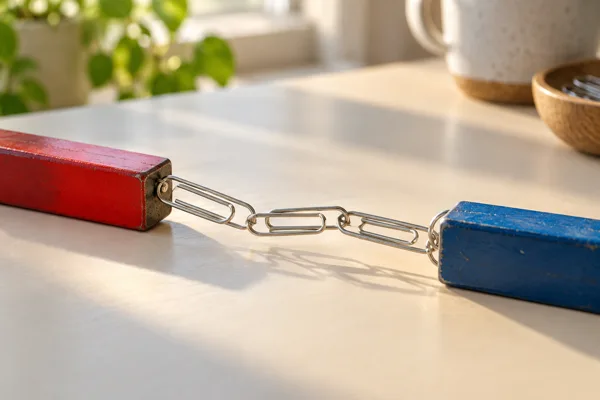
Why do magnets attract each other?
Sometimes they snap together. Sometimes they refuse to meet. What is behind this little magnetic mystery?
No story found. Try another word or another topic.
Follow your curiosity.
Sometimes the best discovery begins with a question you have never thought to ask.
Science is closer
than you think.
You do not need a laboratory to explore the world. A glass of water, a magnet or a look out of the window is enough to get started. We explain what is going on without burying curiosity under technical terms.
More about our idea ↗