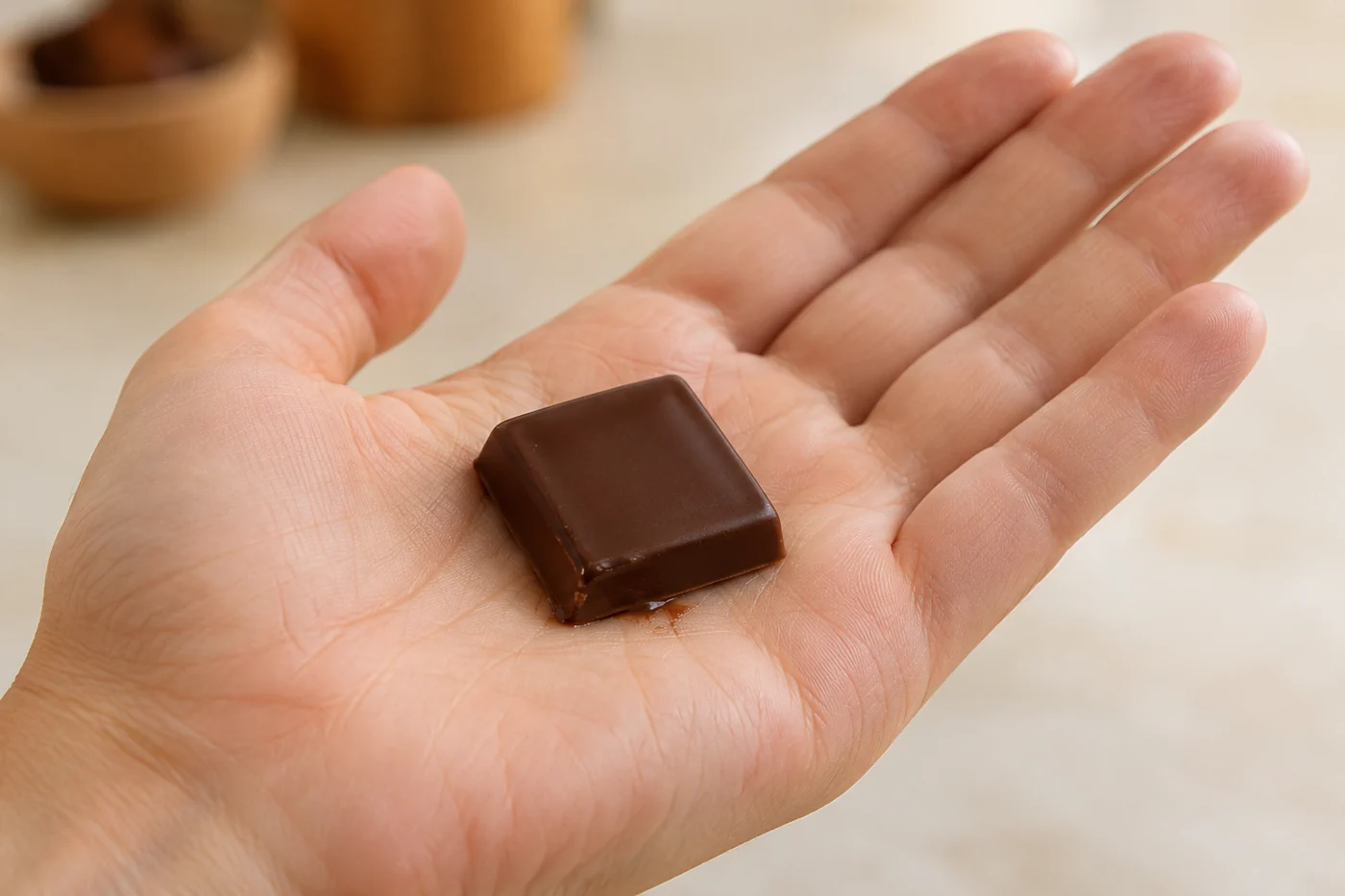
Chocolate contains cocoa butter. In a cool piece of chocolate, much of this fat is solid. If your hand is warm enough, some of the cocoa butter melts. That makes the chocolate soft, and some of it may stick to your skin.
A piece of chocolate snaps when you break it. Hold one half for a while and it may leave a brown mark on your palm. Why does the half on the table stay firm for longer?
Heat moves from your hand into the chocolate
If your hand is warmer than the chocolate, heat moves from your hand into it. The part touching your skin warms first.
How soon you see a change depends on things like the warmth of your hand and the thickness of the piece. If your hands are cold, you may see a different result.
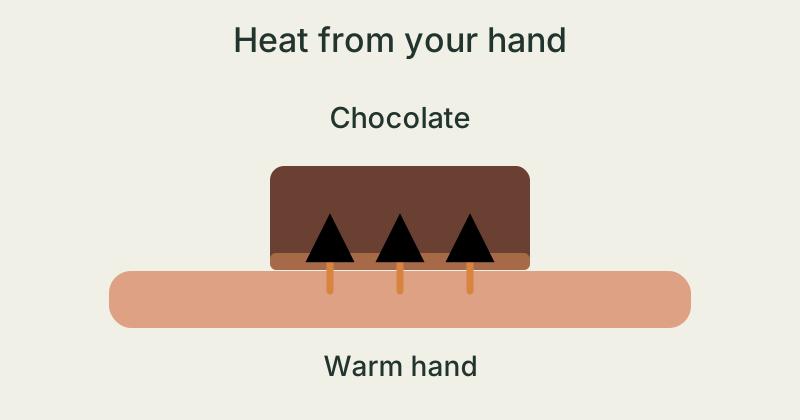
The fat in the chocolate melts
Cocoa butter is the fat from cocoa beans. When it is solid, many of the fat molecules are packed into small, orderly groups called crystals. They help the piece hold its shape.
When the chocolate gets warm enough, that orderly arrangement breaks down. The fat molecules can slide past one another, and the fat can flow. Tiny cocoa and sugar particles stay mixed into the fat.
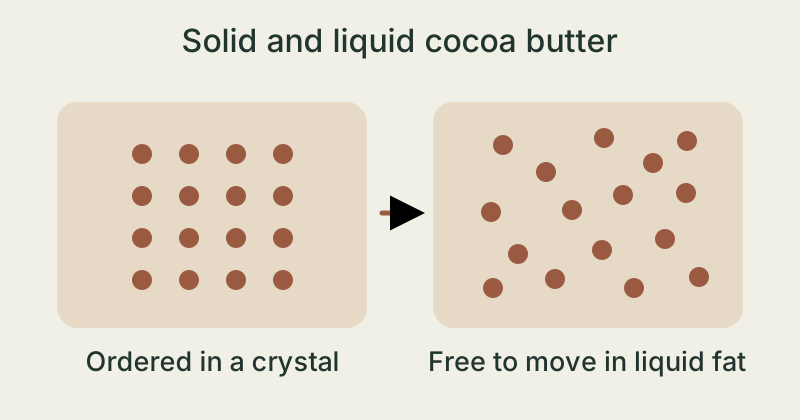
The shape of the crystals makes a difference
Cocoa butter can form several types of crystal. During tempering, chocolate is warmed and cooled in a controlled way. This encourages the crystal form that makes chocolate glossy and gives it a crisp snap at room temperature.
This crystal form melts at around 32 to 34 °C. The temperature at which a particular piece softens also depends on its ingredients. Chocolate usually melts faster in your warm mouth than in your hand.
Compare two pieces from the same bar
- Get two equal-sized pieces from the same bar of chocolate. Both should be about the same temperature to start with.
- Put one on a dry plate and hold the other on your open palm. Wait for one minute without rubbing or pressing the piece.
- Put the piece from your hand beside the other. Compare their undersides. Is one softer or shinier? If you see no difference, try again with two thinner pieces.
All you need for this activity is your hands and a plate. Wash your hands afterwards.
The takeaway
Heat moves from your hand into the chocolate. As the cocoa butter melts, the piece becomes less firm.
What turns to liquid as the chocolate warms?
Sources & further reading
Library of Congress · Why does chocolate melt in your hand? ↗Purdue University Extension · Cocoa Processing: Tempering ↗Our stories explain the main idea in our own words. Pictures and models simplify reality and are not drawn to scale.