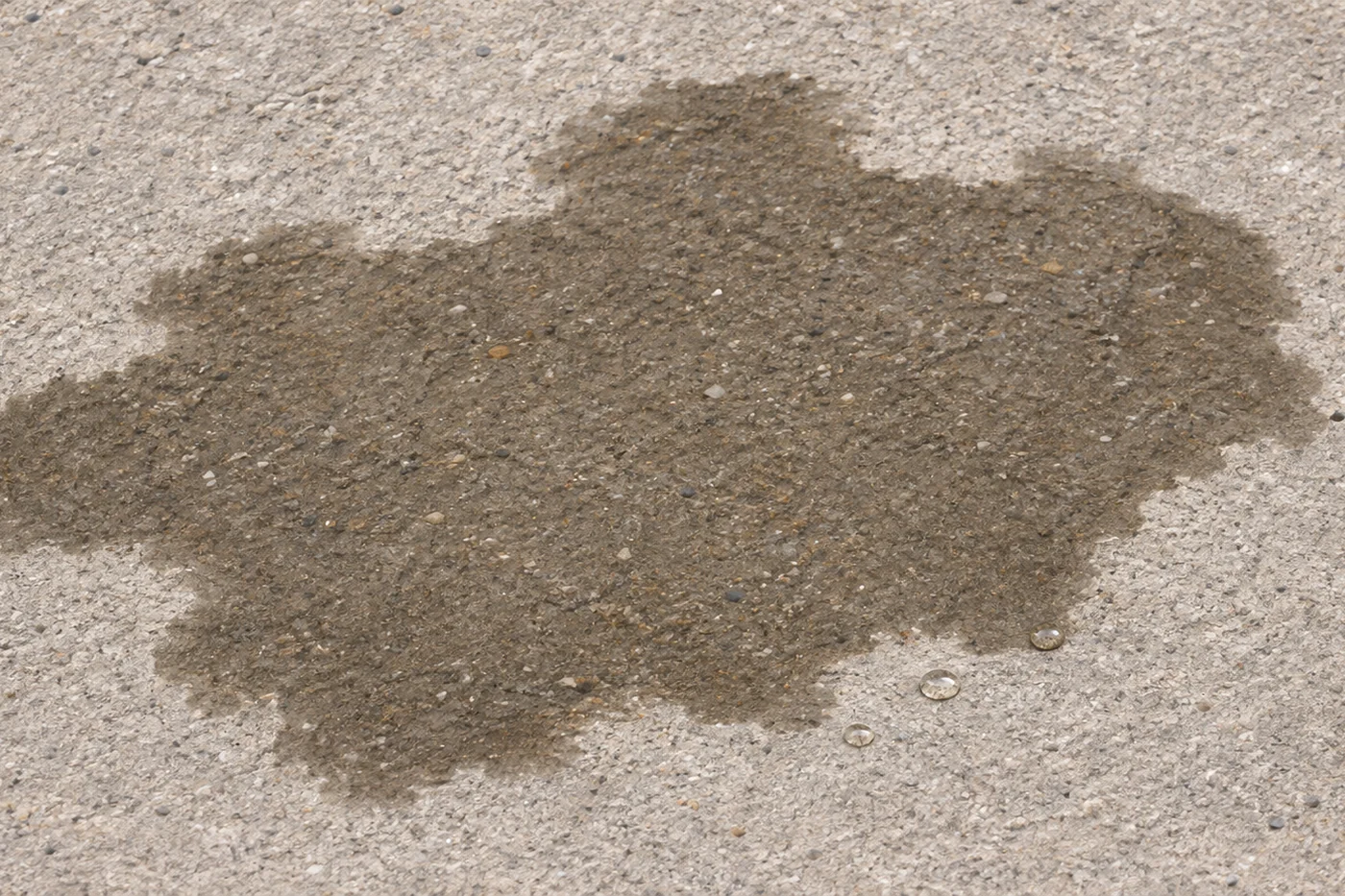
A thin film of water can send some light back toward the concrete. The concrete then absorbs more light. When less light from the wet patch reaches your eyes, it looks darker.
The first raindrops land on the sidewalk. A dark patch forms around each drop. Right beside it, the very same slab is still light gray. How can clear water make such a difference?
Dry concrete scatters light
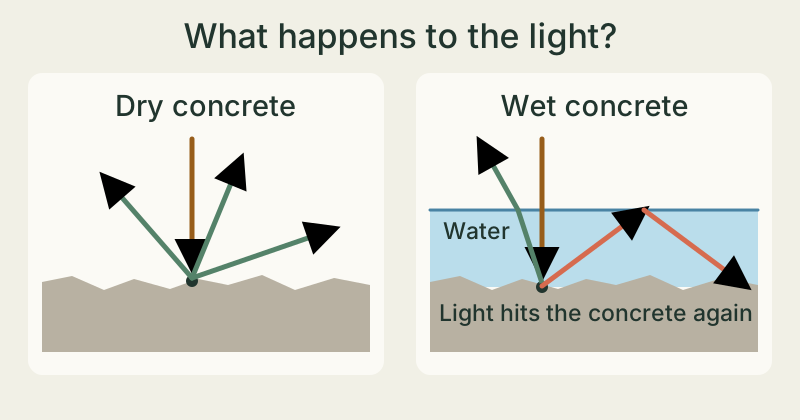
A paving slab is rough. Even a spot that looks flat has tiny ridges and dips. When light hits it, the concrete absorbs some and reflects the rest in many directions. Some of that scattered light reaches your eyes.
Water sends some light back
A thin film of water can sit on top of wet concrete. Some light passes through the water, hits the concrete and bounces back. Light that then strikes the water surface from below at a shallow angle can bounce entirely back into the water. This is called total internal reflection.
The light that bounces back hits the concrete again, giving the concrete another chance to absorb some of it. Less light from the concrete reaches your eyes. In a porous material, water can also fill tiny air gaps and change how light scatters inside.
A wet patch can still shine
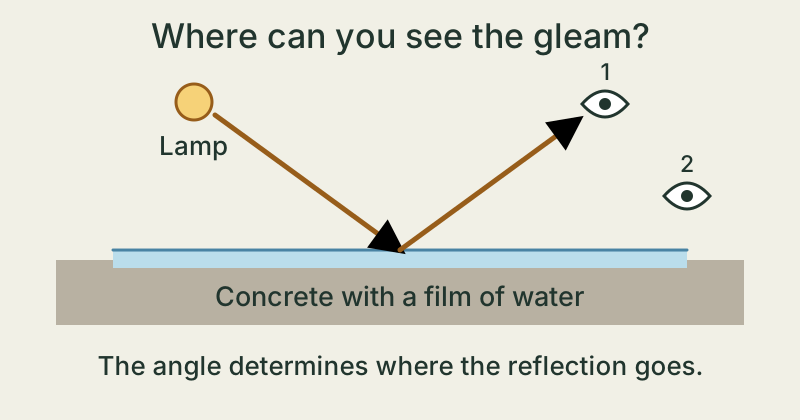
The water surface can also reflect light directly, before it ever reaches the concrete. If you stand where the reflection of a lamp or the bright sky reaches your eyes, you see a bright gleam. Take a step to the side and the same patch may look dark again.
Compare two spots on the same slab
- Find a dry, rough paving slab in a quiet spot. Use a spoon to put a few drops of water on one spot and leave the spot next to it dry.
- Look at both spots at once without casting your shadow over them. Which looks darker? Now look across the slab at a shallower angle. Can you see a gleam anywhere?
- Once the patch dries, go back to your first viewing angle. Can you still see a difference?
Stay away from traffic and use just a few drops so the pavement doesn't get slippery.
The takeaway
Water changes the paths light takes. Rough concrete can absorb more light, while the water surface can shine brightly from certain angles.
Why does the wet patch look darker from many angles?
Sources & further reading
Lekner & Dorf · Why Some Things Are Darker When Wet (Applied Optics) ↗Jensen, Legakis & Dorsey · Rendering of Wet Materials (MIT) ↗Our stories explain the main idea in our own words. Pictures and models simplify reality and are not drawn to scale.