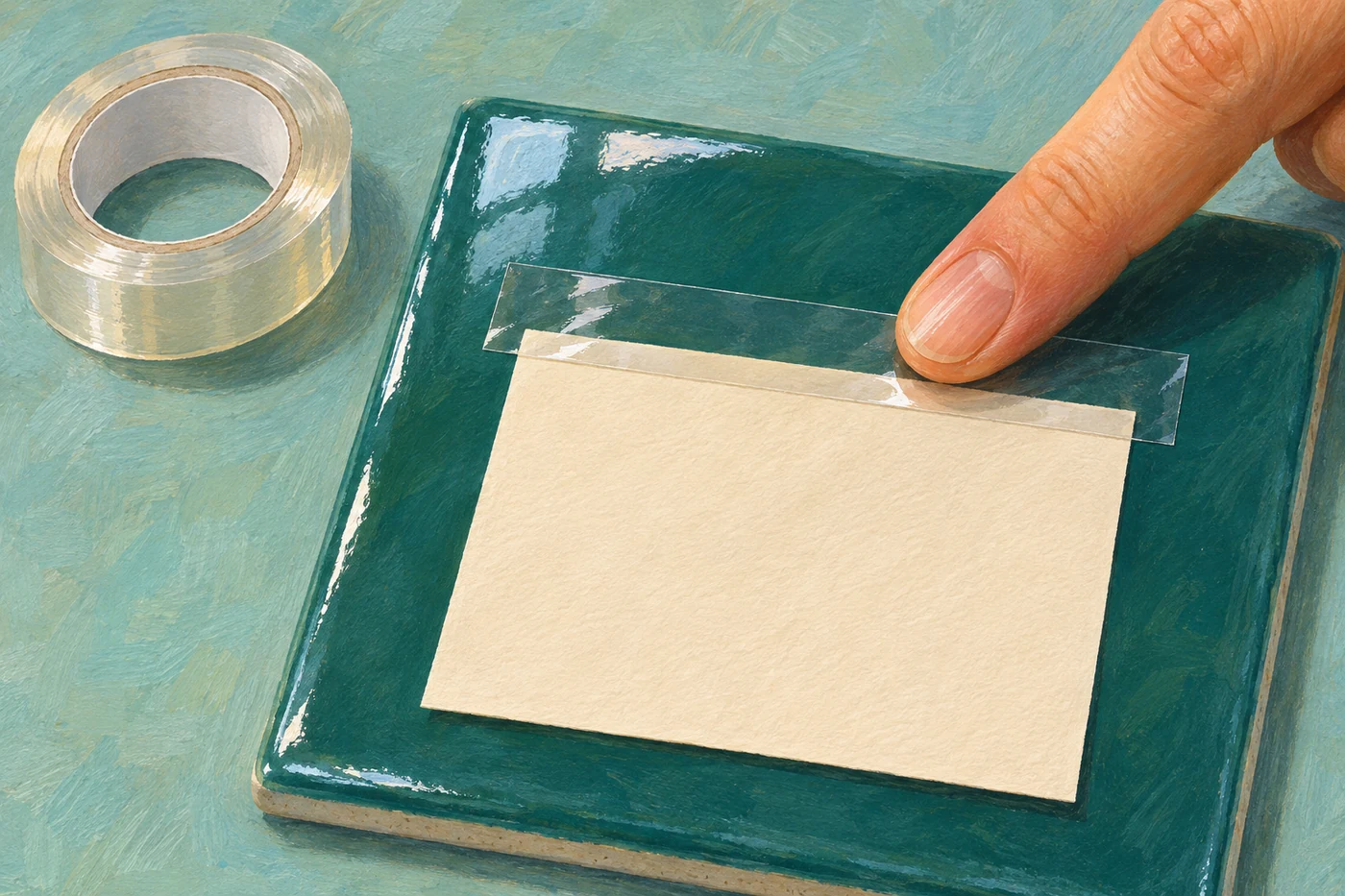
A soft adhesive coats the underside of the tape. When you press it down, the adhesive fits around many tiny bumps. Where it comes very close to the surface, tiny forces pull the two together. That lets the tape grip soon after you press it down.
A piece of tape holds a note in place as soon as you run your finger over it. With liquid craft glue, you often have to wait for it to dry. Why does tape work so quickly?
Tape has two layers
On many clear tapes, a thin film gives the tape its shape. Underneath is an even thinner layer of pressure-sensitive adhesive. It stays soft and tacky at room temperature.
The film makes the tape easy to handle and unroll. The adhesive layer holds it against a surface such as paper or a smooth tile.
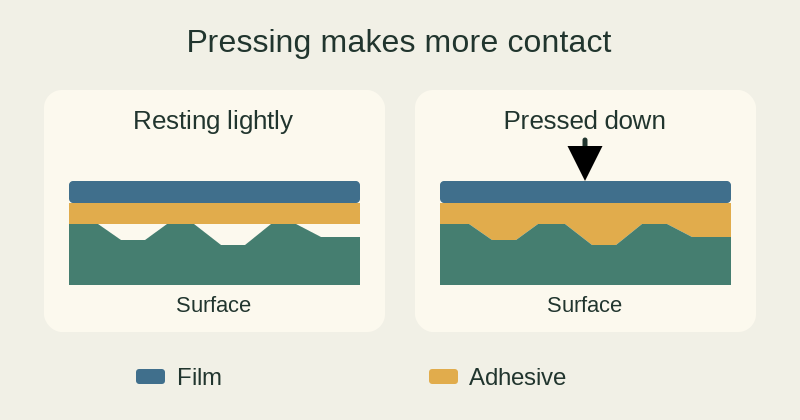
Pressing brings the adhesive closer
Even a surface that looks smooth can have tiny bumps and dips. If you rest the tape lightly on it, the adhesive may touch only the highest spots at first.
When you press down, the soft adhesive fits the shape of the surface more closely. That makes more spots where the two touch. At those spots, the tiny building blocks in the adhesive and the surface can attract one another.
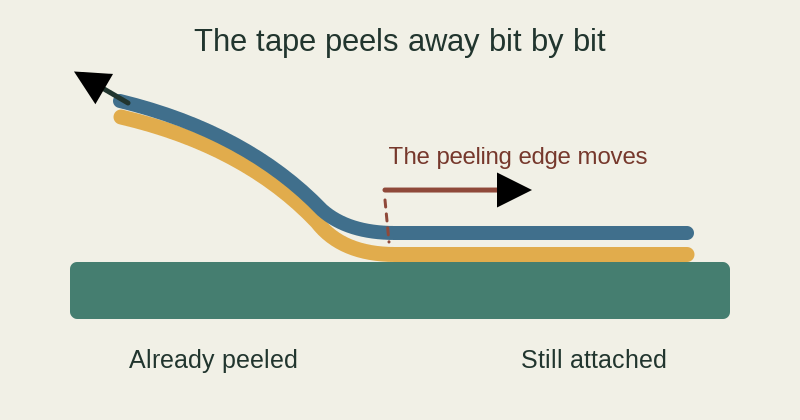
The tape peels away from an edge
Pull on a corner and a narrow strip comes free first. Then the place where the tape lifts away moves across the surface. The adhesive can stretch as this happens.
With many kinds of tape, the adhesive holds together well enough to stay on the film when you peel it off. Some tapes can leave a bit of adhesive behind, depending on the surface.
Compare resting the tape and pressing it down
- Take two equal strips of ordinary clear tape from the same roll. Fold a short end of each strip back on itself, sticky side to sticky side, to make a tab you can grip.
- Lay the strips next to each other on a clean, dry tile with the tabs sticking up. Press down just one strip with three slow strokes of your finger.
- Wait a moment, then use the tabs to peel the strips off slowly, one at a time. Hold each tab at about the same angle to the tile. Which strip comes off more easily?
- If you barely notice a difference, try again with two new pieces. Some tapes grip quite well even when you lay them down lightly.
Use a smooth tile with no sharp edges. Keep the tape on the tile for this activity.
The takeaway
Pressing helps the soft adhesive make close contact with the surface in more places. That can give tape a quick, firm grip.
What happens to the adhesive when you press the tape down?
Sources & further reading
Royal Society of Chemistry · Peeling of pressure-sensitive adhesives ↗tesa · How pressure-sensitive adhesives work ↗3M · Common Chemistry of Pressure Sensitive Adhesive Tapes ↗Our stories explain the main idea in our own words. Pictures and models simplify reality and are not drawn to scale.