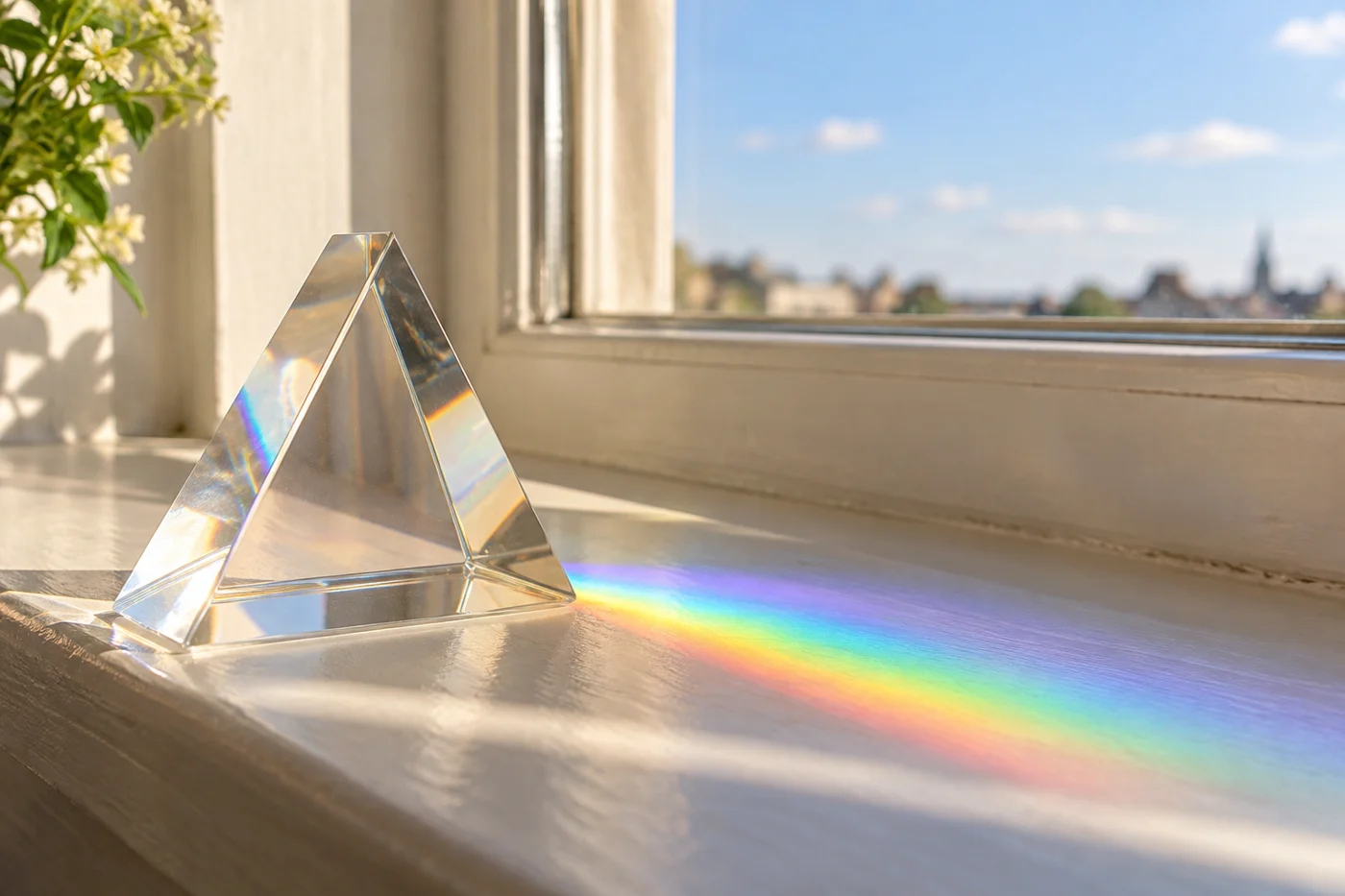
Raindrops bend sunlight, reflect some of it inside and let it out again. Along the way, different colours are sent in different directions.
A rainbow feels like a little reward after a shower. But nobody is painting an arc in the air. Sunlight, water droplets and your viewing position are enough to make the colours visible.
A droplet redirects light
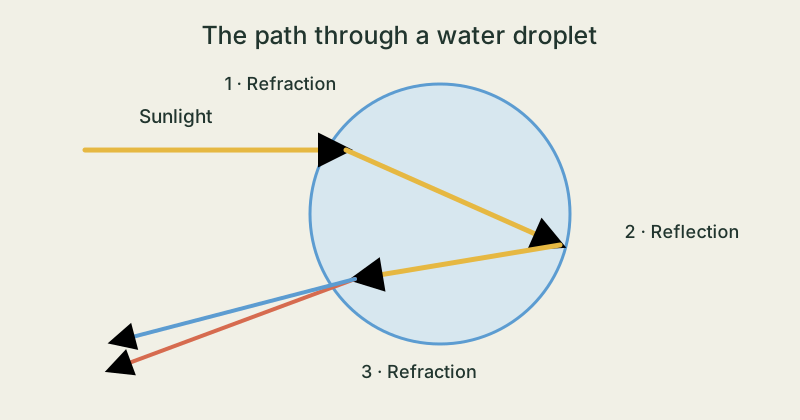
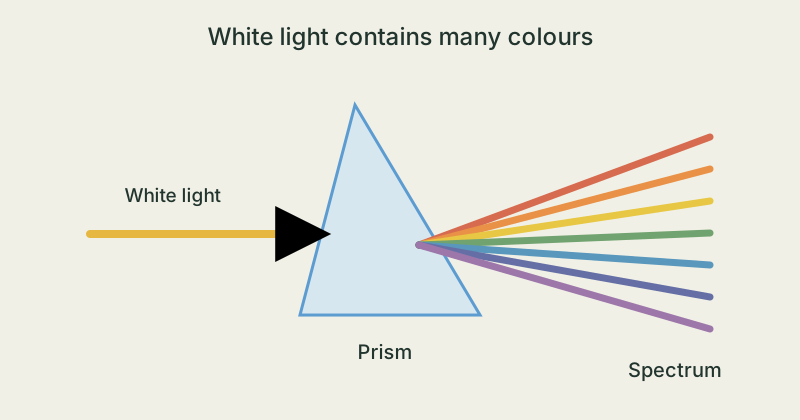
Sunlight is a mixture of many colours. As light enters a water droplet, its direction changes. This is called refraction. Some of the light reflects from the back inside the drop and bends again when it leaves.
The colours are bent by different amounts, so the light no longer leaves as exactly the same white mixture. A visible rainbow requires lots of droplets sending the right parts of that light toward your eyes.
Why do we see an arc?
The Sun needs to be behind you and the droplets in front. From your position, the colours reach you at particular angles. The droplets in the right directions form a circle around the point opposite the Sun.
From the ground, the lower part is usually hidden, leaving an arc. From high above the ground, a complete circular rainbow can sometimes be seen. A rainbow does not have a fixed location where you can walk up and touch its end.
Seven colours or many more?
We often name seven colours: red, orange, yellow, green, blue, indigo and violet. In reality, they blend continuously into one another. Seven names are a useful description, rather than seven sharply separated bands.
In the usual primary rainbow, red is on the outside and violet on the inside. Sometimes a fainter second bow appears above it. Its light has reflected twice inside the droplets, and its colours run in the opposite order.
Make a tiny garden rainbow
- Choose a sunny morning or late afternoon and stand with the low Sun behind you.
- Use a spray bottle to make a fine mist in front of you.
- Slowly change your viewing angle and look for colours in the mist.
Do not look into the Sun. Keep spray away from people, sockets and devices, and avoid slippery floors.
The takeaway
A rainbow needs light, droplets and the right viewpoint. Its colours are already part of sunlight.
Where is the Sun when you see a rainbow ahead?
Sources & further reading
Met Office · Rainbows: optical wonders ↗NOAA National Weather Service · How Do Rainbows Form? ↗Our stories explain the main idea in our own words. Pictures and models simplify reality and are not drawn to scale.