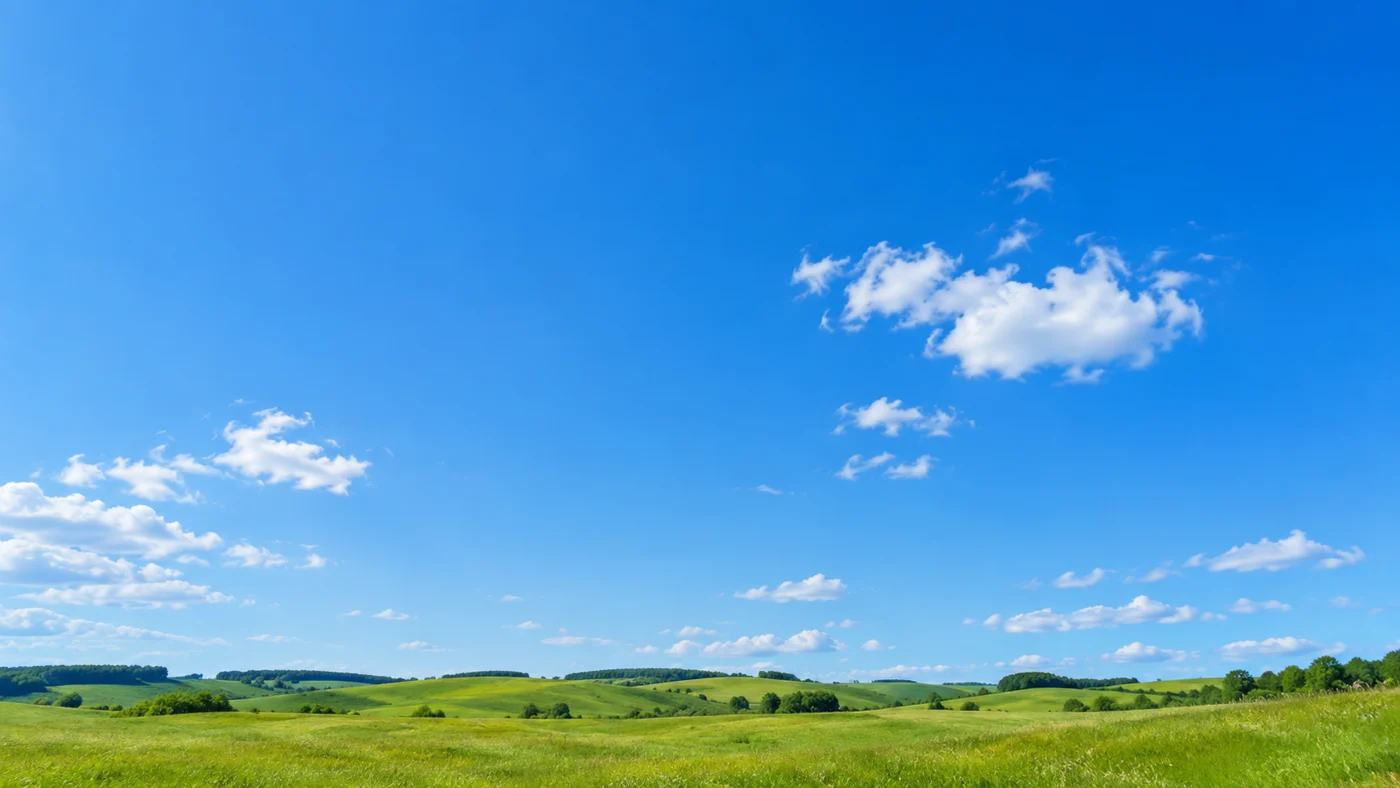
Tiny air molecules redirect sunlight in many directions. Blue light is scattered especially strongly, so it reaches our eyes from all across the sky.
Through a window, on a walk or from a park bench, blue is almost everywhere above you on a clear day. The air does not need blue paint to do this. It simply redirects sunlight in a particular way.
White light is a mix of colours
Sunlight contains many colours. Together, they look approximately white to our eyes. A prism can separate that mixture and make it visible. The colours have different wavelengths: blue light has shorter waves than red light.
There is no complicated formula to remember here. The useful idea is that different colours can behave differently when light encounters something. Some colours get redirected more strongly than others.
Air spreads the blue around
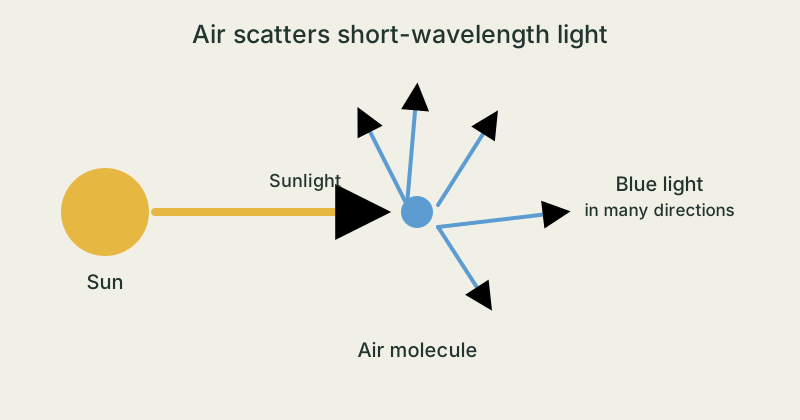
In the atmosphere, light encounters tiny molecules, mainly nitrogen and oxygen. Some of it is scattered, which means sent off in new directions. These very small particles scatter short wavelengths especially strongly.
Look at a patch of sky away from the Sun and plenty of that scattered blue light reaches your eyes. It comes from many directions. Air is not a roof painted blue: it distributes the light that we perceive as blue.
Violet light scatters even more strongly. Yet the sky does not look violet: sunlight contains less violet, and our eyes respond more strongly to blue. The colour we see depends on our eyes too.
Why does sunset turn red?
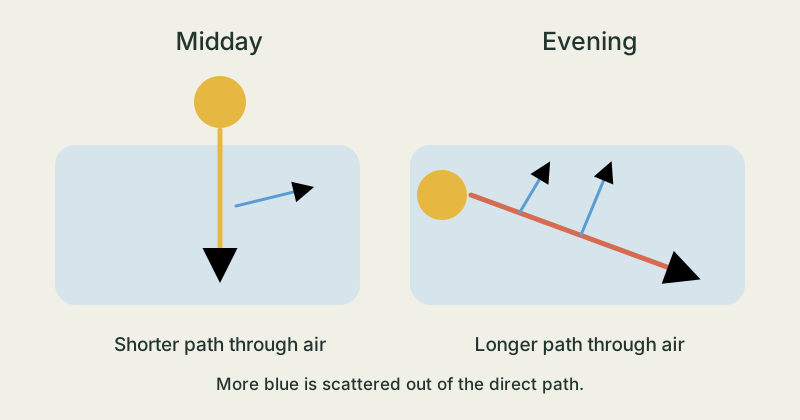
When the Sun sits low, its light travels farther through the atmosphere. Much of the blue gets scattered away from the direct path along the way. Reds and oranges become more prominent in the sunlight that makes it through toward you.
Clouds, dust and other particles can alter the colours too. That is why no two sunsets look exactly alike. The sky is a light show that changes with the route light takes and the condition of the air.
Notice the sky
- On a clear day, look at a patch of sky well away from the Sun.
- Compare its colour with the sky near the horizon.
- Observe the sky again in the evening and note which colours have changed.
Never look directly at the Sun, even through sunglasses or a camera.
The takeaway
Blue sky is scattered sunlight. At sunset, a longer path through the air changes the colours.
Is the sky blue because it reflects the sea?
Sources & further reading
NASA Space Place · Why Is the Sky Blue? ↗Met Office · Why the sky is blue and sunsets red ↗Our stories explain the main idea in our own words. Pictures and models simplify reality and are not drawn to scale.