Heating raises the pressure of water vapour inside a popcorn kernel. Eventually its tough hull ruptures. Vapour expands rapidly and puffs up the softened starch. Cooling leaves a light flake.
A golden kernel and a white piece of popcorn hardly look like the same thing. Where does all the white material come from? Let's imagine looking inside a kernel. For our own observation, we will use only ready-made popcorn that has cooled completely.
A kernel with stored supplies
A popcorn kernel is a seed. Beneath its tough outer hull is plenty of starch, part of the seed's food supply. Water is also distributed inside, even though the outside feels dry.
Our diagram greatly enlarges this structure. Blue symbols represent moisture. A real kernel does not have one large blue water bubble in its centre.
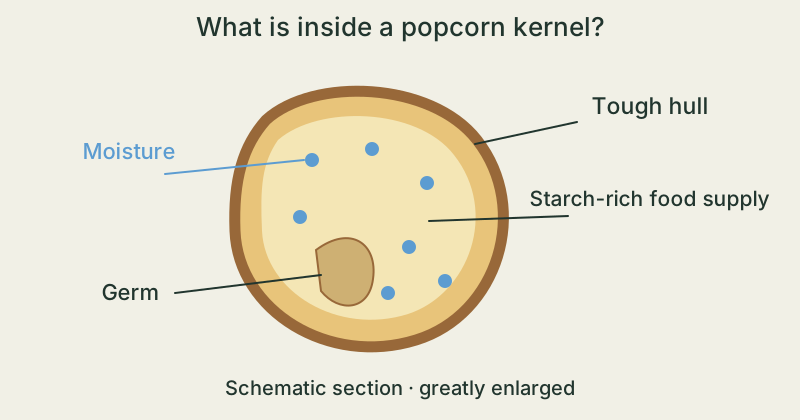
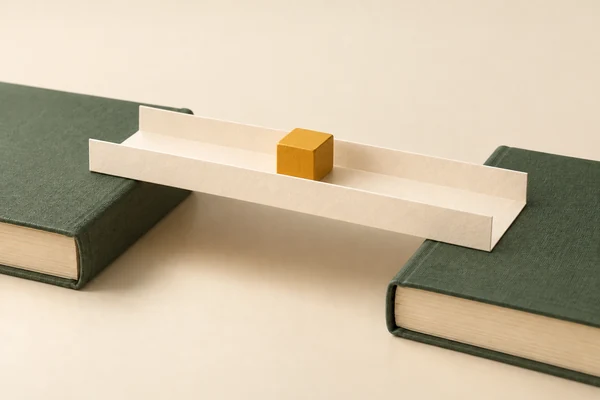
The hull holds back the pressure
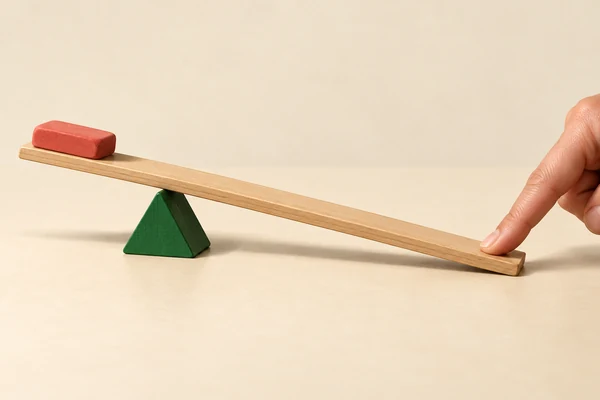
As the kernel gets hot, the water vapour pressure inside rises. At first the tough hull withstands it. The pressure stresses the hull until it splits open. Just before that happens, much of the water is still liquid.
Water therefore does not have to turn completely into vapour at 100 degrees Celsius in every setting. Its boiling behaviour depends on pressure. In one published study, most kernels popped at about 180 degrees Celsius. That is a research explanation, not a temperature instruction for our observation.
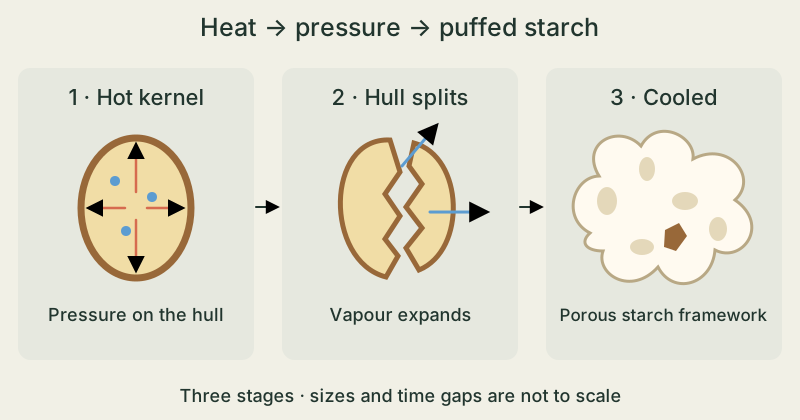
Starch becomes a porous framework
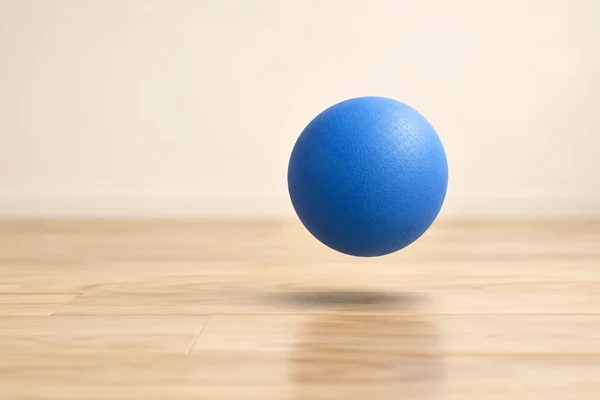
When the hull opens, the pressure inside drops quickly. Water vapour expands, and more of the hot water can vaporize. Starch softened by heat and moisture is puffed up in the process.
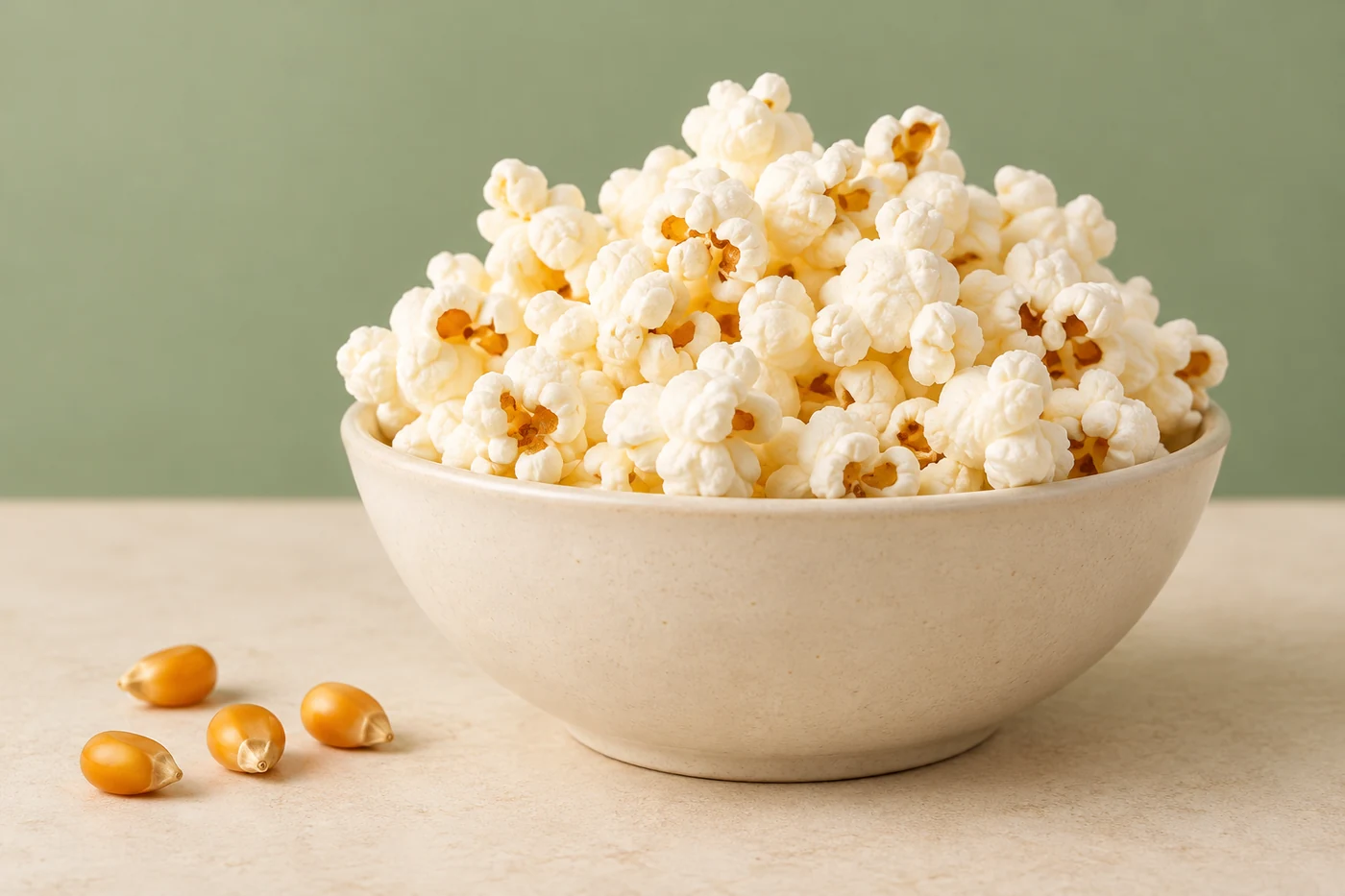
As it cools, the starch framework becomes firm. Many cavities make the flake airy. The pale material comes from inside the kernel: it is mainly expanded starch. Becoming bigger does not mean extra starch has suddenly appeared.
Every flake looks a little different
Some pieces are fairly round, while others have irregular projections. Small brown hull fragments are often still visible. Large flakes come from special popcorn varieties; ordinary corn does not simply give the same result.
What about the audible pop? Researchers Virot and Ponomarenko compared slow-motion images with sound recordings. Their results support the idea that rapidly escaping water vapour triggers the sound. The hull breaking and the sound are therefore not simply the same event.
Look closely at a kernel and a flake
- Ask an adult to put three unpopped popcorn kernels and three ready-made, completely cooled pieces of popcorn on a clean tray. Nothing is heated for this observation. Draw two columns on paper: kernel and flake.
- Look at all six pieces, using a hand lens if helpful. Describe their colours and outlines. Can you find a brown hull fragment or visible hollows on a flake? Draw one kernel and one flake. Do not cut or crush them.
- Arrange each group loosely side by side and compare the space they occupy. Record differences and things you cannot tell by looking. These pieces are not matched before-and-after pairs. This comparison measures neither pressure nor water content nor an exact volume ratio. The adult clears everything away afterward.
Observe with an adult. Keep kernels and popcorn on the tray and out of mouths, noses and ears. Keep them away from small children and animals. Account for known food allergies. Use no heat, cooking equipment or sharp tools.
The takeaway
Water, starch and a tough hull work together inside a kernel. Heat raises the vapour pressure, the hull splits and the starch puffs up. Cooling leaves a porous flake.
What makes a popcorn flake so big as it pops?
Sources & further reading
American Chemical Society · The Secret Science of Popcorn ↗Science World · Exploding Kernels ↗OpenStax · Chemistry 2e: Phase Transitions ↗Virot & Ponomarenko · Popcorn: critical temperature, jump and sound (2015, PDF) ↗Our stories explain the main idea in our own words. Pictures and models simplify reality and are not drawn to scale.