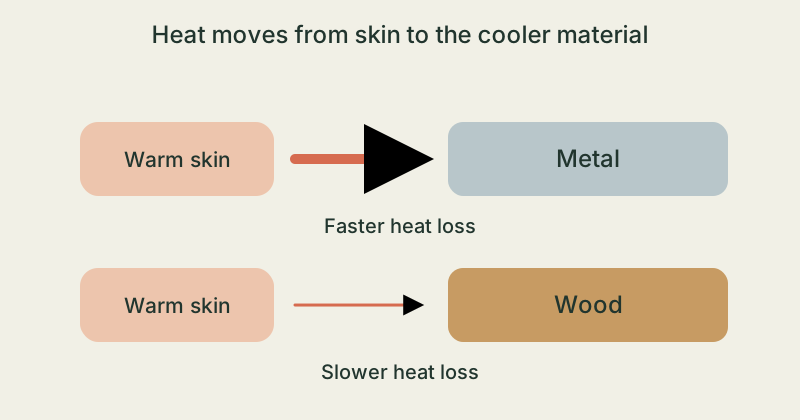
Metal conducts heat better than wood. When both are cooler than your skin, your hand loses heat faster to metal. That makes it feel colder, even though both objects can have the same temperature.
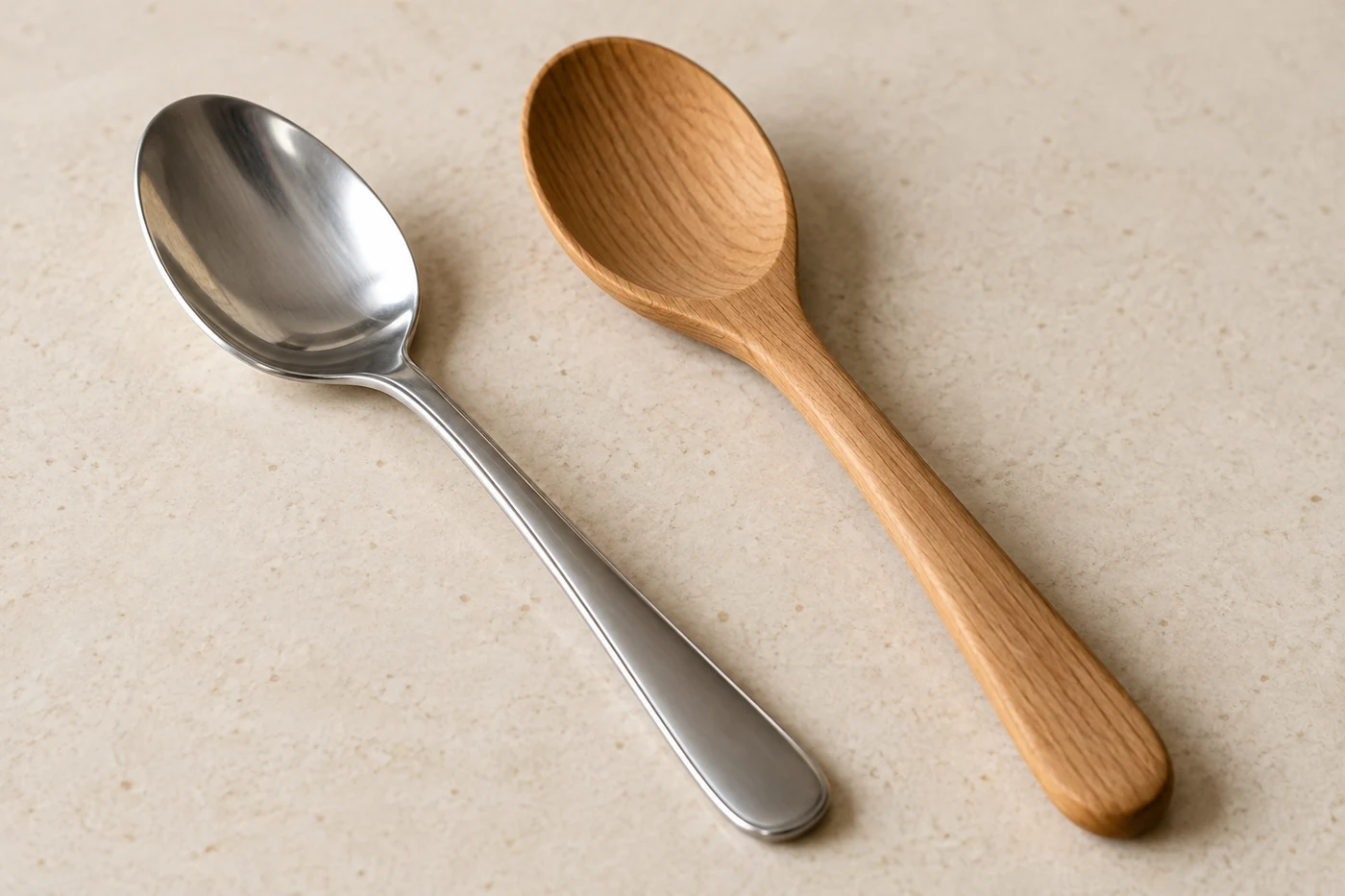
Touch a metal spoon and a wooden spoon that have been sitting indoors for a long time. The metal often feels much cooler. Has it secretly cooled down? A thermometer and your hand tell you different things here.
Same temperature, different feeling
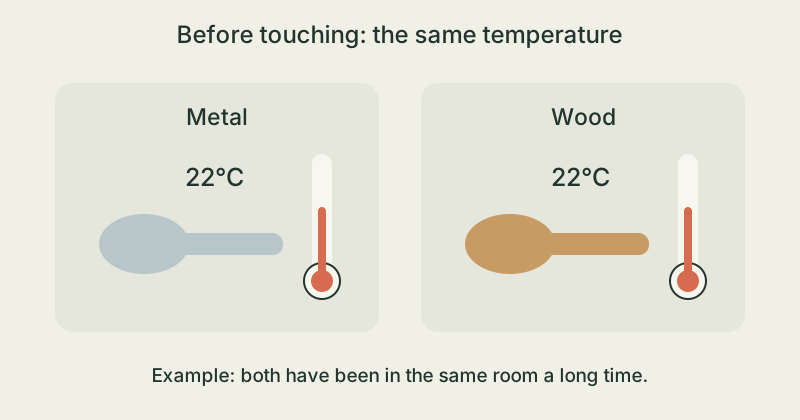
In a room with a steady temperature, the spoons gradually approach room temperature. Away from sunlight, heaters and other heat sources, metal and wood can be equally warm before you touch them. We call this thermal equilibrium.
Your skin is usually warmer than the objects in a fairly cool room. Touching a spoon therefore starts an exchange: heat moves from your hand into the spoon. How quickly this happens affects what you feel.
Metal carries heat away faster
Conduction is the transfer of energy through contact and through a material. Metal conducts heat well: energy spreads quickly from the contact point into other parts of the spoon. Your skin loses energy faster there and cools more.
Wood conducts heat much more slowly. The small patch beneath your finger warms up, but energy spreads away more slowly. Your skin therefore loses less heat. Wood still conducts some heat; it just slows the transfer more.
There is no special substance called cold flowing from the metal into your hand. What matters is how quickly heat leaves your warmer hand.
Your hand is not a thermometer
A suitable thermometer measures temperature. What you feel also depends on the material, the contact and the condition of your skin. Feeling colder does not prove that an object has a lower temperature.
Heat can travel the other way too: if an object is hotter than your skin, heat enters your hand. A good conductor such as metal can then feel especially hot. Never test hot objects with your hand.
Compare two spoons
- Leave a clean metal spoon and a smooth wooden spoon in the same room for several hours, away from sunlight and heaters. They should be dry and safely at room temperature. Predict which will feel colder.
- Briefly touch a similar-sized patch on each spoon with a dry finger. Compare the first feeling. Which feels cooler? Write down your observation.
- Leave the spoons alone again and let your hand rest. Later, compare them in the opposite order. Does the impression stay similar? A suitable contact thermometer can also check the surface temperatures; the feeling alone cannot prove them.
Use only smooth, undamaged spoons known to be at room temperature. No hot or frozen objects, stove or hot water. Young children should observe with an adult.
The takeaway
Objects at the same temperature can feel different. Metal takes heat from your warmer hand faster than wood does.
Both spoons are at 22°C and cooler than your skin. Why does the metal feel colder?
Sources & further reading
Exploratorium · Cold Metal ↗OpenStax University Physics · Mechanisms of Heat Transfer ↗OpenStax University Physics · Temperature and Thermal Equilibrium ↗Our stories explain the main idea in our own words. Pictures and models simplify reality and are not drawn to scale.