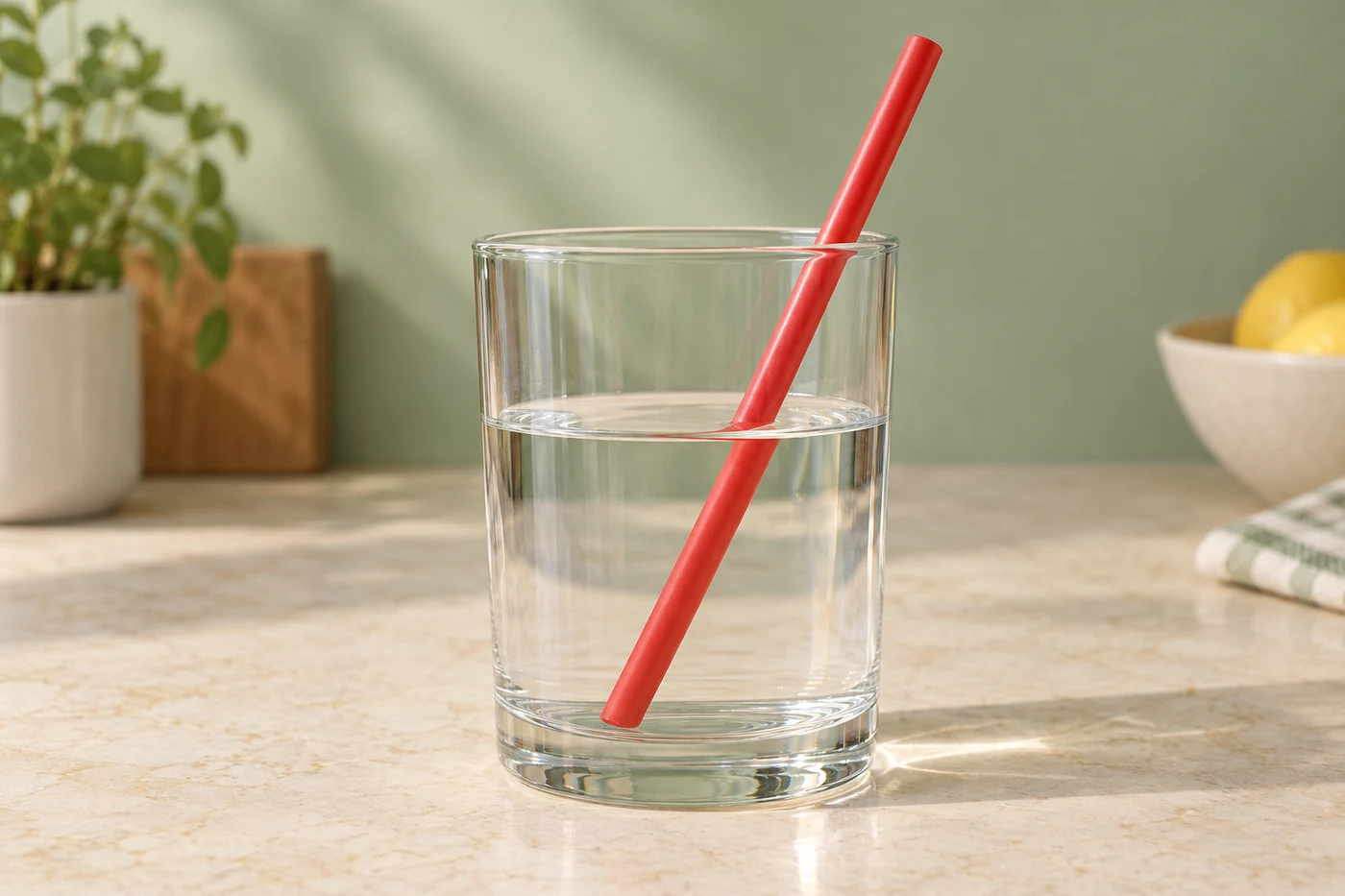
Light from the submerged part changes direction on its way to your eyes. This is refraction. It makes that part appear in a different position. The straw itself stays straight.
A straight straw rests at an angle in a glass of water. At the waterline, it suddenly looks shifted or bent. Lift it out and the bend disappears. What changed? The route taken by the light.
Light changes direction
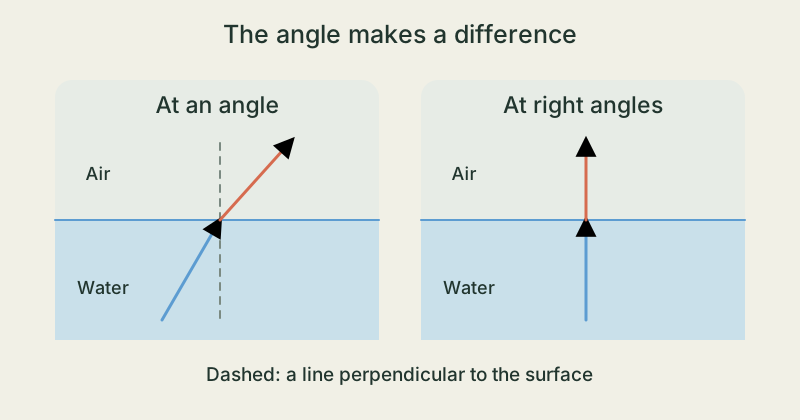
We see the straw because light from it reaches our eyes. Light travels more slowly in water than in air. When it crosses between them at an angle, it changes direction.
This change is called refraction. A ray crossing a flat water surface exactly at right angles is not deflected sideways.
A different position in the image
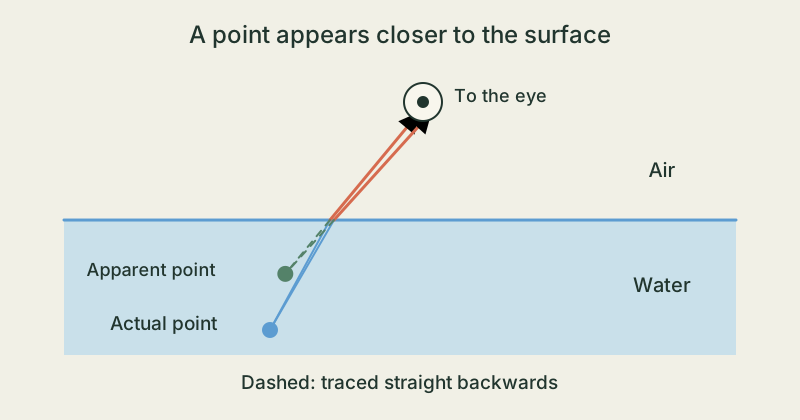
Our vision places an object in the direction from which its light arrives. After refraction, tracing that incoming light straight backwards does not necessarily lead to the object's real position.
Viewed from above, a point below a flat water surface appears closer to the surface. The submerged section of a tilted straw can therefore seem misaligned with the upper section. Viewed through the glass wall, the wall's shape and refraction can also shift or enlarge the image.
Your viewing angle matters
Move slowly around the glass. The apparent shift may change even though the straw stays still. Depending on your view, it can look more bent, less bent or hardly bent at all.
Our drawings show only a flat boundary between water and air. A round glass adds more boundaries. Its image will not exactly match this simple model.
Compare the straw with its image
- Put an undamaged transparent cup containing a little water on a tray. First check that your rigid drinking straw is straight. Rest it at an angle in the cup, with part of it underwater.
- Keep the straw still. Look from the side and then slightly from above. Slowly move a short way around the cup. Sketch how the two sections appear to line up.
- Take the straw out and check its shape again. Compare it with your sketches. The sketches record your views from different directions; they do not measure refraction angles.
Use a little room-temperature water and a cup without sharp edges. Keep the tray away from electrical devices. Do not drink the experiment water. Children should observe with an adult.
The takeaway
Refraction changes the apparent position of the wet section. It does not bend the straw.
Why can the straw look shifted at the waterline?
Sources & further reading
OpenStax Physics · Refraction ↗OpenStax University Physics Volume 3 · Images Formed by Refraction ↗The Physics Classroom · The Broken Pencil ↗Our stories explain the main idea in our own words. Pictures and models simplify reality and are not drawn to scale.