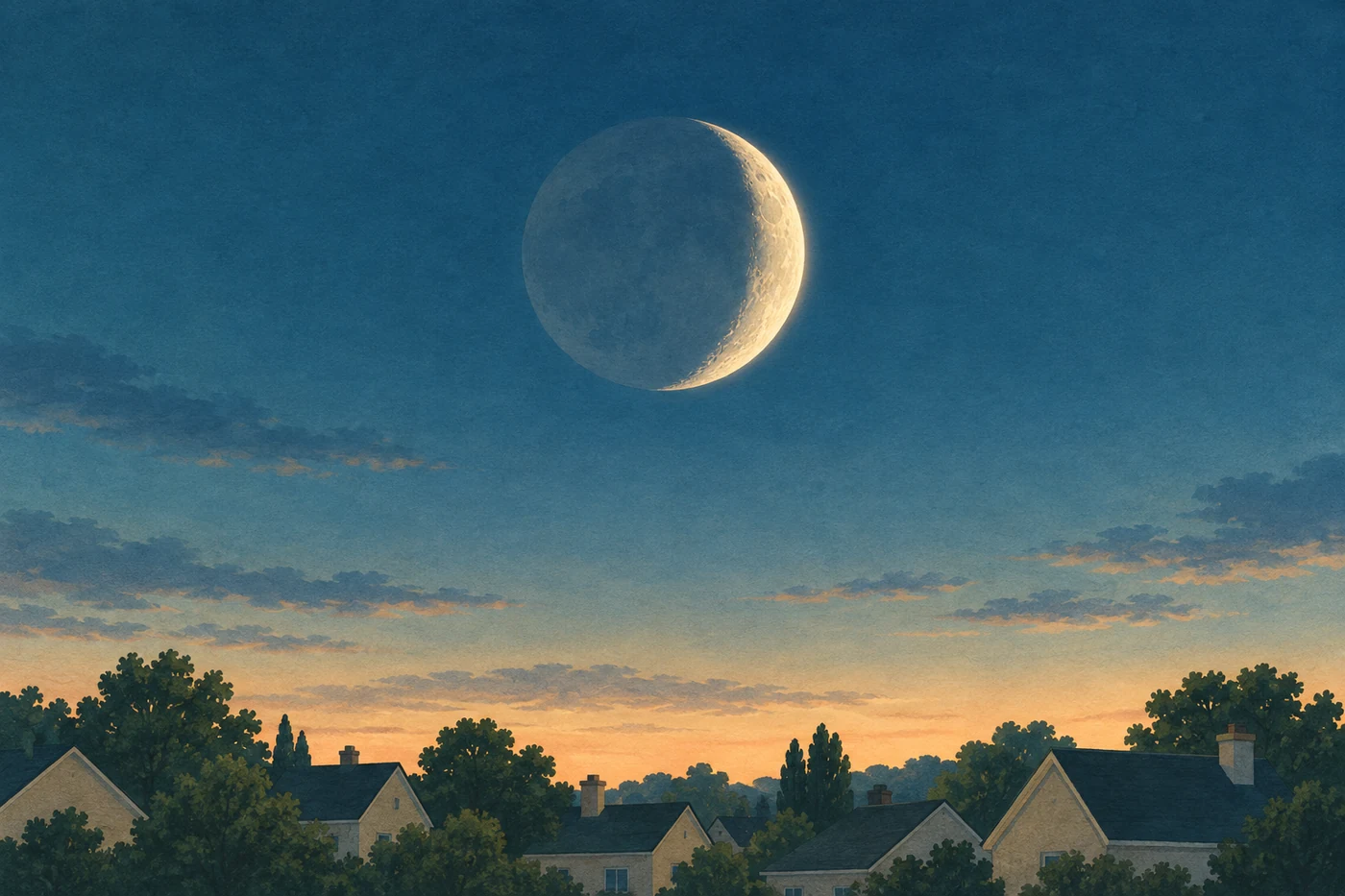
The Moon does not change its shape. The Sun lights half of its globe. As the Moon travels around Earth, we see different amounts of that sunlit half. These changing views are called the Moon's phases.
No pieces of the Moon need to disappear and grow back. What matters is the light and our viewing direction.
Moonlight comes from the Sun
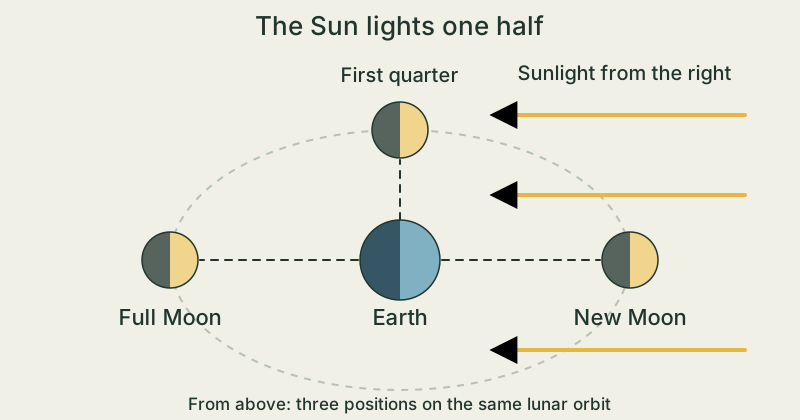
The Moon does not generate its own light like the Sun. Its surface reflects sunlight. Except during an eclipse, roughly half of the Moon's globe is sunlit and the other half is on its night side.
Even when we see a thin crescent, the whole Moon is still there. We see only a small part of its directly sunlit half.
Our view changes
The Moon moves around Earth. This changes the angle between the Sun, the Moon and us.
At new Moon, the Moon is roughly in the Sun's direction as seen from Earth. Its lit side points mostly away from us. At full Moon, it is roughly opposite the Sun; we look almost straight at its entire day side.
From crescent to full Moon and back
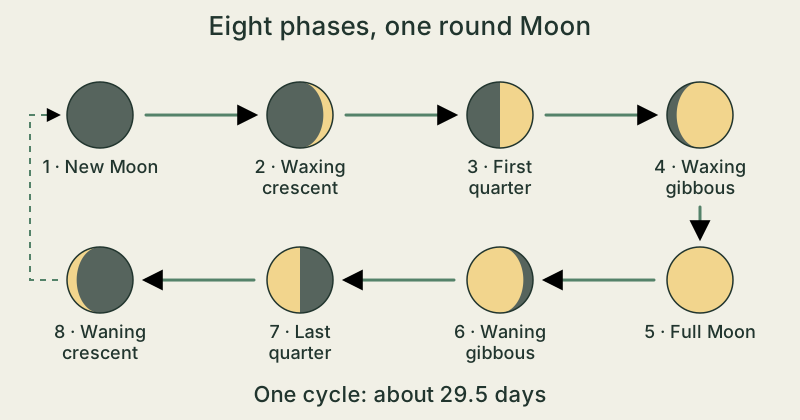
After new Moon, the visible sunlit area grows: the Moon is waxing. After full Moon, it shrinks: the Moon is waning. At first and last quarter, half of the visible disk is bright.
It takes about 29.5 days to go from one new Moon to the next. The phases change continuously. Depending on your location and observing time, the crescent may look rotated in the sky.
Is the dark part Earth's shadow?
The ordinary phases are not caused by Earth's shadow. The dark area is the portion of the Moon's night side that we can currently see.
Earth's shadow reaches the Moon during a lunar eclipse. This requires a full Moon and the right alignment. The Moon's orbit tilts by about five degrees relative to Earth's orbital plane, so most full Moons pass above or below Earth's shadow.
Keep a little Moon journal
- With an adult, choose a safe spot on the ground or behind a closed window with a clear sky view. Draw seven equal-sized circles on paper as templates, one for each observing day. Have a pencil ready.
- For a week, briefly look for the Moon after sunset at roughly the same clock time. If you see it, draw the bright portion as it actually appears. Record the date, time and clouds. If it is not visible, write that down; do not draw a guessed phase.
- Compare your own drawings: is the bright area growing or shrinking? Some days show only a small change. Not seeing the Moon does not automatically mean new Moon: clouds, buildings or its position below the horizon can hide it. Too few observations leave the result undecided.
Observe with your unaided eyes from a safe place. Do not climb onto roofs, walls or windowsills, or stand in roads. Children should observe with an adult. Do not use binoculars or telescopes for this activity. Never look at the Sun or search for the new Moon near it; this observation takes place only after sunset.
The takeaway
The Moon stays a globe. Its phases show how much of the sunlit half we can see. The cycle takes about 29.5 days. A lunar eclipse is a different event.
Why does the Moon sometimes look like a half circle?
Sources & further reading
NASA Science · Moon Phases ↗NASA Space Place · What Are the Moon’s Phases? ↗ESA Space for Kids · Moon phases ↗NASA Science · Eclipses and the Moon ↗Our stories explain the main idea in our own words. Pictures and models simplify reality and are not drawn to scale.