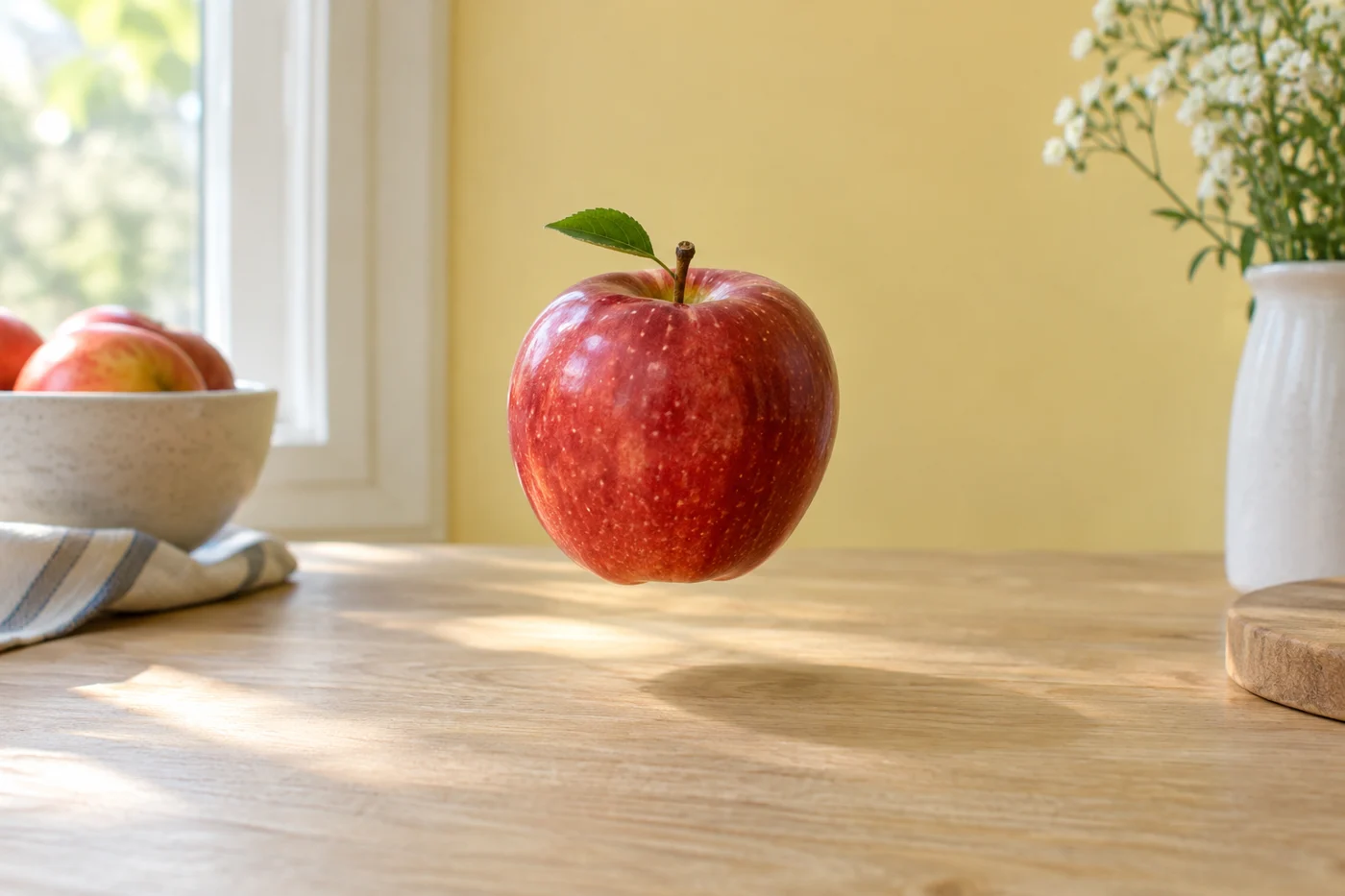
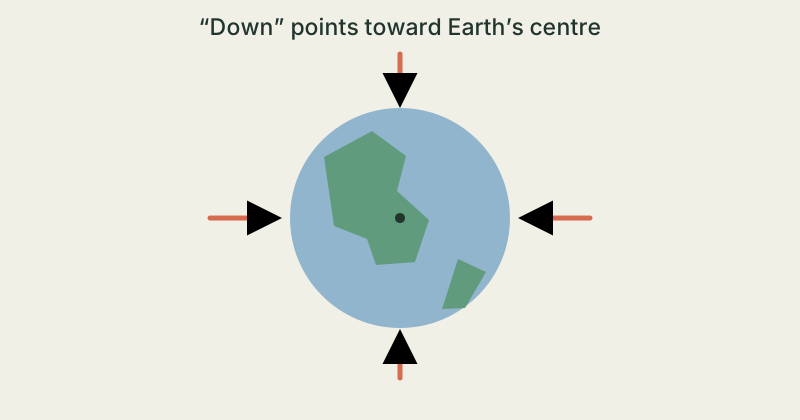
Earth attracts things that have mass. This attraction is called gravity. Here, “down” means toward the centre of the Earth.
Let go of a ball and you already know where to look: down. This is so familiar that we hardly notice it. Yet the force moving your ball also helps keep the Moon in its orbit around Earth.
Earth pulls on you
Objects with mass attract each other. Earth has an enormous amount of mass, so its attraction is strong enough for us to feel every day. It gives us weight and pulls an unsupported object toward the ground.
You also pull on Earth. The force is mutual, even if that sounds surprising. Because Earth is so massive, its motion changes by a fantastically tiny amount. We notice the ball falling, not the planet jumping up to meet it.
What does down actually mean?
On a round planet, down points roughly toward Earth's centre wherever you stand. People on the other side of the world are held to their ground just as you are. They do not need to hang on, and they do not fall off the planet.
A ball resting on a table has not started falling because the table supports it. Remove that support and gravity can change its motion. As it falls, it speeds up until other forces, such as air resistance, balance the pull.
Do heavier things fall faster?
A stone often lands before a feather. Here, the important difference is the air. A feather has a large area and little mass, so air slows it strongly. Without air resistance, both objects would accelerate equally if released together from the same height.
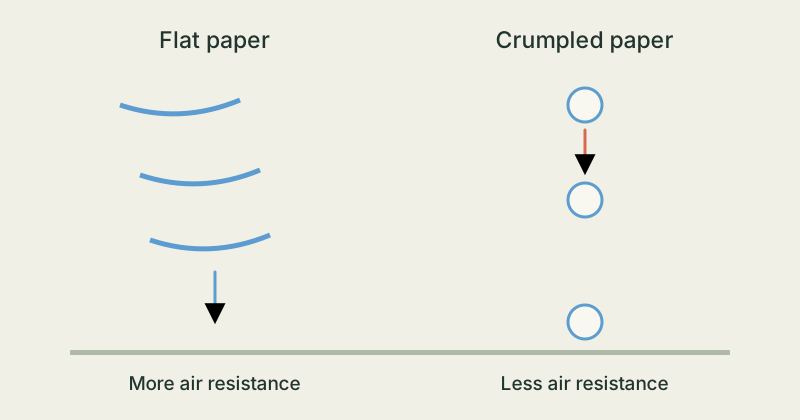
You can get a feel for this with paper. A flat sheet drifts down slowly. Crumple the same sheet into a ball and it falls more directly. Its mass is almost unchanged, but its new shape gives the air less area to push against.
One sheet, two ways to fall
- Take two identical sheets of paper and crumple one into a ball.
- Hold them at the same height above a clear floor.
- Release both together and compare. Air slows the flat sheet more strongly.
Drop only light objects from a low height. Keep your feet on the floor.
The takeaway
Gravity pulls things toward Earth. Air resistance explains why many objects still fall at different rates.
Why does crumpled paper fall faster than a flat sheet?
Sources & further reading
NASA Space Place · What Is Gravity? ↗The Physics Classroom · Free Fall and Air Resistance ↗Our stories explain the main idea in our own words. Pictures and models simplify reality and are not drawn to scale.