A coil beneath the glass creates a rapidly changing magnetic field. This makes electric currents flow in the base of a suitable pan. The metal’s electrical resistance causes the base to heat up.
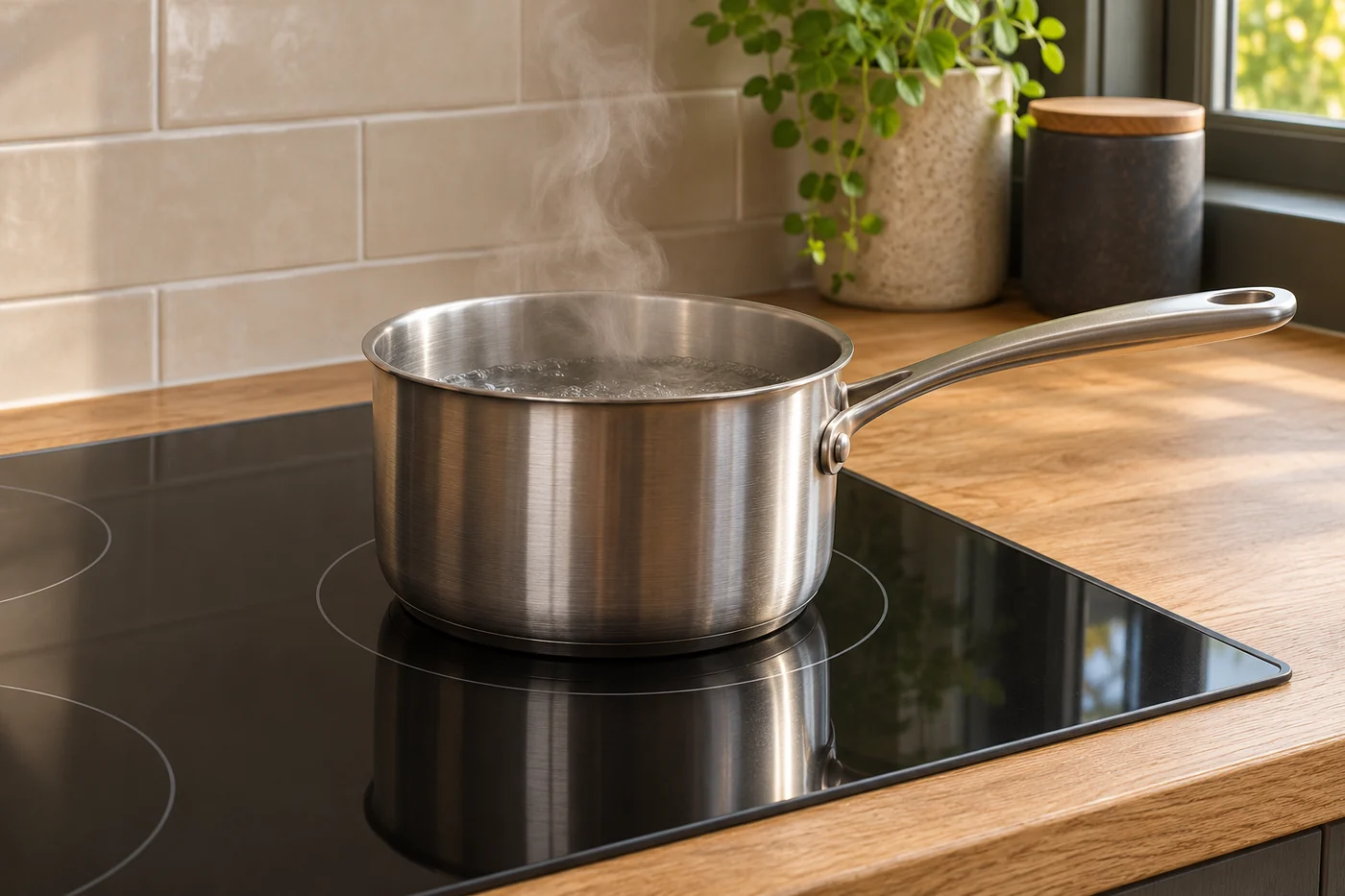
A saucepan of water sits on an induction hob. Before long, steam rises. A coil is hidden beneath the smooth glass. How can it heat the pan?
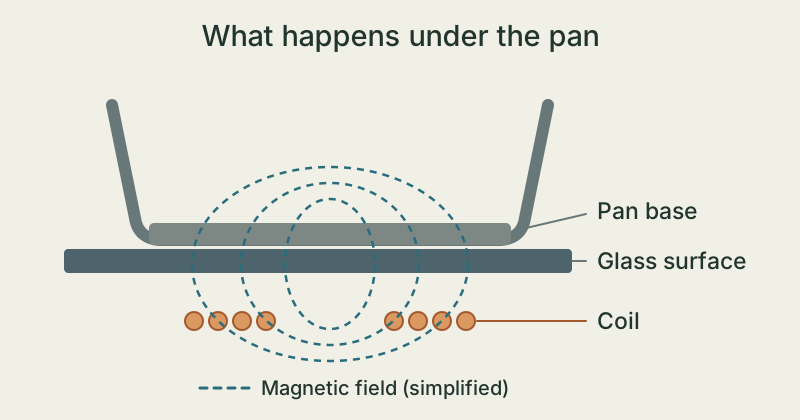
A coil sits beneath the glass
The coil is a wire wound into a flat spiral. When the hob is heating, an electric current flows through the wire. It switches direction very quickly, so we call it alternating current.
The alternating current creates a magnetic field around the coil that changes just as quickly. The field reaches through the glass and into the base of the pan.
Heat is produced in the pan base
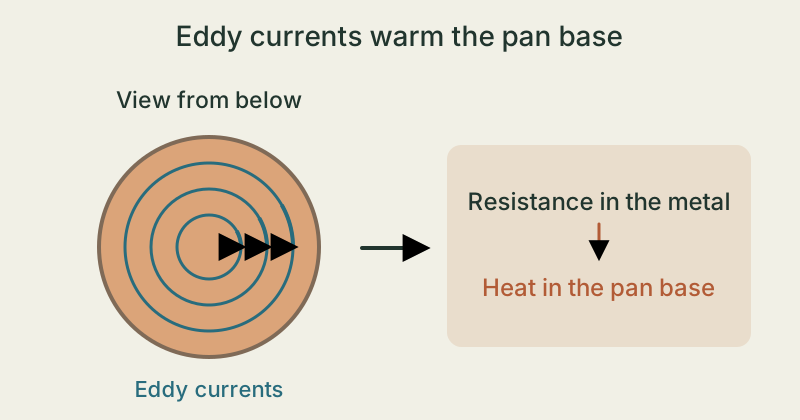
The changing magnetic field makes electric currents flow in the metal. They flow in loops and keep reversing direction. These are called eddy currents. Producing currents with a changing magnetic field is an example of electromagnetic induction.
The metal has electrical resistance. As the eddy currents flow, electrical energy turns into heat there. The pan passes heat to the water and to the glass beneath it. The glass can still be hot after cooking.
The pan base needs to suit the hob
A typical induction hob works well with a flat pan base that contains a magnetic layer. Cast iron is one example of a suitable material. Even an aluminium pan can work if it has a suitable steel layer in its base.
A magnet on the base gives you a first clue. The pan’s markings and the hob’s instructions tell you which cookware is designed to work with it.
Compare the bases of two cool pans
- Put two cool pans on a table and turn them upside down. Look for the word ‘induction’ or a symbol that looks like a small coil.
- Hold the same large fridge magnet against the centre of each base. See if it sticks and compare what you find with the markings.
- If you find a suitable pan, try holding the magnet against the side as well. Does it stick just as firmly? The base and the sides may be made of different layers.
Let the pans cool completely and leave the hob switched off.
The takeaway
The coil creates a changing magnetic field. It produces eddy currents in the base of a suitable pan. The metal’s electrical resistance produces heat there.
Where is the heat that warms the water mainly produced?
Sources & further reading
Science in School · Faraday’s law of induction: from classroom to kitchen ↗U.S. Department of Energy · Making the Switch to Induction Stoves or Cooktops ↗Frontier Energy · Induction Cooktop Analysis ↗Our stories explain the main idea in our own words. Pictures and models simplify reality and are not drawn to scale.