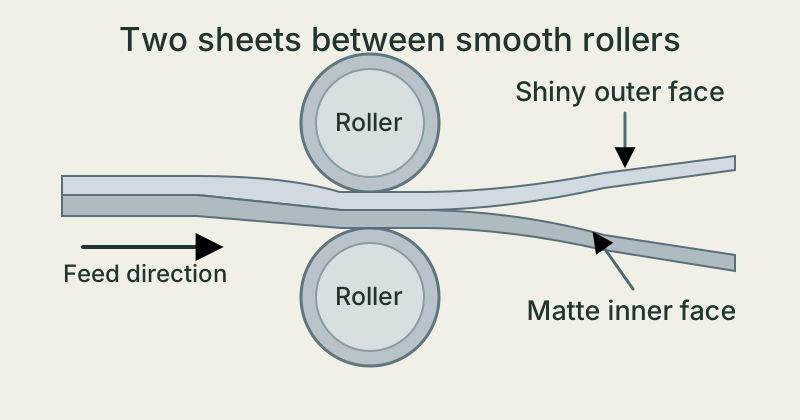
When very thin aluminium foil is made, two sheets pass through smooth rollers together. The outer faces touch the rollers and become smoother. The faces that touch in the middle stay a little rougher. Once the sheets are separated, each one shines more on one side.
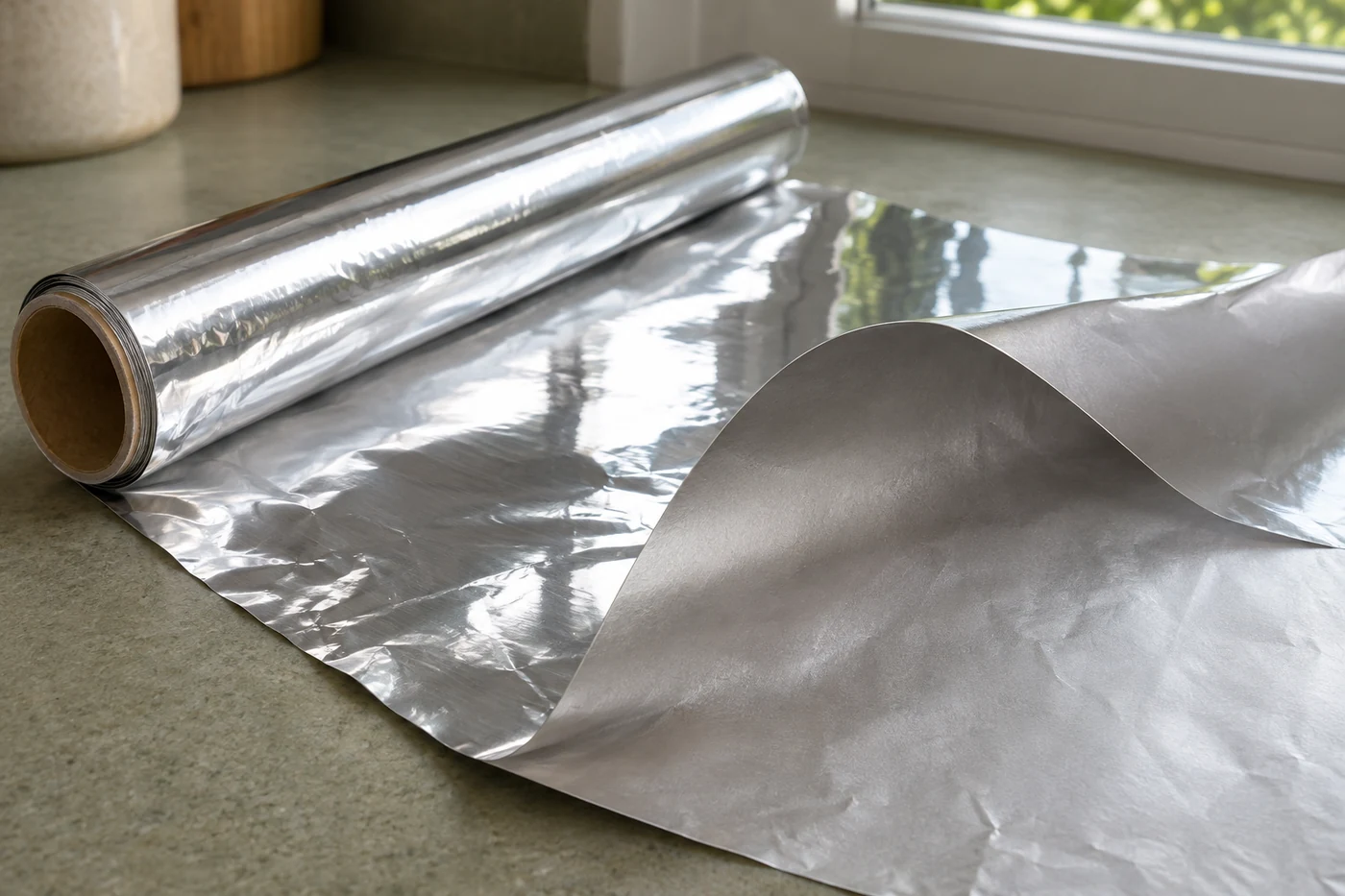
Unroll a piece of ordinary aluminium foil and flip it over. One side often catches a bright highlight. The other side looks duller. The difference starts in the factory.
Two sheets pass through the rollers together
Rollers are large, smooth cylinders. As the metal passes through, they squeeze it thinner. For the final pass when making very thin foil, two sheets are placed on top of each other.
The two outer faces touch the smooth rollers. The inner faces rest against each other. When the sheets are pulled apart again, each one has a smoother side and a rougher side.
The smoother side gives a sharper reflection
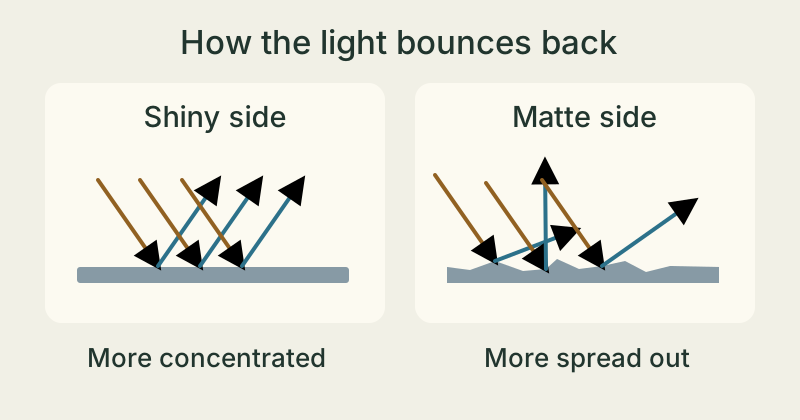
When light hits the smoother side, more of it bounces back in a particular direction. Stand at the right angle and you might see a bright glint or a blurry image of a lamp.
The matte side has tiny bumps you can hardly see with the naked eye. They send the light in many directions. This makes the reflected spot look broader and less sharp.
The dull side reflects plenty of light too
In one study of household foil, the two sides reflected similar amounts of visible light overall. The main difference was in the directions the light went.
The bright patch on the shiny side shows that more light is concentrated in one direction. Tilt the foil a little and the patch moves.
Compare the reflected spots
- Take two similar pieces of ordinary foil from the same roll. Lay them as flat as you can side by side on a table, with a shiny side and a matte side facing up.
- Shine a small torch at an angle across both pieces. From the other side of the table, see where the bright spot appears on the foil.
- Compare how sharp and bright the spot looks on each piece. Swap their positions and look again.
Use a small torch. Keep the beam and its reflection away from anyone’s eyes.
The takeaway
The roller makes the smoother side, which sends more light in one direction. The rougher side spreads the light more widely and looks matte.
Which faces become shinier when two sheets are rolled together?
Sources & further reading
European Aluminium Foil Association · Facts and Properties ↗Pozzobon et al. · Household aluminum foil matte and bright side reflectivity measurements ↗OpenStax · The Law of Reflection ↗Our stories explain the main idea in our own words. Pictures and models simplify reality and are not drawn to scale.