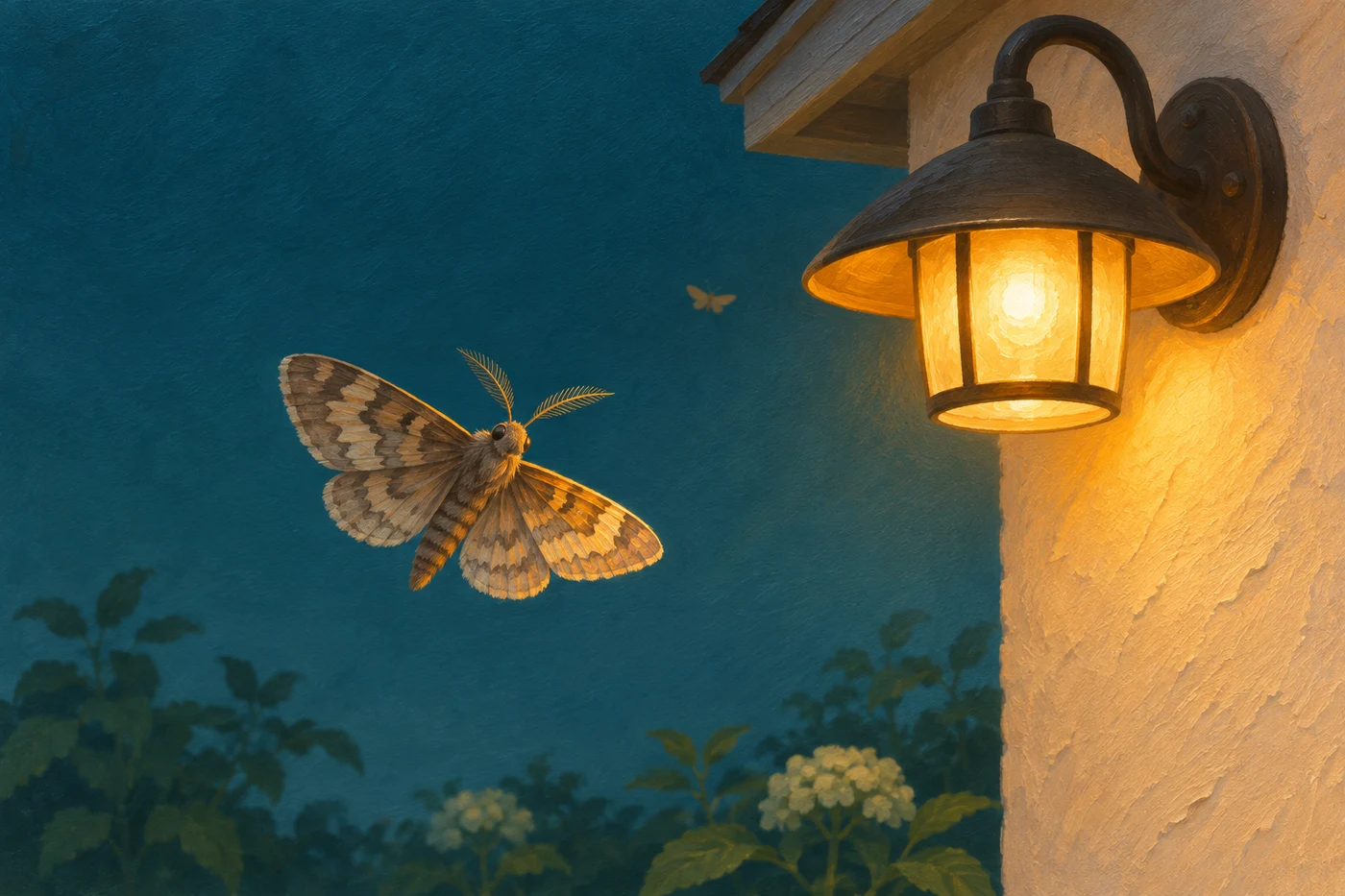
Many moths point their backs towards the brightest part of their surroundings as they fly. Under an open sky, this helps them stay upright. When a bright lamp is beside a moth, it can make the moth lean towards it. That tilt can send the moth into a turn and keep it circling the lamp.
It’s getting dark outside. A lamp glows beyond the window, and a small moth sweeps around it. A moment later, it’s back in the same spot. What makes it stay close?
The sky tells a moth which way is up
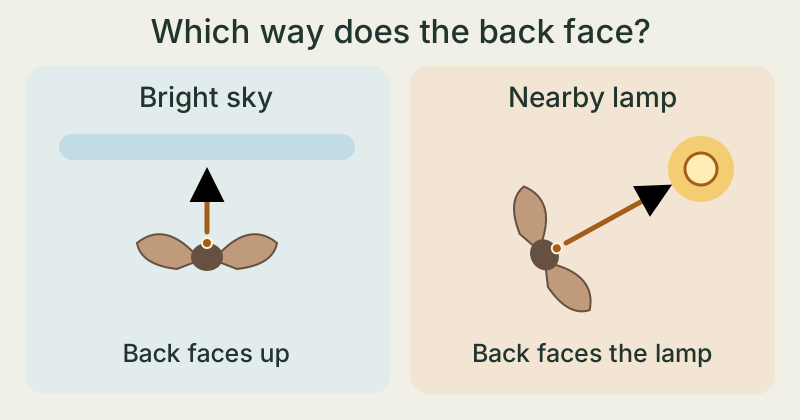
Under an open sky, the brighter light usually comes from above. Many flying insects keep the tops of their bodies facing the brighter side. If they tip over as they fly, this signal helps them right themselves.
The response is automatic. Just as you balance while walking without planning every step, a moth can keep adjusting the way it holds its body in flight.
A lamp to one side makes the moth lean
A nearby lamp can look brighter than the sky. If that light comes from one side, the moth tilts its back towards it. Its head can still point forwards. The tilt steers its flight into a curve.
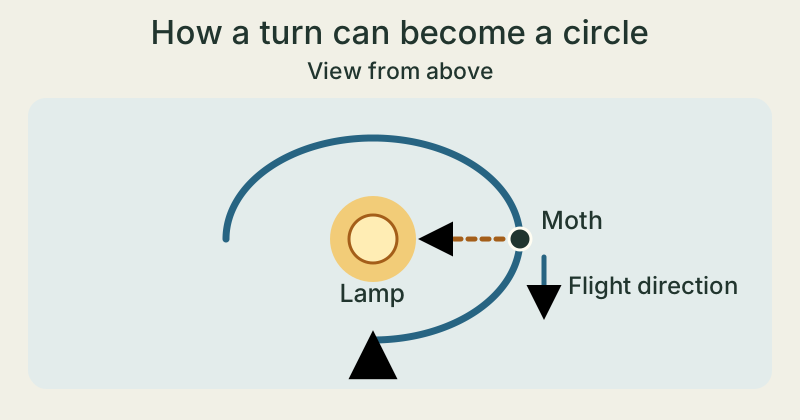
As the moth moves around the lamp, the light stays off to one side. If the moth keeps leaning towards it, that turn can become a full circle.
Cameras reveal different flight paths
A research team filmed insects outdoors and tracked their movements with cameras in the lab. In several species, the researchers saw insects tilt their backs towards a light when they flew close to it. Some circled. Others climbed steeply or flipped upside down above the light.
Some of the species in the study responded differently. The study explains how many insects can get stuck near a light. How lamps affect flight from farther away is a separate question.
Watch how a moth flies around a light
- At dusk, look through a window at an outdoor lamp that’s already on. Watch the area for a few minutes.
- If you spot a moth, follow a short stretch of its flight. Does it curve around the lamp, fly straight past or disappear from view?
- Draw a dot for the lamp and a line for the path you saw. It’s hard to see how a moth tilts in flight with the naked eye. Sketch only what you could see.
Watch from indoors or from a safe distance. Leave the insects undisturbed and keep any extra lights off.
The takeaway
Brightness helps many moths tell which way is up. Tilting towards a nearby lamp can steer them round and round it.
Which part of their bodies did many of the insects in the study tilt towards the nearby light?
Sources & further reading
Fabian et al. · Why flying insects gather at artificial light (Nature Communications, 2024) ↗Imperial College London · Flying insects become disorientated and trapped by artificial light ↗Our stories explain the main idea in our own words. Pictures and models simplify reality and are not drawn to scale.