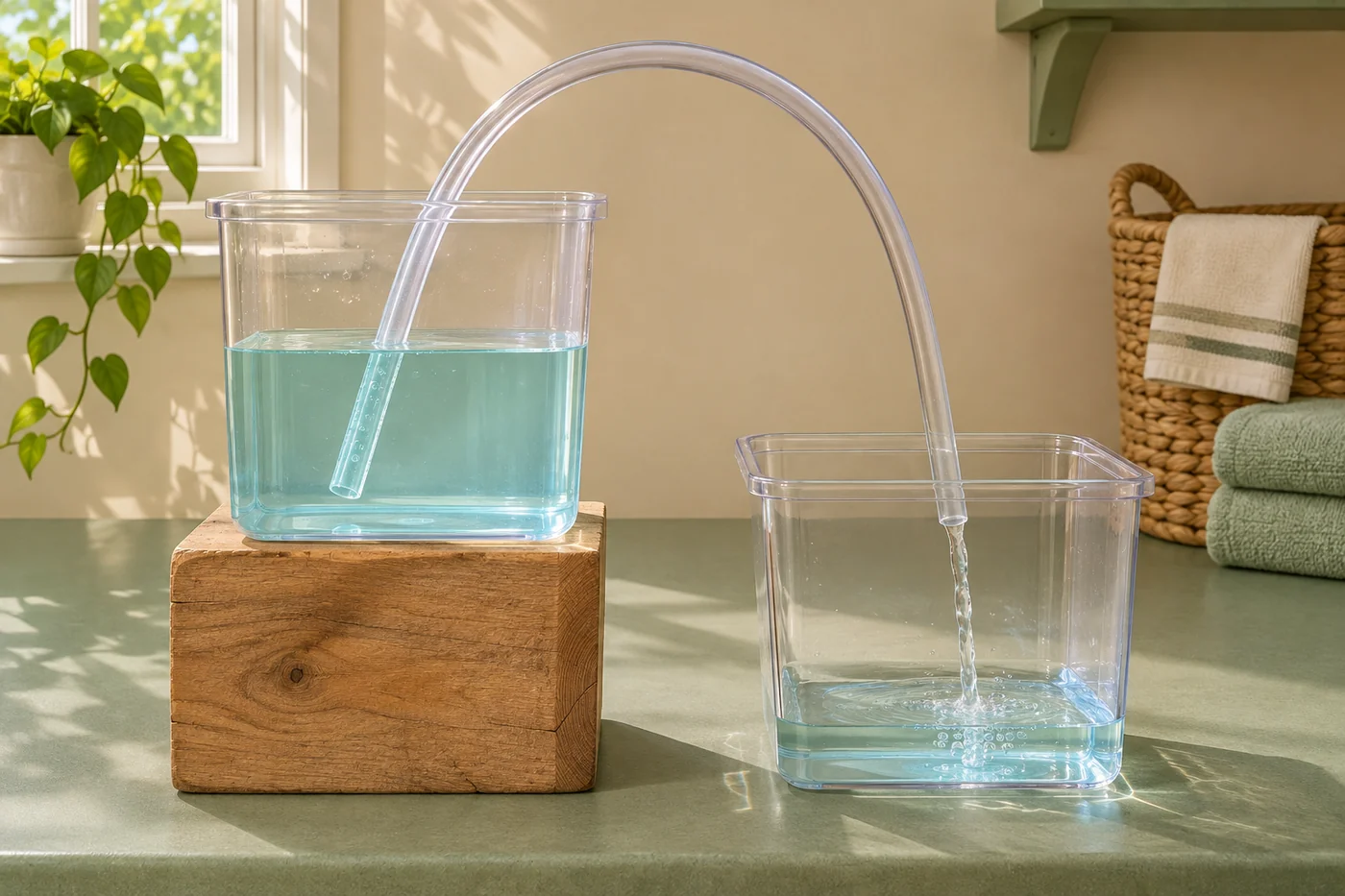
A hose filled with water can lift water over a rim if the outlet sits below the water level in the upper container. Gravity drives the water towards the lower outlet. The lower pressure at the top of the hose draws in more water from the container.
When you change the water in a fish tank, a hose can carry water up over the glass rim and into a bucket. Inside the hose, the water rises a little and then drops a little farther. A hose used this way is called a siphon.
A filled hose gets things going
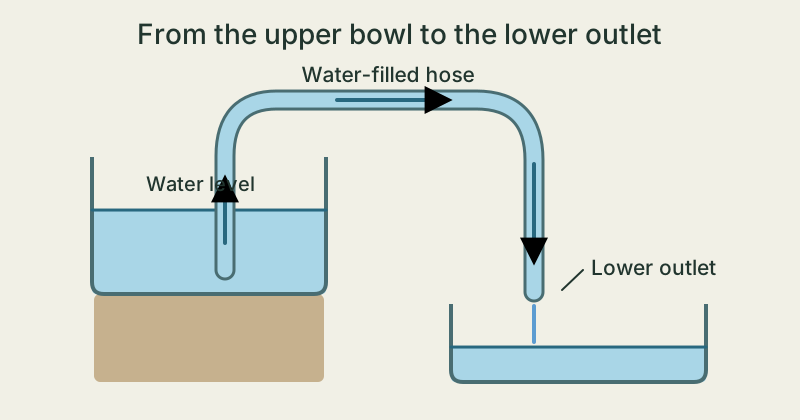
Imagine a clear hose bent into an upside-down U. One end sits underwater in the upper container. The other hangs freely over the collecting bowl and sits below the upper water level.
When you fill the hose completely, there is already water all the way over the rim. Open the lower end and water flows out. This leaves the pressure at the top of the bend lower than at the water’s surface in the container. That pressure difference moves water from the container into the hose and over the bend.
The outlet’s height matters
A sip of water rises briefly along the way. By the end, though, it has dropped below where it started. Over the whole journey the drop releases energy, which keeps the water moving.
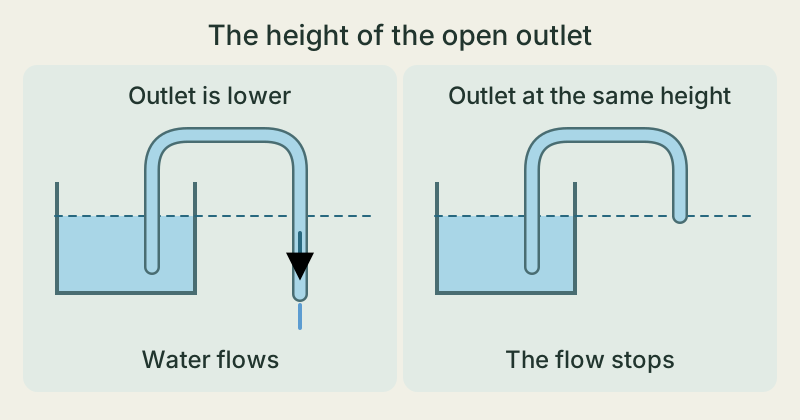
Raise the open outlet to the same height as the upper water level and the flow soon stops. As long as the hose stays full, you can restart the flow by lowering the outlet again.
What happens when air gets in?
When the water level in the upper container drops to the hose opening, air gets in. Once air breaks the continuous column of water, the siphon stops drawing in water. To start again, you can refill the entire hose.
Raise and lower the outlet
- Inside the sink, put a wide plastic bowl on a sturdy upside-down plastic tub. Place a second bowl beside it on the bottom of the sink. Add enough tap water to the raised bowl to submerge a short, flexible hose completely. Wait until no more air bubbles come out of the hose.
- Cover both hose openings with your fingers. Keep one end underwater in the raised bowl and uncover it there. Hold the other end over the lower bowl, below the upper water level. Uncover that end and watch the water flow.
- Slowly raise the open outlet to the height of the upper water level. What happens to the stream? Lower the outlet again while the first end is still underwater and the hose is still full.
Use a clean hose and tap water only. Fill the hose by putting it underwater. Keep the hose away from your mouth.
The takeaway
A filled hose carries water over the rim. Gravity keeps it flowing when the open outlet is lower than the water level in the upper container.
You raise the open outlet to exactly the height of the upper water level. What happens after a moment?
Sources & further reading
Iowa State University · Siphon ↗University of Tennessee · Pumps and siphons ↗Our stories explain the main idea in our own words. Pictures and models simplify reality and are not drawn to scale.