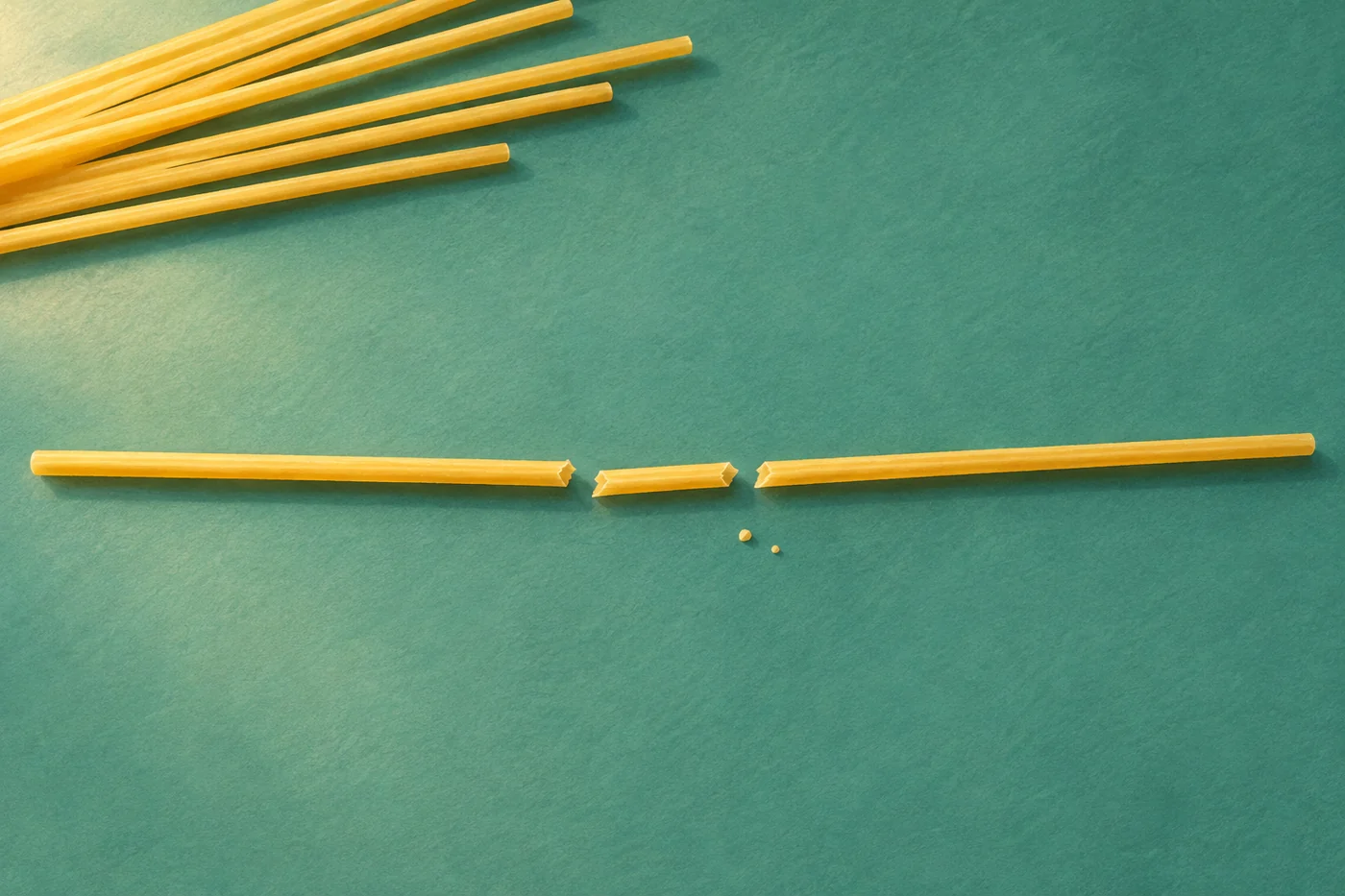
After the first break, the new ends spring back. That sends a bending wave along the pieces. If the wave bends one spot too sharply, the strand breaks again there.
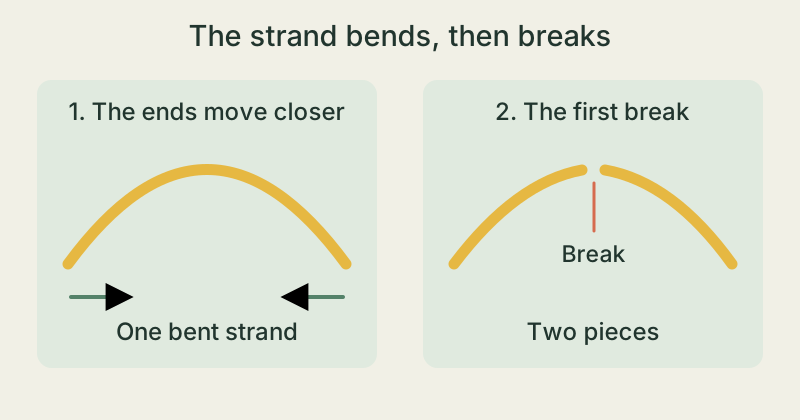
Imagine holding a strand of dry spaghetti by both ends and slowly bringing your hands together. The strand bends into an arch. Why do you so often end up with more than two pieces after one quick snap?
The strand breaks in one place first
If you bring the ends together evenly, the strand often bends most sharply near the middle. It can break there first. You now have two pieces, and both are still bent at that instant.
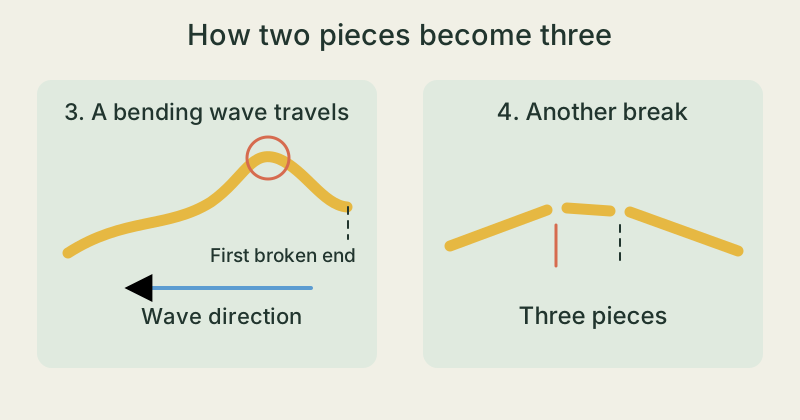
Springing back can trigger another break
The two newly broken ends are free to spring back. The motion travels along the pieces. This is called a bending wave.
As the wave passes, one short section can bend more sharply than it did before the first break. If the dry pasta can't take that extra bend, it breaks again. The breaks happen so close together that you often hear a single snap.
Two pieces are possible
Dry spaghetti doesn't break the same way every time. In a lab experiment, researchers got a strand to break into two pieces by twisting it a lot before bending it. The twist changed how it sprang back after the first break.
Count the pieces after each snap
- Put one whole strand of dry spaghetti in a large, clear resealable freezer bag. Close the bag and leave room inside for the strand to bend.
- Hold the ends of the spaghetti through the bag. Slowly bring them together until the strand snaps. Lay the bag flat on the table and count the pieces.
- Repeat with five more strands from the same pack. Write down the number of pieces each time. How often did you get two pieces? How often did you get three or more?
Keep the bag closed while breaking the spaghetti, and hold it away from your face.
The takeaway
A first break can send out a bending wave. If that wave bends another spot too sharply, the strand breaks again.
What can make another piece break off after the first snap?
Sources & further reading
Audoly & Neukirch · Physical Review Letters (2005) ↗MIT · Spaghetti-Fracture Experiments (2018) ↗Our stories explain the main idea in our own words. Pictures and models simplify reality and are not drawn to scale.