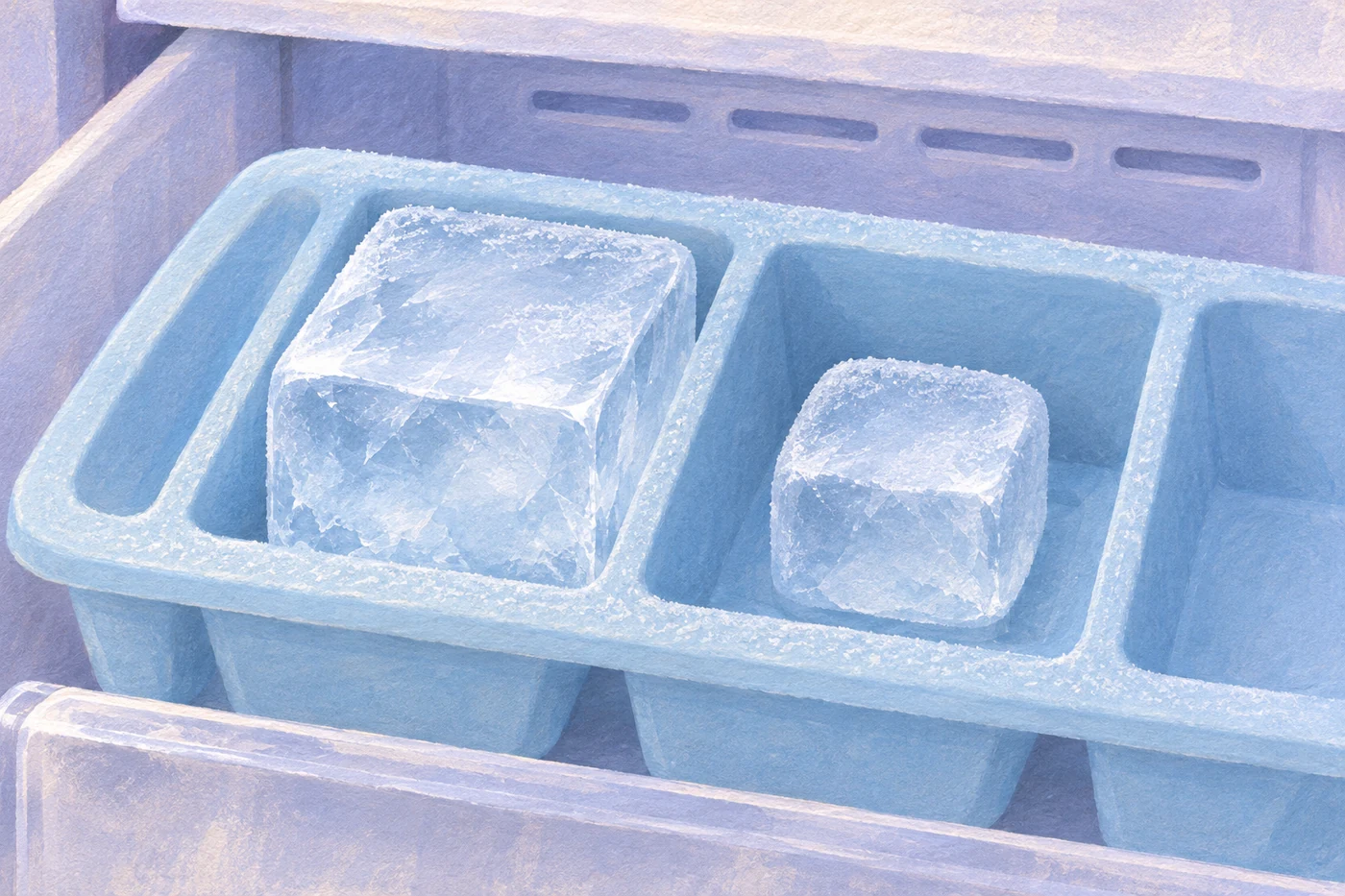
Tiny water molecules escape from the surface of the cube. They go straight from solid ice into the air as water vapour. When more molecules leave than come back, the cube shrinks. This is called sublimation.
You find a few old ice cubes at the back of the freezer. They barely fill their slots in the tray anymore. The freezer stayed cold the whole time. Where did the rest of the ice go?
From ice straight into the air
An ice cube is made of tiny particles called water molecules. Even in solid ice, they move a little. Some at the surface have just enough energy to break free. They spread through the air as invisible water vapour.
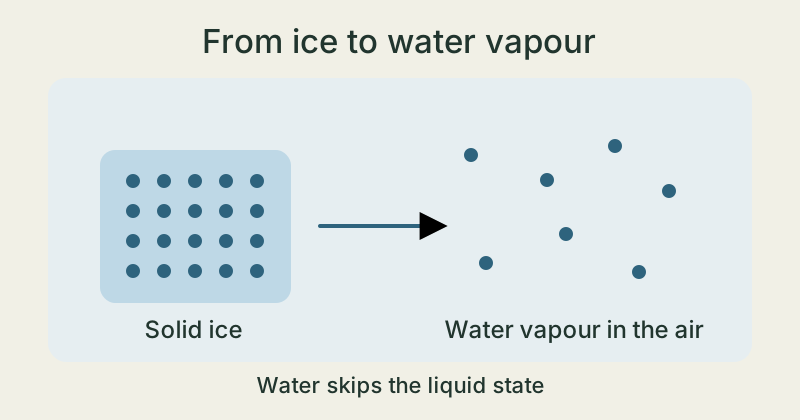
When ice melts, it becomes liquid water. In sublimation, water skips that step and goes straight from solid ice to water vapour. That is how a cube can shrink without leaving a puddle.
Why a lid can help
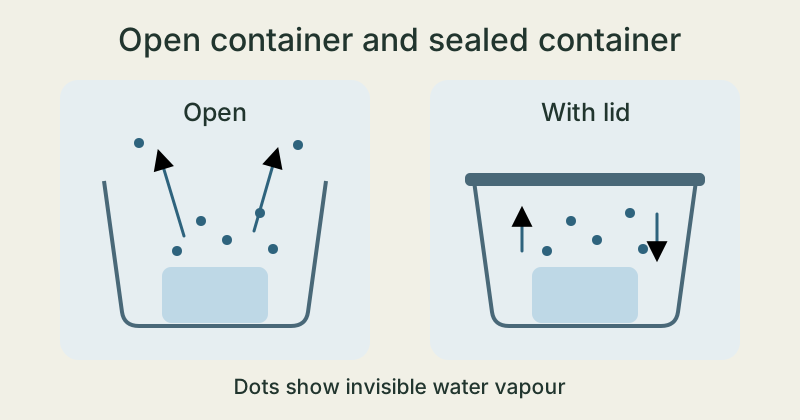
Water molecules move both ways: some leave the ice, and others in the air settle back onto it. In dry air, fewer come back than leave. The cube slowly loses ice.
In a sealed container, water vapour tends to stay near the cube. As more vapour collects there, more molecules can return to the ice. This can slow down the loss of ice.
Where does the water go?
Water vapour can settle onto a cold surface as ice. This is one way frost can form on a wall inside the freezer. Water vapour goes straight to solid ice, the reverse of sublimation.
Two ice cubes, one lid
- Put two similar-sized ice cubes from the same tray in two matching freezer-safe containers. Take a photo of them side by side. Close one container and leave the other open.
- Put the containers next to each other in the same freezer. Write down the start date and leave both there.
- After two weeks, compare the cubes with your photo. Which one has shrunk more? If you can barely see a difference, leave both for another week.
Use containers made for freezer storage. Keep the freezer door open only as long as you need to compare the cubes.
The takeaway
Ice can turn straight into invisible water vapour. When an ice cube loses water this way, it shrinks even though it stays frozen.
What happens when ice undergoes sublimation?
Sources & further reading
University of Illinois Urbana-Champaign · Sublimation ↗U.S. Geological Survey · Sublimation and the Water Cycle ↗Maricopa Community Colleges · Phase Transitions ↗Our stories explain the main idea in our own words. Pictures and models simplify reality and are not drawn to scale.