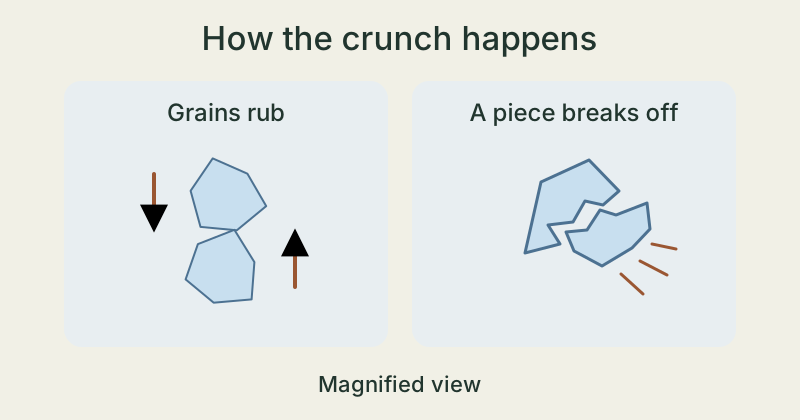
The ice grains in snow get pushed closer together under your boot. They rub against each other, and some break. All those tiny sounds add up to a crunch.
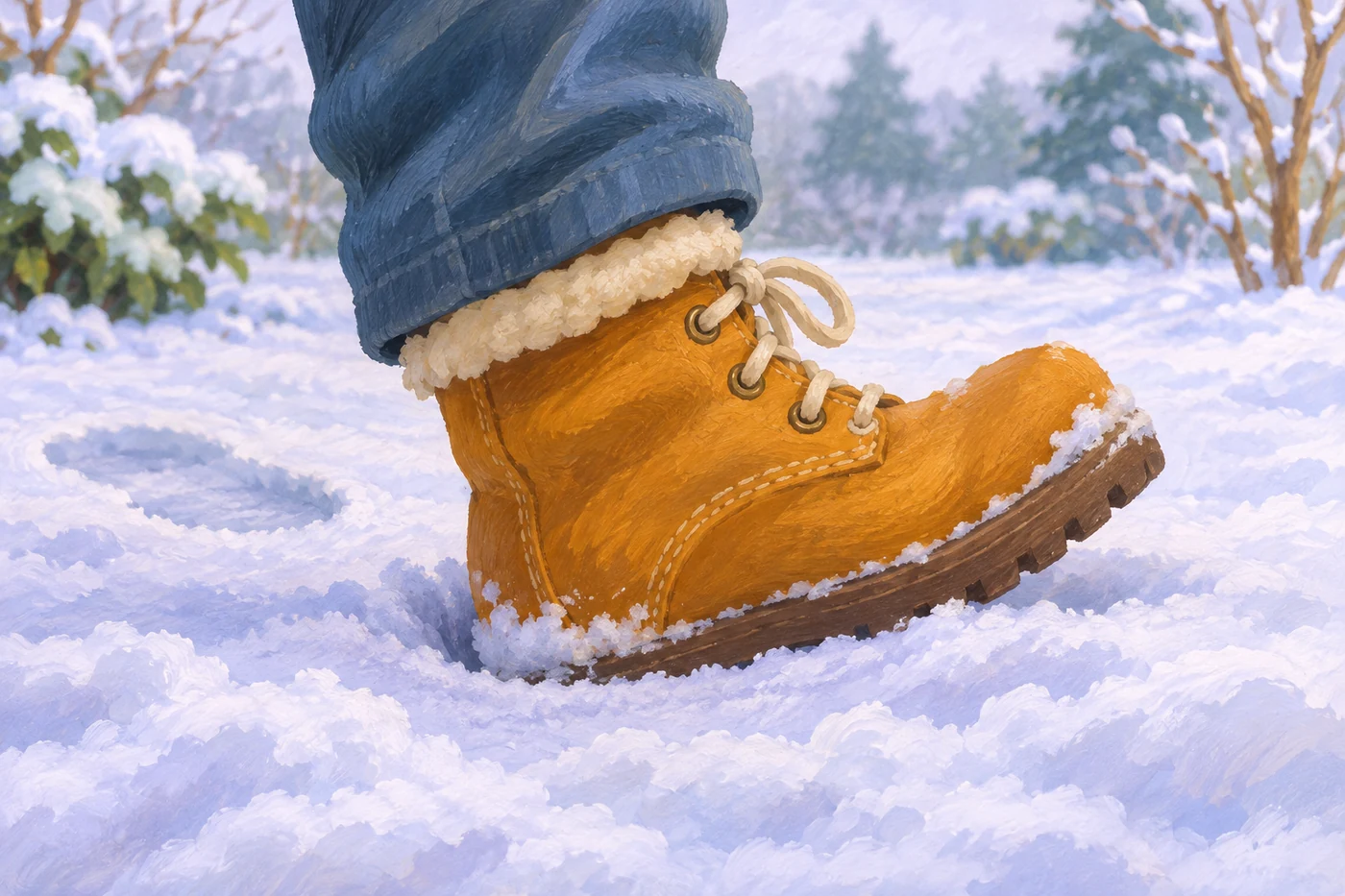
On a snowy path, you hear a short crunch with each step. On a milder day, snow can sound quite different under the same boot. What is happening beneath the sole?
There is room for air in snow
Snow is made of tiny ice crystals and grains. There are air-filled spaces between them. Loose snow has lots of those spaces.
Your boot presses the grains closer together. The gaps get smaller and some of the air escapes. A hollow remains where you stepped. That is your footprint.
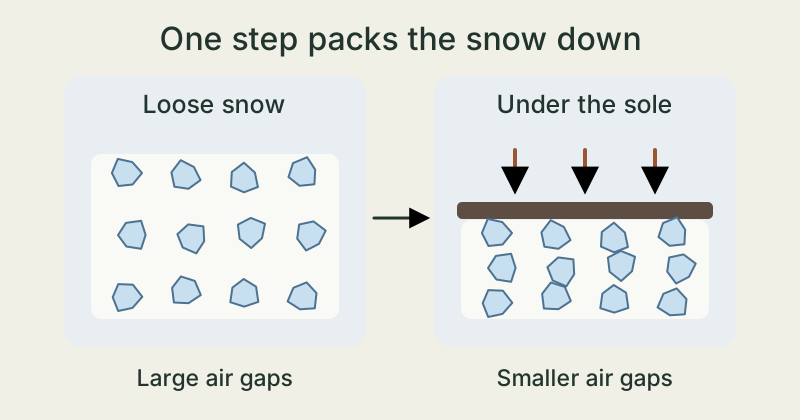
Lots of tiny sounds in one step
As the grains get pushed closer, they rub against one another. In some places, parts of the crystals or the little bonds between grains break.
Each sound is tiny on its own. Under a boot, lots of grains move at once. Their brief sounds add up to the crunch you hear.
Why different snow sounds different
Cold, dry snow often makes a clear crunch. Near the melting point, grains tend to slide past one another more easily. Damp snow is often quieter.
The shape of the grains and what has happened to the snow also matter. If the surface partly melts and then freezes again, a hard crust can form. It can make a sharp crack when you step on it.
Listen as you press down on snow
- Loosely fill two matching plastic bowls with snow from the same spot. Leave one bowl in a cold, shady place. Bring the other indoors for a little while, until the snow becomes damp and you can still see plenty of grains.
- Set the bowls next to each other. Push the back of a spoon into each sample with roughly the same force and speed.
- Listen closely and look at the hollows you made. Which sample sounds louder or higher? If you barely hear anything, try again another day with colder, drier snow.
Collect snow in a safe, level spot. Wear warm boots and gloves outside, and stay away from slippery ice.
The takeaway
When you step on snow, ice grains move closer together, rub and can break. The sound depends on how cold, wet and firmly packed the snow is.
What happens to the ice grains under your boot?
Sources & further reading
National Snow and Ice Data Center · Science of Snow ↗University of Wisconsin–Madison CIMSS · Squeaking Snow ↗U.S. National Park Service · Winter Ecology Teacher Guide ↗Our stories explain the main idea in our own words. Pictures and models simplify reality and are not drawn to scale.