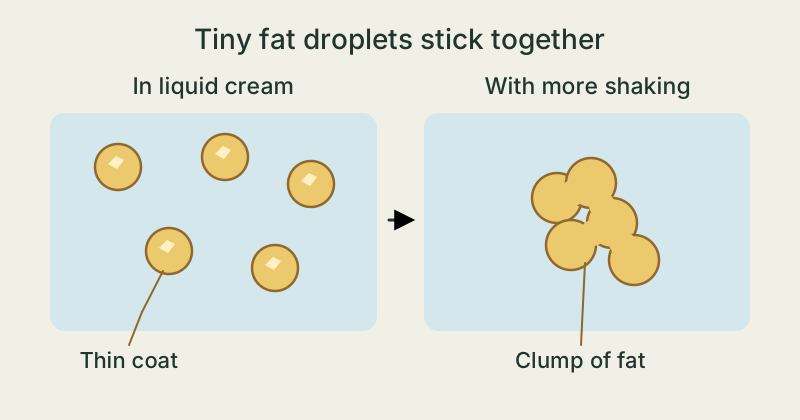
Cream contains tiny droplets of fat. Shaking damages parts of their thin coats, so the droplets can stick together and form grains of butter. A pale liquid separates out. It’s called buttermilk.
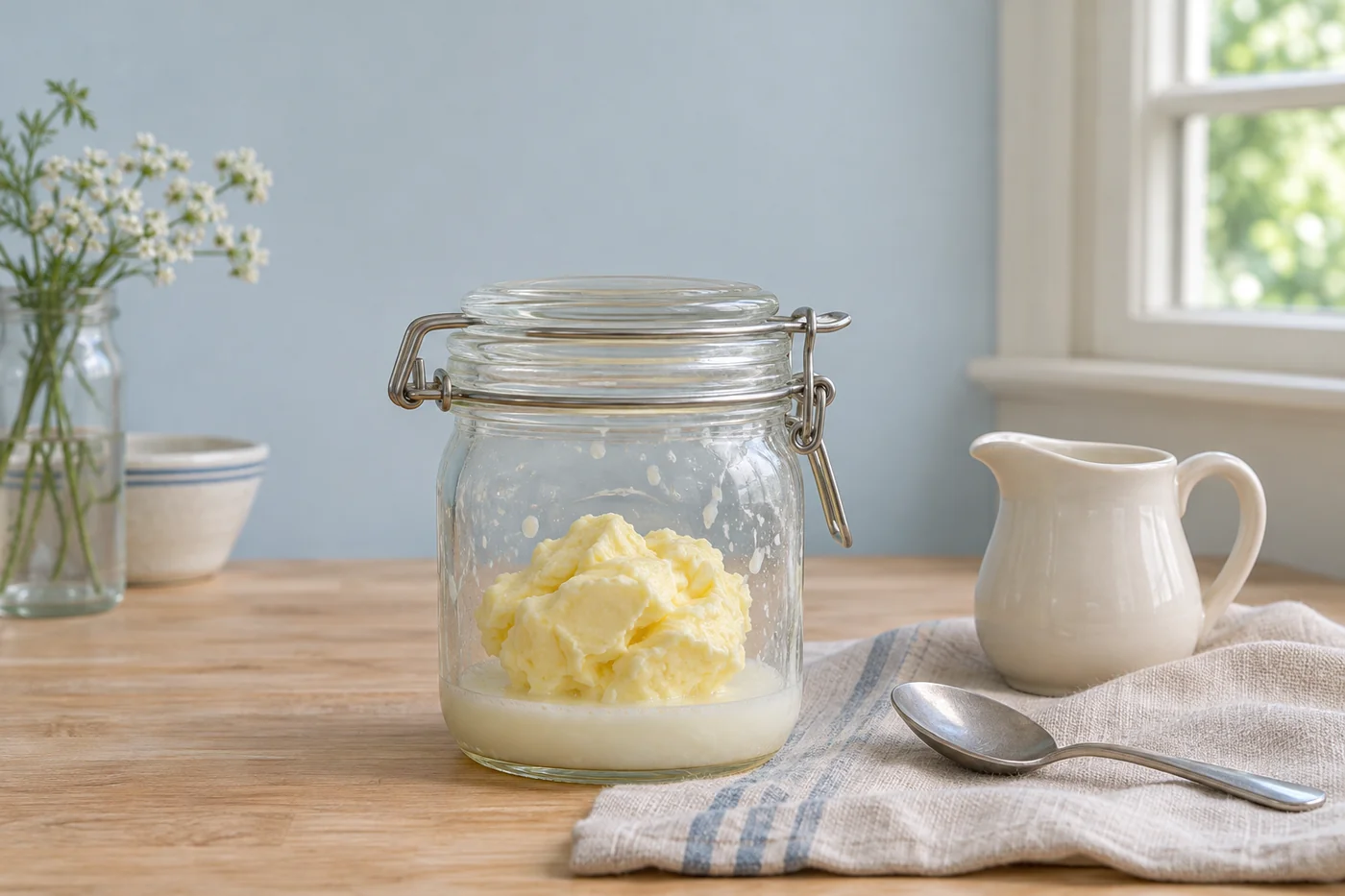
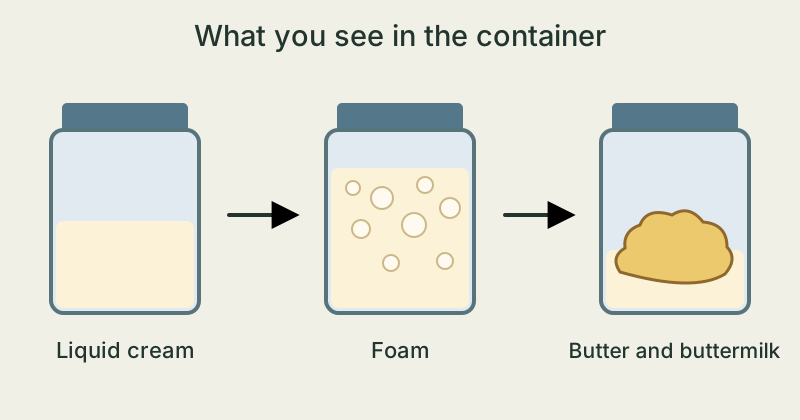
Shake a container of cream and listen. At first it sloshes, then it goes quiet as the cream gets thick and foamy. Keep shaking and you’ll hear it slosh again. This time you’ll see pale lumps of butter in a thin liquid.
Tiny droplets of fat float in cream
Cream contains lots of water and tiny droplets of milk fat. Each droplet has a thin coat that helps keep the fat spread out in small drops throughout the liquid.
Some of the fat in cool cream is solid. As you shake, tiny fat crystals can pierce the coat of a nearby droplet. That lets the droplets stick together.
The foam gives way to grains of butter
Shaking first makes lots of little air bubbles. Fat droplets gather around the bubbles and hold the foam together for a while. That’s the thick stage that looks like whipped cream.
As you keep shaking, the clumps of fat grow. Many of the bubbles burst, and liquid drains out of the foam. You can press the pale grains together into a soft lump.
Where does the water go?
In cream, little fat droplets are spread through a watery liquid. In butter, fat surrounds tiny drops of water. Most of the water that was in the cream ends up outside the butter, in the buttermilk.
Shake cream and listen closely
- Pour about 80 mL of cool pasteurized heavy whipping cream into a clear plastic container that holds at least 200 mL. Screw the lid on tightly. Leave room above the cream so it can move when you shake it.
- Shake hard. Pause now and then to look through the side of the container. Is the cream still runny, or has it turned foamy? Keep the lid closed.
- Keep shaking until you hear liquid sloshing again and see little lumps of butter. The whole process can take up to 20 minutes. Take turns shaking if you like. Tip the container a little. Watch what flows and what holds its shape.
Use a clean plastic container and keep the lid tightly closed. If you have a milk allergy, you can watch someone else do the activity.
The takeaway
Shaking makes fat droplets stick together into grains of butter. The foam collapses and buttermilk collects around the grains.
Where did the fat in the lumps of butter come from?
Sources & further reading
University of Wisconsin–Madison · Butter Science 101 ↗University of Guelph · Butter Manufacture ↗Mississippi State University Extension · Experiments in Food Science ↗Our stories explain the main idea in our own words. Pictures and models simplify reality and are not drawn to scale.