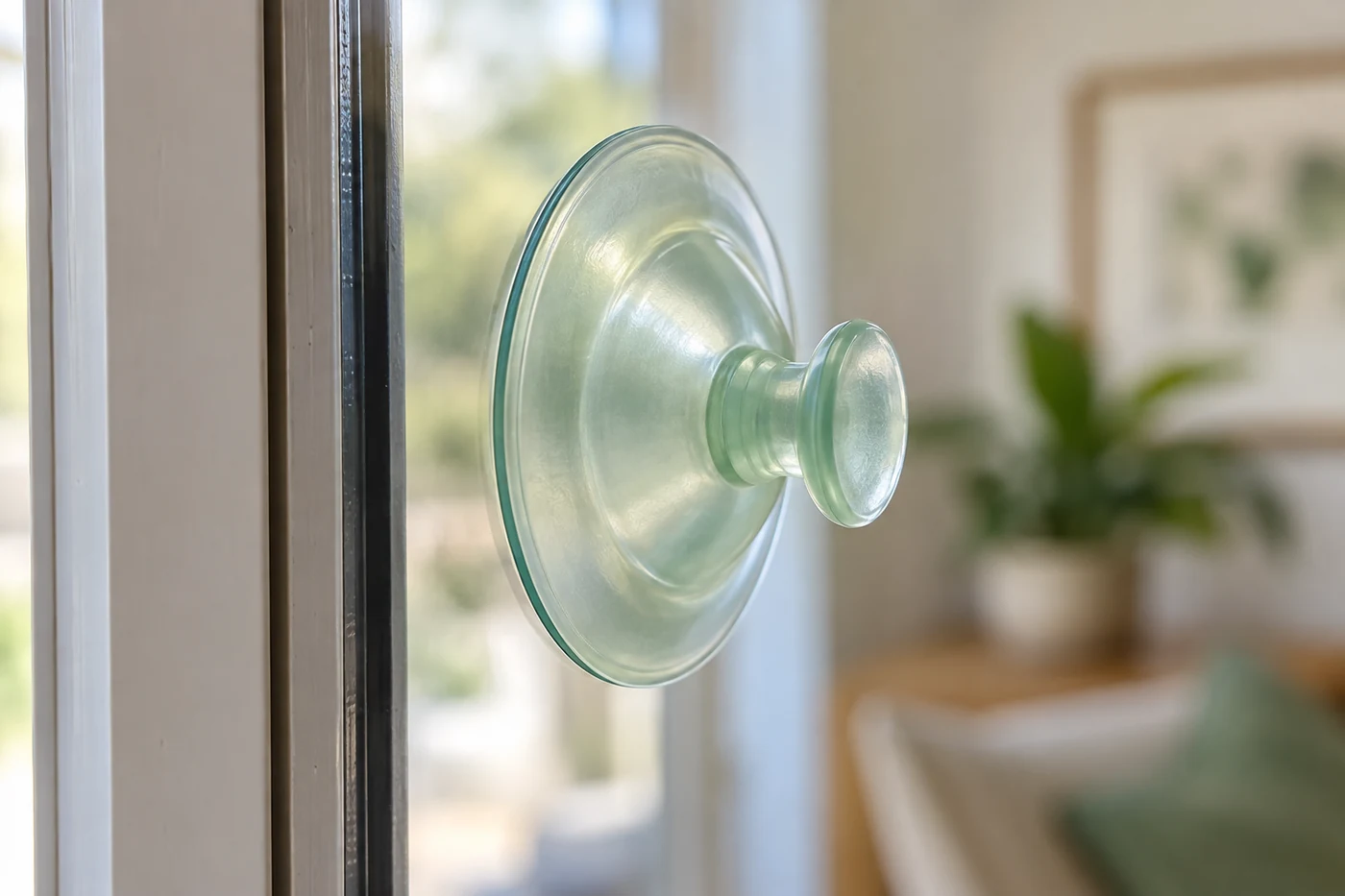
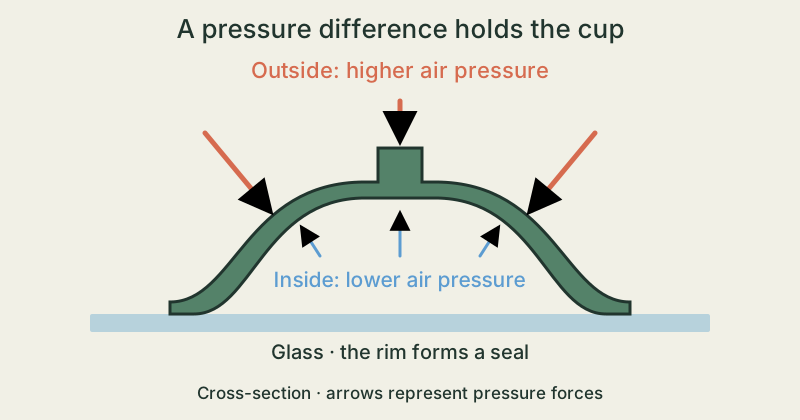
The air pressure beneath a well-sealed suction cup is lower than outside it. The outside air therefore presses it against the glass. A tight seal around the rim maintains this pressure difference.
A suction cup needs a smooth surface and a flexible rim. Pressing it changes how much air remains trapped beneath its dome.
Air pushes from every direction
Air consists of tiny moving particles. They collide with surfaces and exert forces. Force per unit area is called pressure. Air pressure also acts sideways and from below.
For many objects, the effects of pressure inside and outside largely balance. A suction cup creates a difference: the higher outside pressure presses it toward the surface.
Pressing and sealing
Pressing the cup flat forces some air out around the rim. The elastic material then tries to spring back into a deeper dome. If the rim stays sealed, the trapped air has more space and its pressure falls.
Low pressure here means less pressure than in the surroundings. Air can still remain beneath the cup. How well it holds depends on the pressure difference, its size and its material, among other factors.
A tiny gap makes a big difference
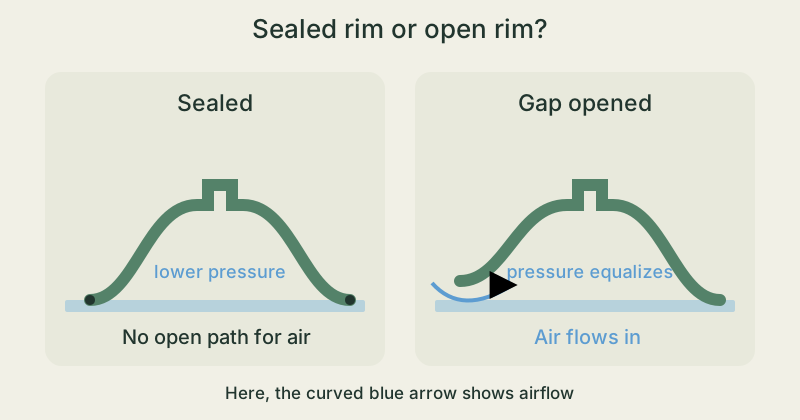
Lifting the rim lets air flow into the cavity. The pressure equalizes with the surroundings, making the cup easier to remove.
Dust, hairs or a rough, porous surface can let air in. Clean glass is usually easier to seal against. A little water can fill small gaps. On vertical glass, friction also helps stop the cup sliding down.
Pull the knob, then open the rim
- Choose a small suction cup with a knob or release tab and a smooth, securely installed window pane at a low height. Clean the spot and the rim. Press on the empty cup; hang nothing from it.
- Pull very gently on the central knob without lifting the rim. Do you feel resistance? Let go before you need much force.
- Now gently lift the release tab or a small part of the rim with your finger. Compare how easily it comes off. Repeat the comparison. If it never holds, check its cleanliness, shape and seal.
Do not test on loose or damaged glass. Do not attach weights, body parts or breakable objects, or push tools beneath the rim. Young children should observe with an adult.
The takeaway
A suction cup holds through a pressure difference and a tight seal. Air entering underneath reduces the difference and makes removal easier.
Why is a suction cup easier to remove after you lift its rim?
Sources & further reading
Planet Schule / SWR Schulfernsehen · Prinzip Saugnapf (Arbeitsblatt: Saugnapf im Wasser) ↗OpenStax College Physics 2e · Friction ↗OpenStax Chemistry 2e · Gas Pressure ↗Science World · Balloon and Cup Attraction ↗Our stories explain the main idea in our own words. Pictures and models simplify reality and are not drawn to scale.