Many ordinary black surfaces absorb more visible sunlight than comparable white ones. The absorbed energy enters the material and can raise its temperature. White surfaces usually reflect more light. How warm something actually gets also depends on the material and its surroundings.
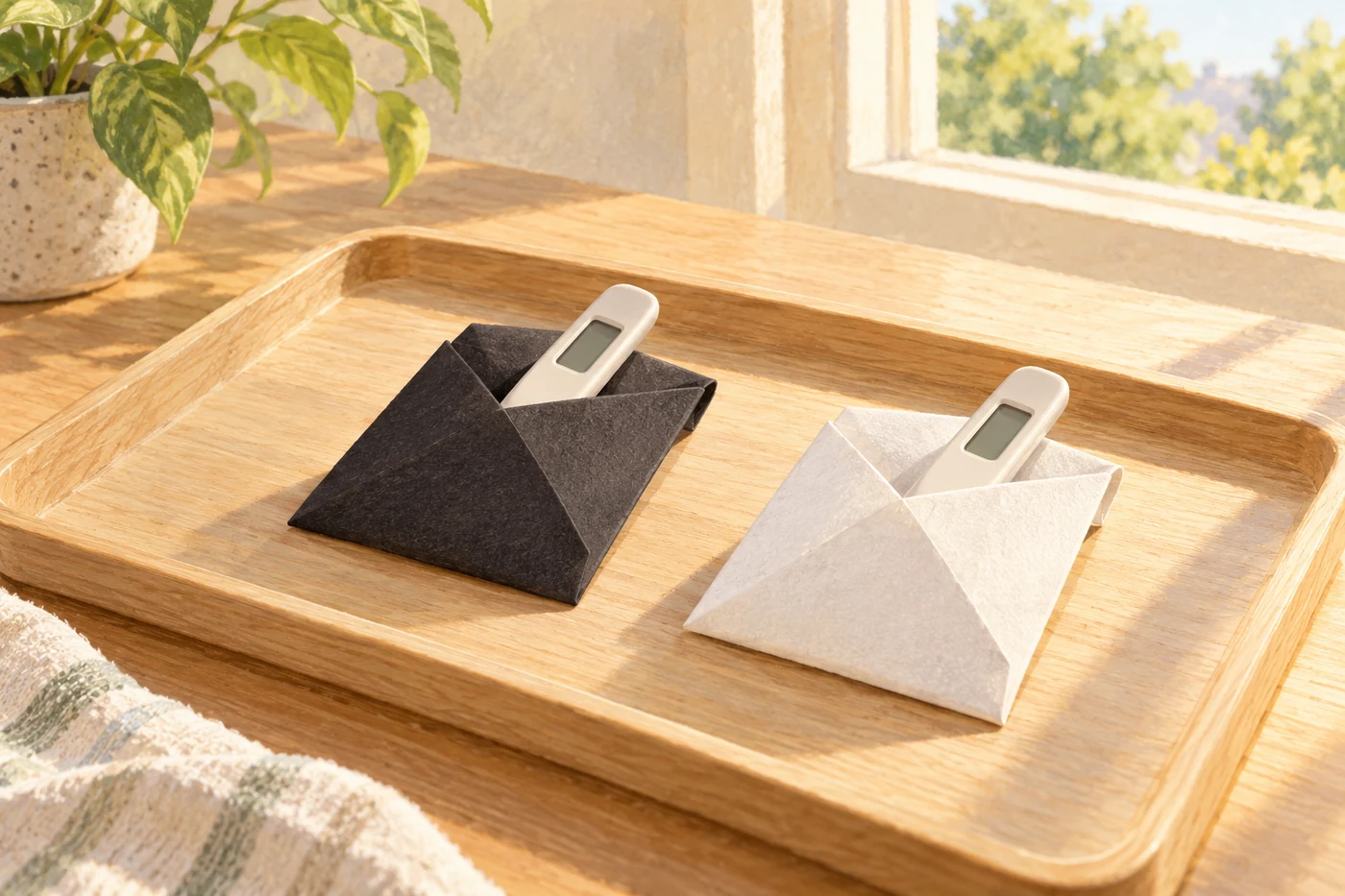
The cover is an illustration of two paper pockets and symbolic thermometers. It does not show measured temperatures. A real experiment needs instruments that can measure room and outdoor temperatures.
Light can be reflected or absorbed
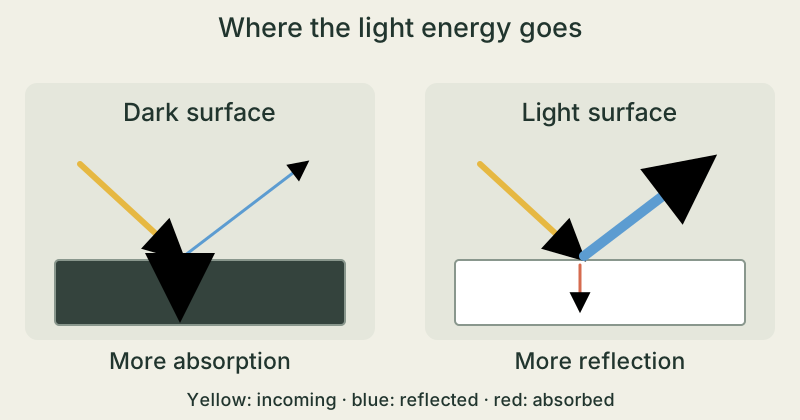
Sunlight carries energy. When it reaches an opaque surface, some is bounced back: this is reflection. Another part is taken in: this is absorption.
A white surface reflects a lot of visible light, so it looks bright. A black surface reflects little of it and usually absorbs more. It is not collecting black light.
The energy comes from the Sun
Absorbed radiant energy can warm the material. Black colouring does not create extra energy itself. Without illumination, it does not make an object warm on its own.
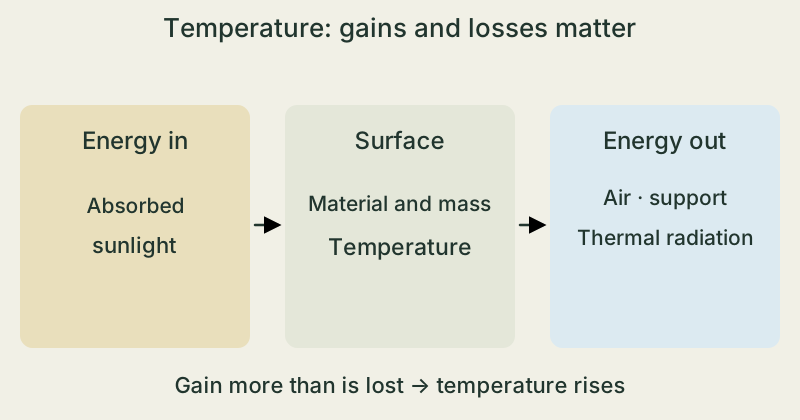
A surface can also lose energy to cooler air or cooler objects it touches. It also emits thermal radiation. Its temperature rises when it gains more energy overall than it loses.
Albedo: what fraction is reflected?
Albedo describes the fraction of incoming solar energy that a surface reflects. High albedo means a lot of reflection; low albedo means little reflection.
Bright snow, for example, reflects a lot of sunlight. When darker ground beneath is exposed, it can absorb more solar energy. The balance between reflection and absorption matters here too.
Visible colour does not tell us everything
Sunlight also includes invisible radiation, such as near-infrared. Two coatings that look equally dark may reflect different amounts of it. Special dark surfaces can therefore stay cooler than ordinary dark ones.
Material, thickness, wind, shade and contact with the supporting surface also matter. Compare similar objects under similar conditions. Black is not hotter than white in every situation.
Compare black and white paper
- With an adult, fold two identical paper pockets from equal-sized black and white sheets of similar type and thickness. Put equal amounts of dry kitchen paper inside. Insert one suitable room thermometer equally far into each, with its sensor shielded from direct sunlight inside the paper pocket. Let both settle in the shade first and record the starting readings.
- Place both pockets side by side on the same dry support in sunlight, at the same angle and without shading each other. Read the temperatures after 5, 10 and 15 minutes. Keep the pockets in place and avoid shading them while taking readings.
- Compare how much each temperature rose from its own starting value. Let everything cool again in the shade and repeat with the pockets' positions swapped. Note any clouds or wind too. A small or absent difference is also a result; this experiment does not measure exact albedo.
Have an adult help and check the thermometers' measuring range. Avoid glass or mercury thermometers and instruments designed only for body temperatures. Do not look at the Sun. Keep the pockets dry and do not heat them with a lamp, magnifying glass or another heat source. Do not touch warm surfaces to test their temperature.
The takeaway
Black surfaces often absorb more visible sunlight; white ones reflect more. Absorbed energy can cause warming. Albedo describes the reflected fraction, while actual temperature also depends on the material and how it loses energy.
Why might black paper get warmer than comparable white paper under the same illumination?
Sources & further reading
NASA · Cool Suits, Educator Section (PDF) ↗UCAR Center for Science Education · Looking Into Surface Albedo ↗UCAR Center for Science Education · Albedo and Climate ↗Lawrence Berkeley National Laboratory · About Cool Surfaces ↗Our stories explain the main idea in our own words. Pictures and models simplify reality and are not drawn to scale.