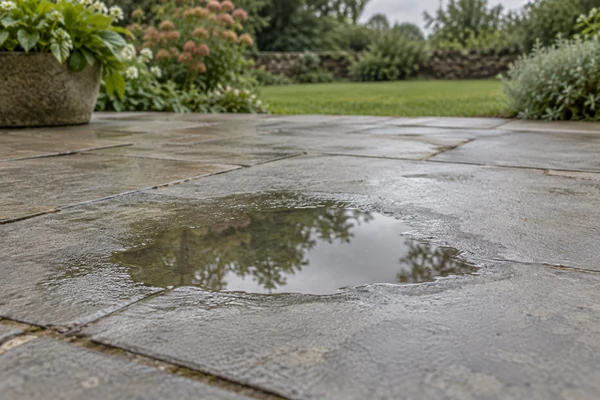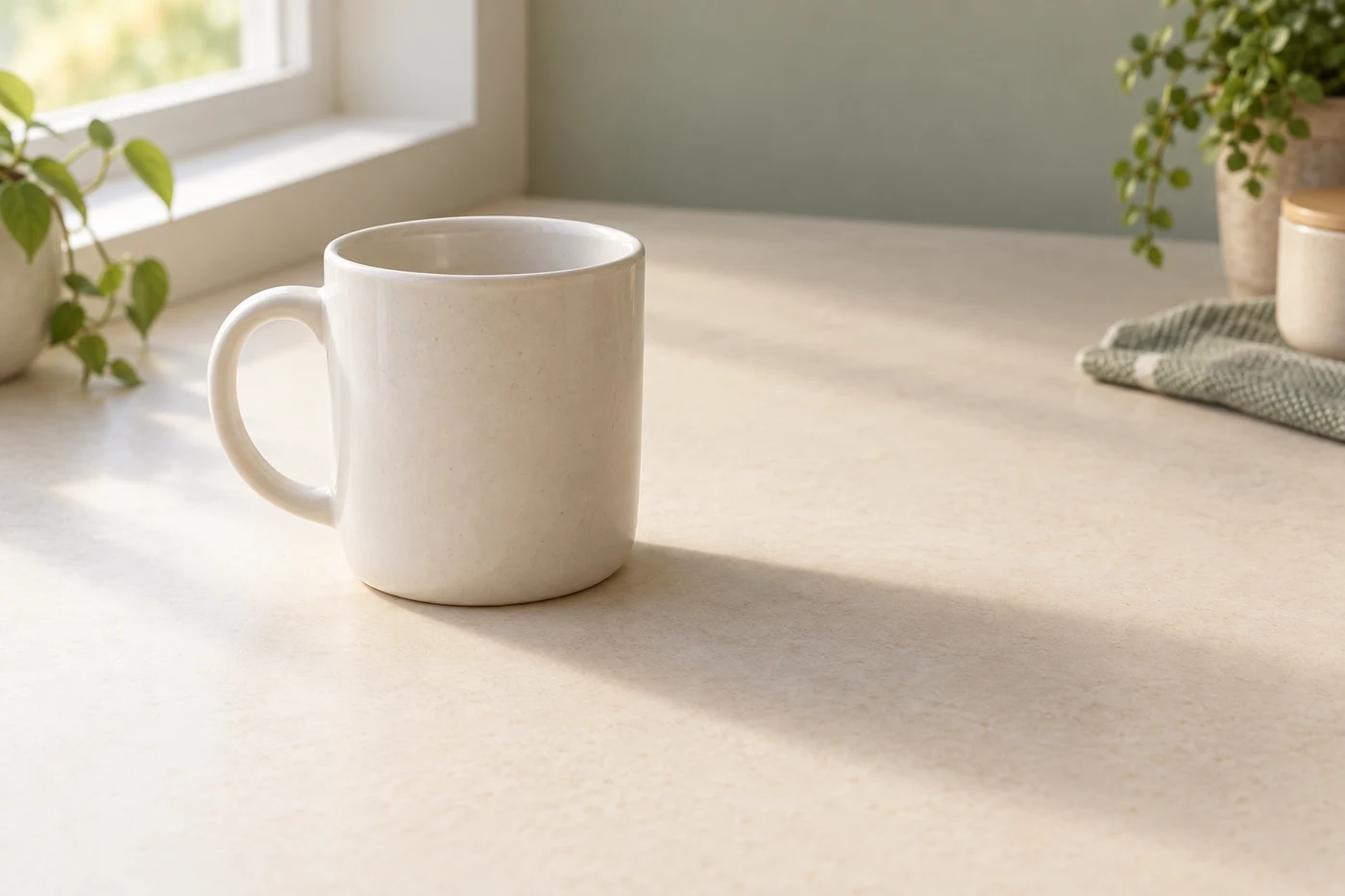
Many light sources shine from an area. At a shadow's edge, the object blocks only part of that area. Some light still arrives there: this transition region is called the penumbra.
A shadow is a region that receives less light. Its soft edge can already exist on the tabletop. It does not have to come from an out-of-focus photograph.
A lamp is rarely a point
For ordinary shadows, light in uniform air can be represented by straight paths. An opaque object blocks some of them.
Different parts of a glowing area send light along different paths. Their shadow edges fall in slightly different places. A light-emitting area that appears larger from the object produces a wider transition when the rest of the arrangement stays the same.
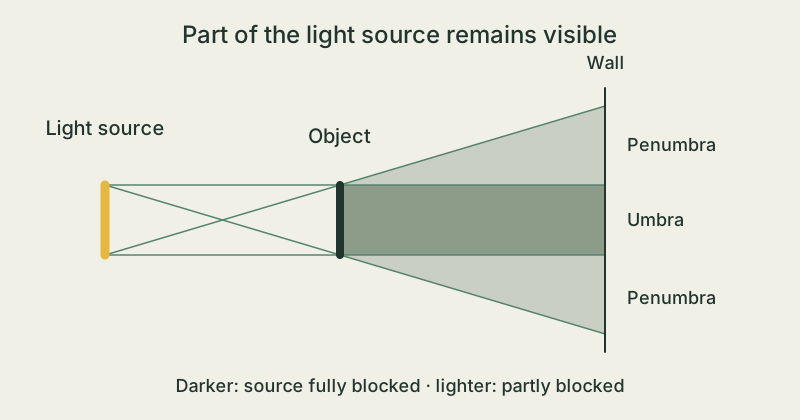
Umbra and penumbra
In the umbra, this light source is completely blocked. In the penumbra, part of it remains visible. The more of it that is visible, the more direct light can reach that spot.
Penumbra does not mean exactly half the brightness. Brightness changes across the edge. Other lamps or reflected light can also brighten the umbra.
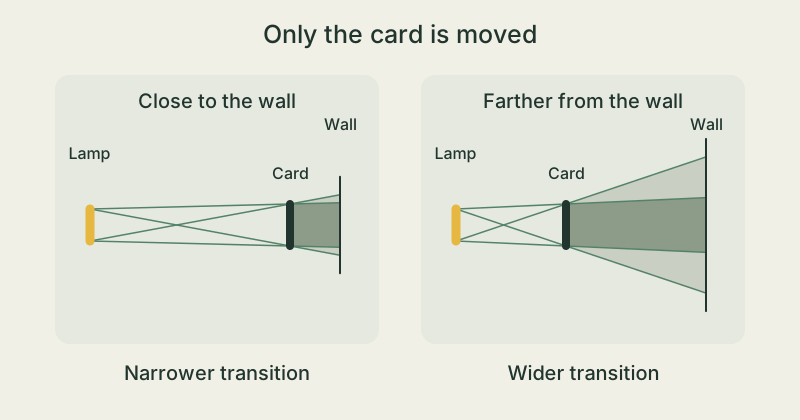
Distance from the wall matters
With the lamp and wall fixed, the transition usually becomes narrower when you hold the object close to the wall. Farther from the wall, it can become wider.
This applies to an extended light source. Several separate lamps can also produce several shadows. A shadow's size or darkness alone does not tell you how soft its edge is.
One card, two distances
- Aim a cool-running LED lamp with a light-emitting area at a white wall. Hold an opaque postcard between them, first close to the wall. Observe the shadow edge.
- Keep the lamp and wall fixed. Move only the card slowly toward the lamp. Compare the width of the soft transition, rather than just the shadow's size.
- Move the card back. Does the edge become narrower again? If the difference is hard to see, your lamp may have a very small light-emitting area. Other lamps and bright daylight make the comparison harder.
Use a stable, cool-running LED lamp. Keep paper away from the light and do not look directly into it. Do not use a laser or candle. Children should observe with an adult.
The takeaway
At a soft shadow edge, an extended light source is only partly blocked. The light-emitting area and distances determine the transition.
Why is the penumbra brighter than the umbra of the same light source?
Sources & further reading
OpenStax College Physics 2e · The Ray Aspect of Light ↗NASA Science · Eclipse Glossary: Umbra and Penumbra ↗AAPT / NASA HEAT · Concept Questions: Geometrical Optics ↗Exploratorium · Model a Solar Eclipse ↗Our stories explain the main idea in our own words. Pictures and models simplify reality and are not drawn to scale.