Water is attracted to the paper fibres, and its molecules also attract one another. Together with surface tension, this makes water flow into the tiny spaces in the paper, even a short way upward. This is called capillary action.
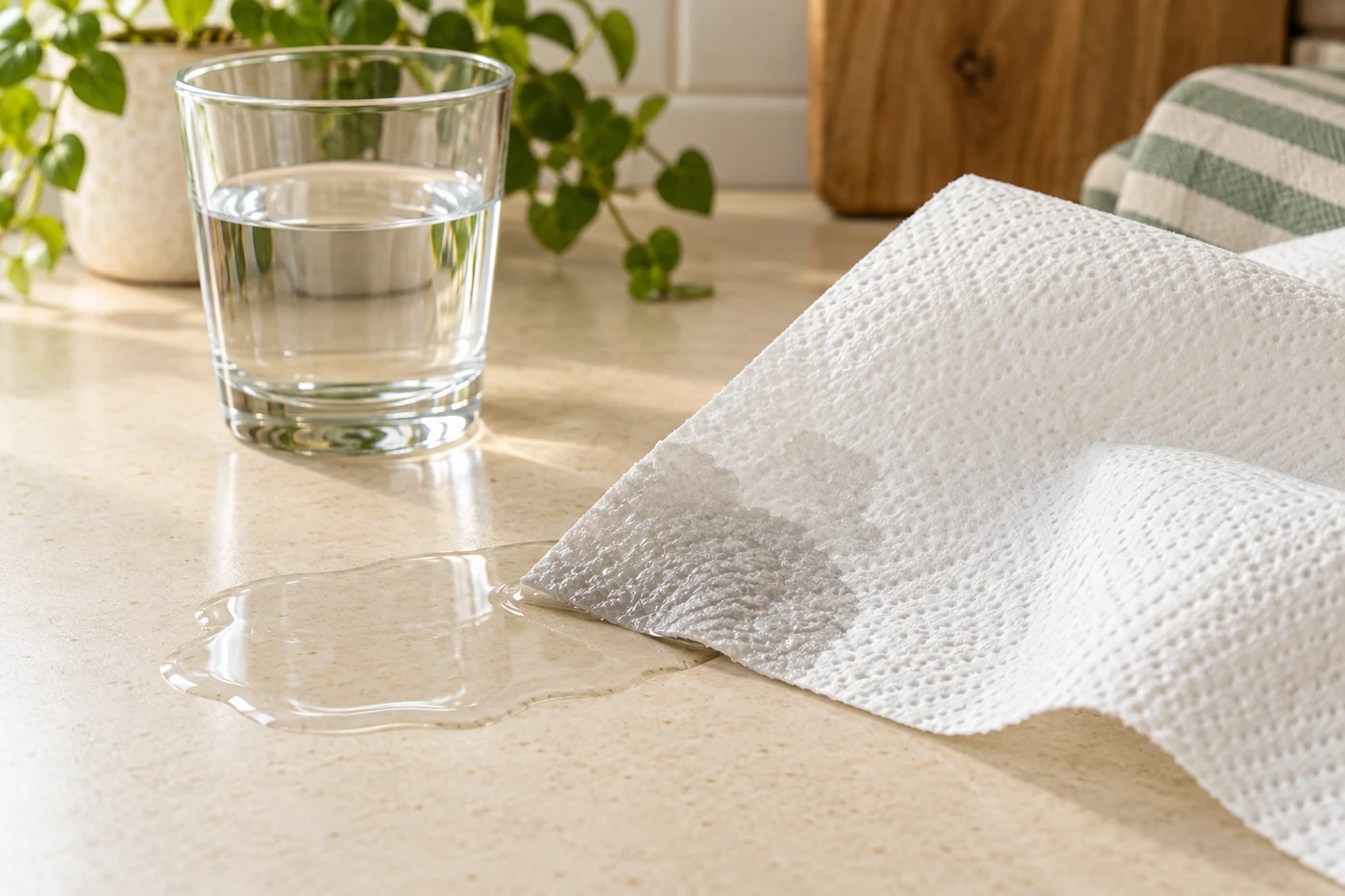
A glass has tipped over. You touch one corner of a paper towel to the puddle. Soon, paper that never touched the puddle gets wet too. How does water reach it? Picture the towel as a network of tiny pathways.
Two kinds of attraction
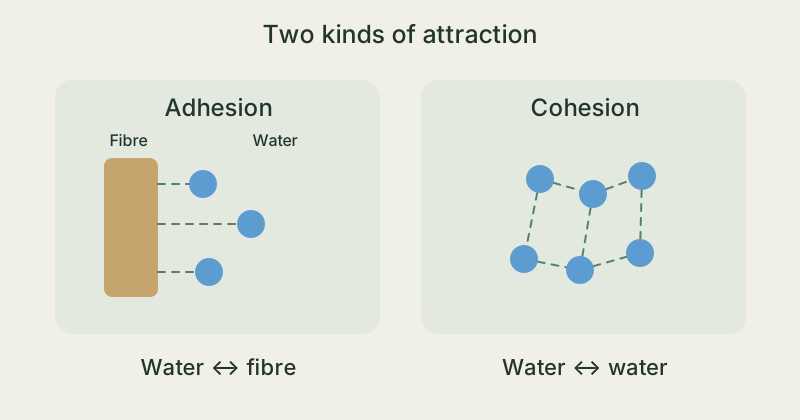
Water is made of tiny molecules. The attraction between them is called cohesion. It helps hold liquid water together. Attraction between water and another material, such as a paper fibre, is called adhesion.
You do not need to remember the names. The idea is enough: water clings to the fibres and stays connected to other water. Paper towels contain many plant fibres. Water can wet their surfaces.
Tiny pathways through paper
Between the fibres are many narrow, connected spaces. Water flows into these pores. There is no hidden pump in the towel: forces at the tiny water surfaces set it moving.
Surface tension plays a part too. It comes from attraction between water molecules. In a narrow space with walls that water wets well, these forces can work together to draw water upward against gravity. We call this movement capillary action.
Water spreads through the fibre network. The wet patch grows beyond the first point of contact, sideways as well as upward. The spaces are irregular; they are not a row of perfect miniature drinking straws.
Why does it not climb forever?
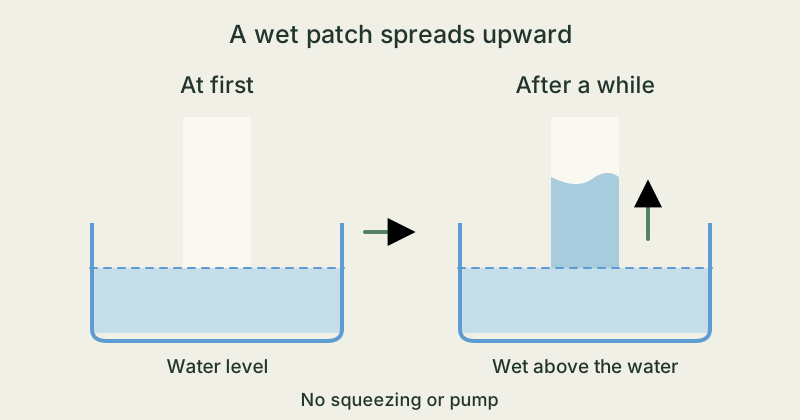
Gravity still pulls downward. Water therefore cannot rise to any height in an upright strip. How high and how quickly the wet patch spreads depends on the paper and its pores, among other things.
A towel also has a limited capacity. Once it is very wet, it cannot soak up another puddle as well as a dry one. When comparing towels, start with equally sized dry strips and give them the same amount of time.
Watch a wet patch travel
- Put a stable cup with a little room-temperature water on a tray. Tear off a long, narrow strip of dry paper towel. First, predict: will only the dipped end get wet?
- Hold the strip upright and dip only the bottom end about one centimetre into the water. Do not squeeze it. Watch for a few minutes as the wet patch moves above the water level. Write down what you see after one minute and after three minutes.
- Repeat with an equally sized dry strip of a different kind of paper towel. Use the same dipping depth and observation times. Has the wet patch travelled the same distance? A difference tells you about these two samples; it does not prove a rule for every paper.
Use a small amount of room-temperature water and an undamaged cup. Keep the tray away from sockets and electrical devices. Do not drink the experiment water. Young children should observe with an adult.
The takeaway
Water wets the fibres and draws more water along with it. In the tiny pores, capillary action helps the towel take up water, even a short way upward.
Only the bottom of a paper strip is in the water. Why does a patch above it get wet too?
Sources & further reading
USGS Water Science School · Capillary Action and Water ↗OpenStax Chemistry 2e · Properties of Liquids ↗OpenStax College Physics 2e · Cohesion, Adhesion and Capillary Action ↗Our stories explain the main idea in our own words. Pictures and models simplify reality and are not drawn to scale.