Hard walls and floors reflect some sound. Many of these reflections reach us close together and overlap. This is reverberation. Rugs, thick curtains and upholstery can absorb more sound energy and shorten the lingering sound.
You step into a nearly empty room and say hello. It sounds different from a cosy living room. The room is not making another voice: some of your sound returns by longer routes.
Sound comes back
Sound is a vibration that travels through the air. Some reaches our ears directly. Some first meets a wall, the floor or the ceiling.
A surface can reflect sound. The sound then travels in a different direction. This lets us hear sound that has taken a longer route too.
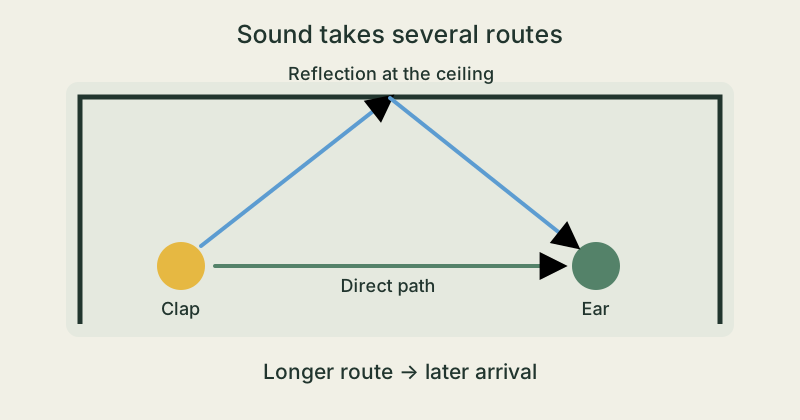
Many return paths, one lingering sound
A room offers many routes and repeated reflections. The arriving sounds overlap. After a short clap, you may hear a fading tail: reverberation.
You hear a clearly separate echo as a repeat. With reverberation, many reflections arrive so close together that they sound like one fading tail. Not every room produces a single distinct echo.
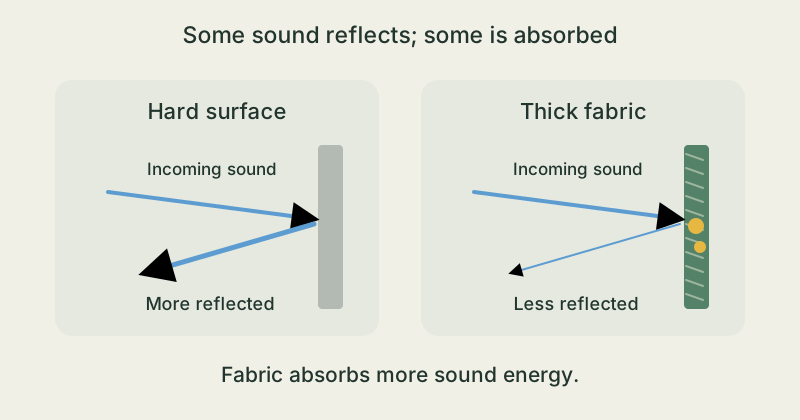
Soft furnishings help damp the sound
Rugs, thick curtains and upholstery absorb some sound energy. Less is reflected back into the room. A furnished room therefore often sounds less echoey.
These materials still reflect some sound. Their effect depends on the material, its thickness and the pitch of the sound. Room size and shape matter too. One sofa will not make every room equally quiet.
Listen to what follows the clap
- Choose two quiet rooms you may safely enter: one with many hard surfaces, another with a rug or soft furniture. Predict where a brief clap will linger longer.
- Clap gently once in each room, at a similar height and with roughly the same strength. Stay quiet afterwards. Listen to the sound AFTER the clap, rather than just how loud the clap is.
- Write down: a clear lingering sound, little lingering sound, or no clear difference? The rooms differ in size and shape too. Your comparison shows how they sound; it does not isolate the effect of one object.
Clap gently, never close to an ear. Do not shout. Use dry, safe rooms and avoid disturbing others. Stop if the sound feels uncomfortable. Children should observe with an adult.
The takeaway
Reverberation comes from many reflections. Sound-absorbing materials can shorten the fading tail.
Why can a rug shorten reverberation?
Sources & further reading
OpenStax College Physics 2e · Sound ↗OpenStax University Physics Volume 1 · Reflection and Interference of Waves ↗University of Iowa Voice Academy · Classrooms and Sound Absorption ↗Exploratorium · Rotunda Echo ↗Our stories explain the main idea in our own words. Pictures and models simplify reality and are not drawn to scale.