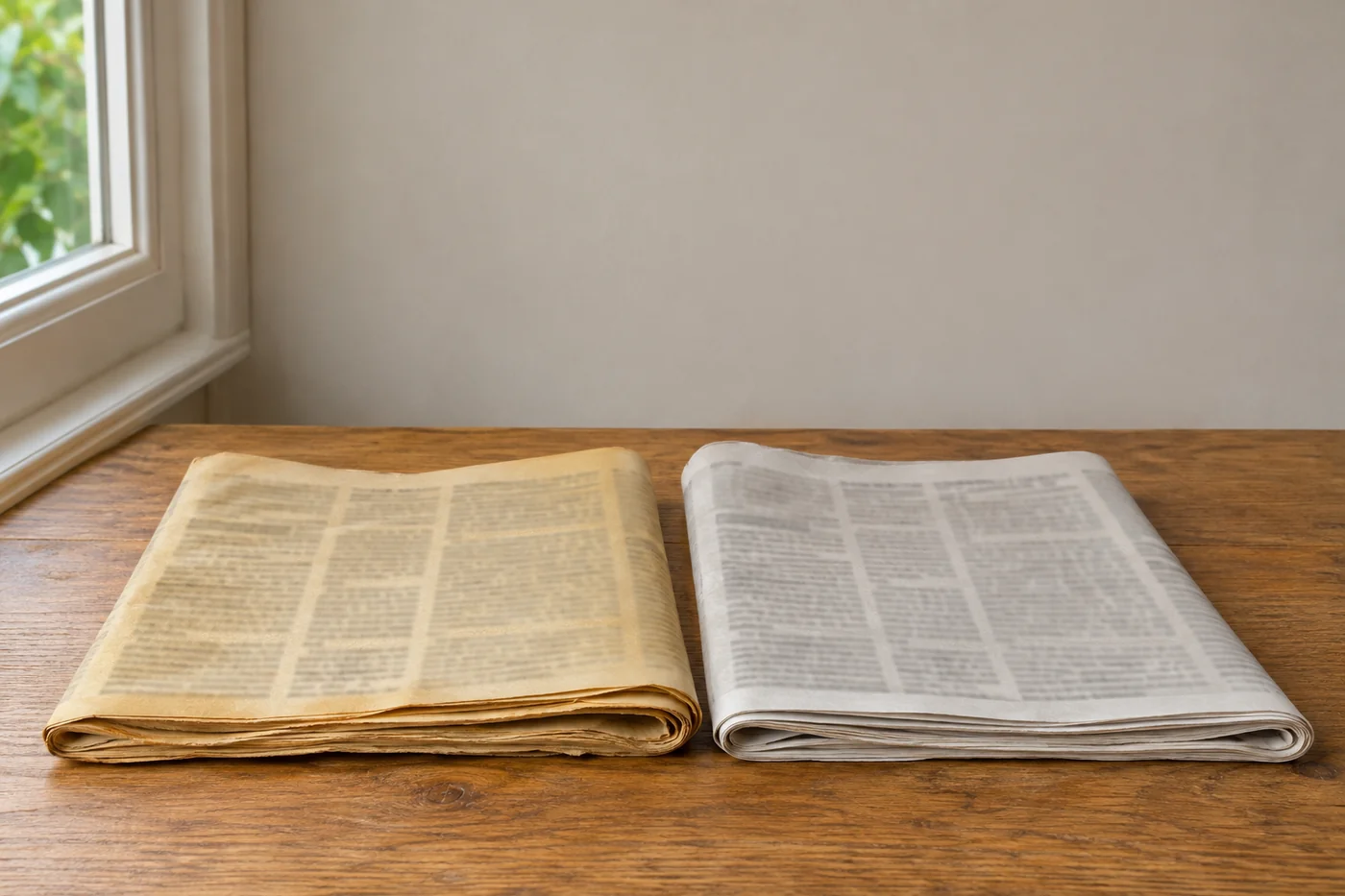
Many kinds of newsprint contain lignin, a substance from wood. Light can trigger chemical changes in lignin. Those changes produce substances that absorb some blue light. The light that comes back from the paper then looks more yellow.
Look at the unprinted edge of an old newspaper. It’s often yellower than the edge of a fresh edition. The difference can be especially noticeable if the old newspaper spent a long time by a bright window.
Something from the wood stays in the paper
Paper is a mat of tangled plant fibres. Wood also contains lignin, which stiffens the walls of its cells. When wood is mechanically broken down into fibres for newsprint, a lot of lignin stays with the fibres.
Some other ways of making paper remove much of the lignin. That’s one reason why different kinds of paper can look very different as they age.
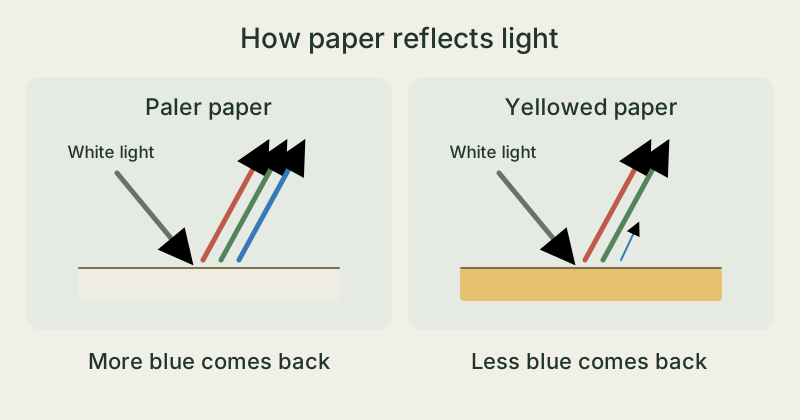
Yellowed paper sends less blue light back
Lignin changes chemically over time. Light can speed up some of these changes, and oxygen from the air takes part in some of the reactions.
The substances produced absorb more light from the blue end of the spectrum. Less blue light reaches your eye compared with the amount of red and green light. In white light, that makes the paper look yellower.
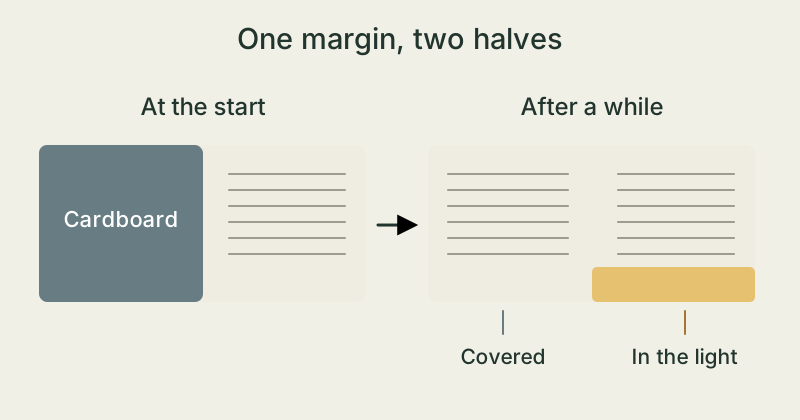
A cover keeps some light off the page
A covered part of the same newspaper gets less light. After a while, it may look paler than the exposed part. How quickly you see a difference depends on the paper and how much light reaches it.
Paper still ages slowly in the dark. That’s why archives keep important newspapers in cool, dry places away from light.
Watch two halves of the same page
- Find a piece of newspaper you can spare. Look for a wide unprinted margin and take a picture of it in even light.
- Put the piece on a dry, bright windowsill. Cover half the margin with cardboard that light can’t pass through. Leave the other half exposed.
- Look under the cardboard after a week. Compare both halves side by side in the same light, then put the cover back. Do that again each week for a few weeks. Depending on the paper and the window, a visible difference can take longer.
Use a newspaper headed for recycling and stick to daylight from the window.
The takeaway
Lignin from wood remains in many kinds of newsprint. Light can change the lignin. The paper then sends less blue light back and looks yellower.
Why might the exposed half of a partly covered newspaper turn yellower?
Sources & further reading
Canadian Conservation Institute · Caring for paper objects ↗Library of Congress · The Deterioration and Preservation of Paper ↗Fjellström et al. · Light-induced yellowing of pulp sheets ↗Our stories explain the main idea in our own words. Pictures and models simplify reality and are not drawn to scale.