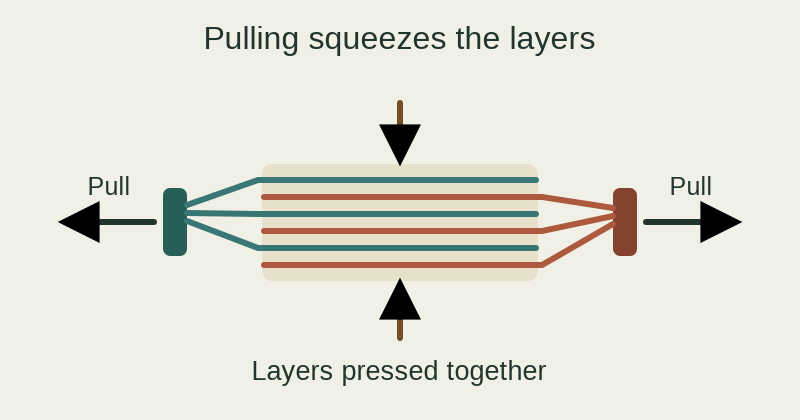
To pull the notebooks apart, many paper surfaces have to slide past one another. Some sheets run at an angle between the spine and the middle. Pulling makes these sheets squeeze the layers in the middle more firmly. That increases the friction resisting the slide.
Put two notebooks next to each other on a table. Lay one sheet from the left notebook over one from the right, then keep alternating. Suddenly the notebooks are much harder to separate. What gives the paper such a firm grip?
Many sheets are touching
Two loose sheets of paper slide past each other easily. Press them together and you feel more resistance when you pull. This resistance to sliding is called friction.
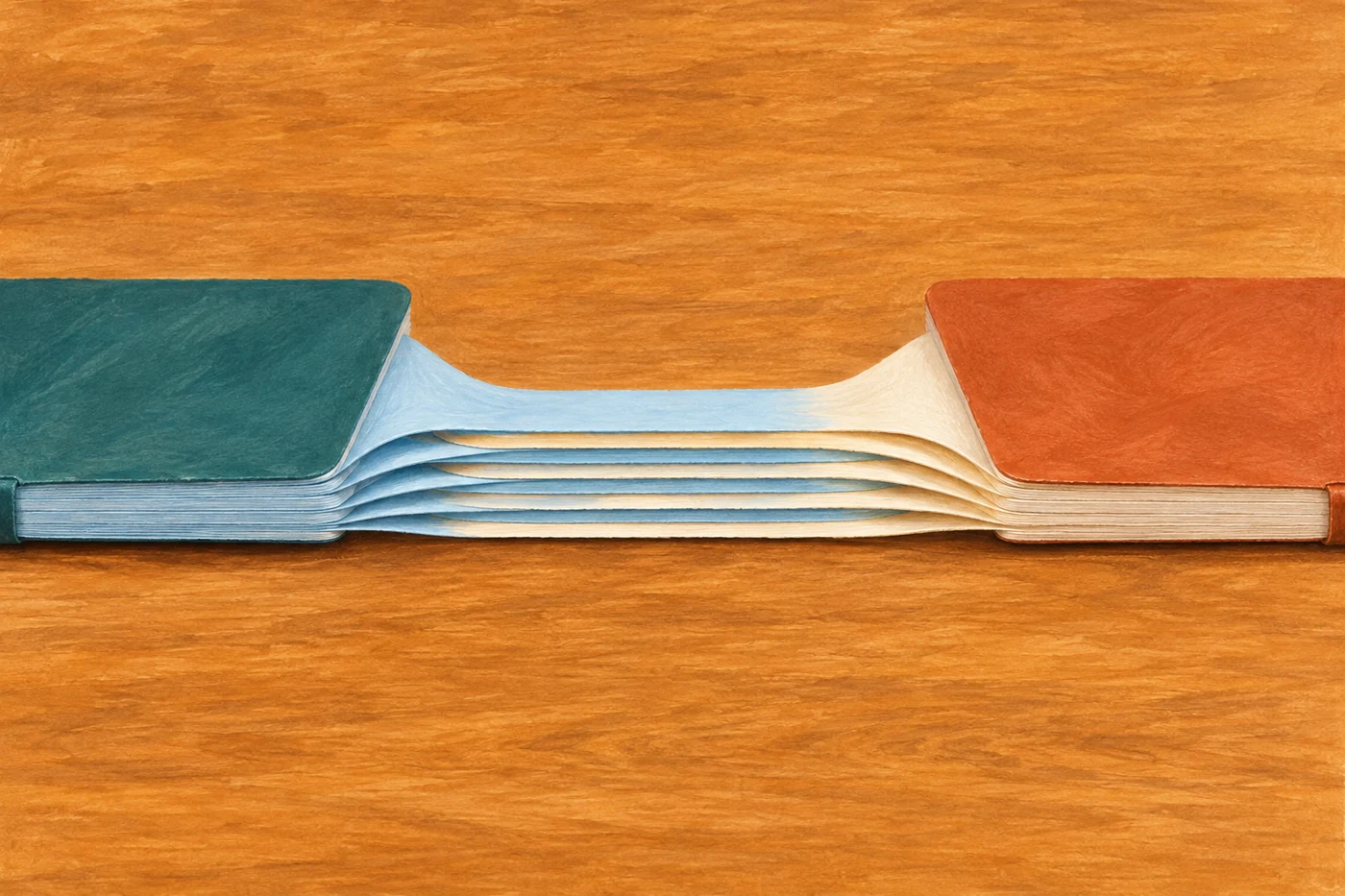
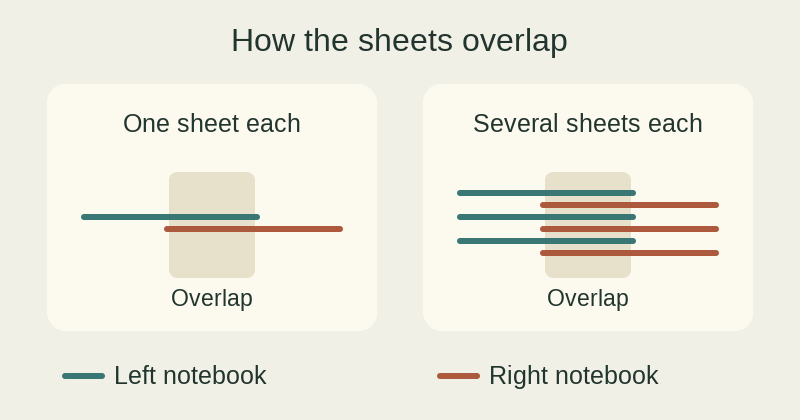
With the pages of two notebooks interleaved, each inner sheet touches paper from the other notebook. To separate them, many pairs of sheets have to slide past each other at once.
Pulling can squeeze the paper
In the middle, the sheets lie flat against one another. They fan out between each spine and the middle. Some of the sheets run at a slight angle.
Pulling on the spines puts the sheets under tension. Because some of the sheets are slanted, they press the flat layers in the middle together more firmly. The harder the sheets press together, the more friction they can create.
Many small forces act together
One sheet can press a little on the layers underneath it. Many sheets contribute at the same time. Pulling can make the inner layers press together much harder than you might expect from such thin paper.
Researchers measured the effect with similarly bound booklets. The force needed to separate them rose quickly as they interleaved more sheets. The thickness of the sheets and the amount of overlap made a difference too.
Compare a few layers with many layers
- Find two old notebooks of about the same size with bound pages. Set them open side by side, with the spine of the left one on the left and the spine of the right one on the right.
- Overlap one sheet from each notebook by a few centimeters. Hold each notebook at its spine and slowly pull them apart on the table. Notice how easily they slide.
- Now lay one sheet at a time in the middle, alternating from left to right. Use about eight sheets from each notebook, keeping about the same amount of overlap as before.
- Pull gently on both spines again. Compare the resistance. Then lift the layers one by one to separate the notebooks.
Use old notebooks and keep them on the table. Pull gently so the pages stay intact.
The takeaway
Pulling can make the slanted sheets squeeze the paper in the middle. That increases friction between many sheets at the same time.
Why are many interleaved sheets harder to pull apart?
Sources & further reading
Physical Review Letters · Self-Amplification of Solid Friction ↗Physics Today · Why can’t you separate interleaved books? ↗Australian National University · Friction Books ↗Our stories explain the main idea in our own words. Pictures and models simplify reality and are not drawn to scale.