Dry pasta takes up water as it cooks. Tiny starch granules inside swell, and the network of proteins changes too. Water reaches the outside layers first, so the pasta softens from the outside in.
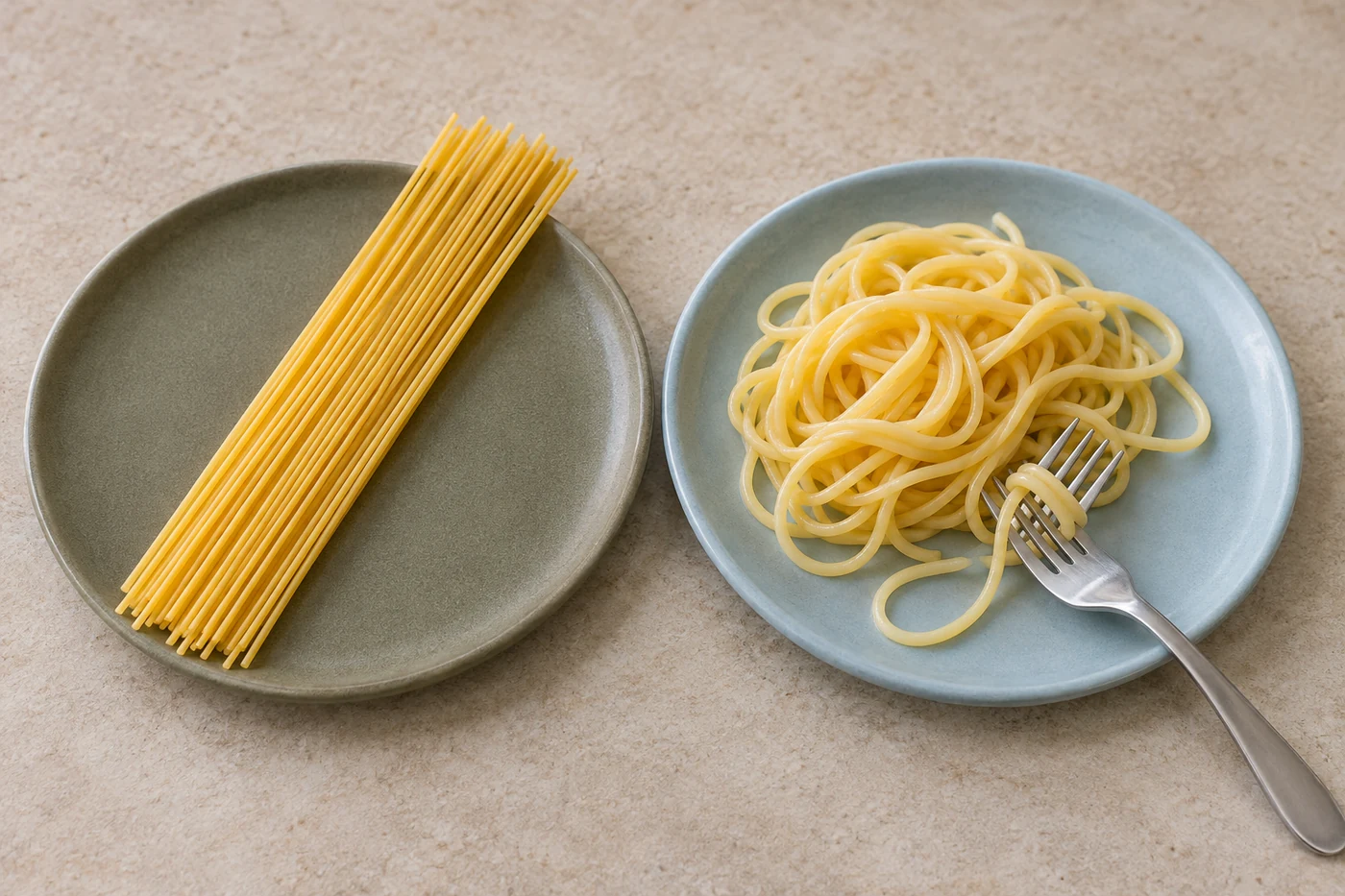
A dry strand of spaghetti is stiff and snaps if you bend it too far. Once it’s cooked, you can twirl it around a fork. What changed inside the pasta?
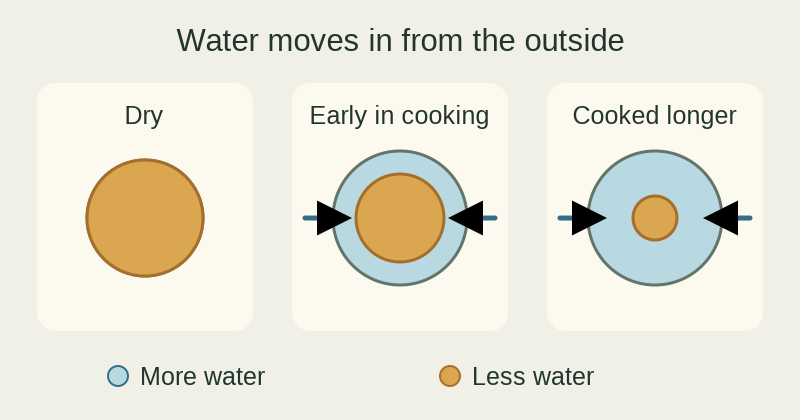
Water starts at the surface
Dry durum wheat pasta contains a lot of starch and some protein. Both are packed tightly inside the pasta.
In the pot, water touches the surface first. It makes its way deeper into the pasta over time. The outer layers take up water before the center does.
Water and heat change the starch
Starch is packed into tiny granules. With enough water and heat, the granules take up water and swell. Some of their internal structure loosens. This change is called gelatinization.
The protein network also takes up water and changes as the pasta cooks. Together, these changes make the pasta thicker and easier to bend.
The middle can stay firmer
Pasta can be soft on the outside and still feel firmer in the middle. You may notice this when you eat pasta cooked al dente, or firm to the bite.
In a thicker strand or tube wall, water has farther to go to reach the middle. That’s one reason different pasta shapes can take different times to cook.
Compare dry and cooked spaghetti
- Ask an adult to put one dry strand and one completely cooled cooked strand of spaghetti from the same package onto a plate.
- Lay the strands side by side and compare how thick they look. Can you tell which one is thicker?
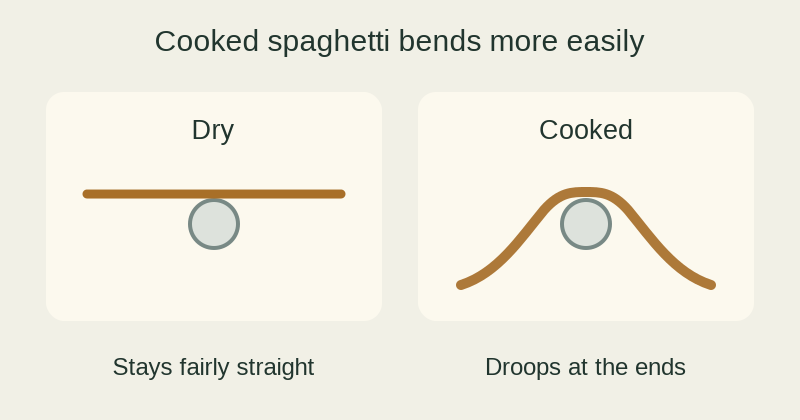
- Ask the adult to hold a spoon with its handle level above the plate. Lay the middle of each strand across the handle in turn. Watch how far the ends droop.
- Draw the two shapes on paper. Which strand stays straighter, and which hangs down over the spoon?
An adult should cook the pasta. Wait until it has cooled completely before you handle it.
The takeaway
Hot water enters pasta from the outside. The starch swells and the protein network changes, making the pasta thicker and softer.
Which part of a strand of spaghetti takes up water first as it cooks?
Sources & further reading
University of Illinois · Swelling and softening of cooked pasta ↗International Journal of Food Science & Technology · The durum wheat pasta cooking process ↗Delcour et al. · The role of starch gelatinization in pasta quality ↗Our stories explain the main idea in our own words. Pictures and models simplify reality and are not drawn to scale.