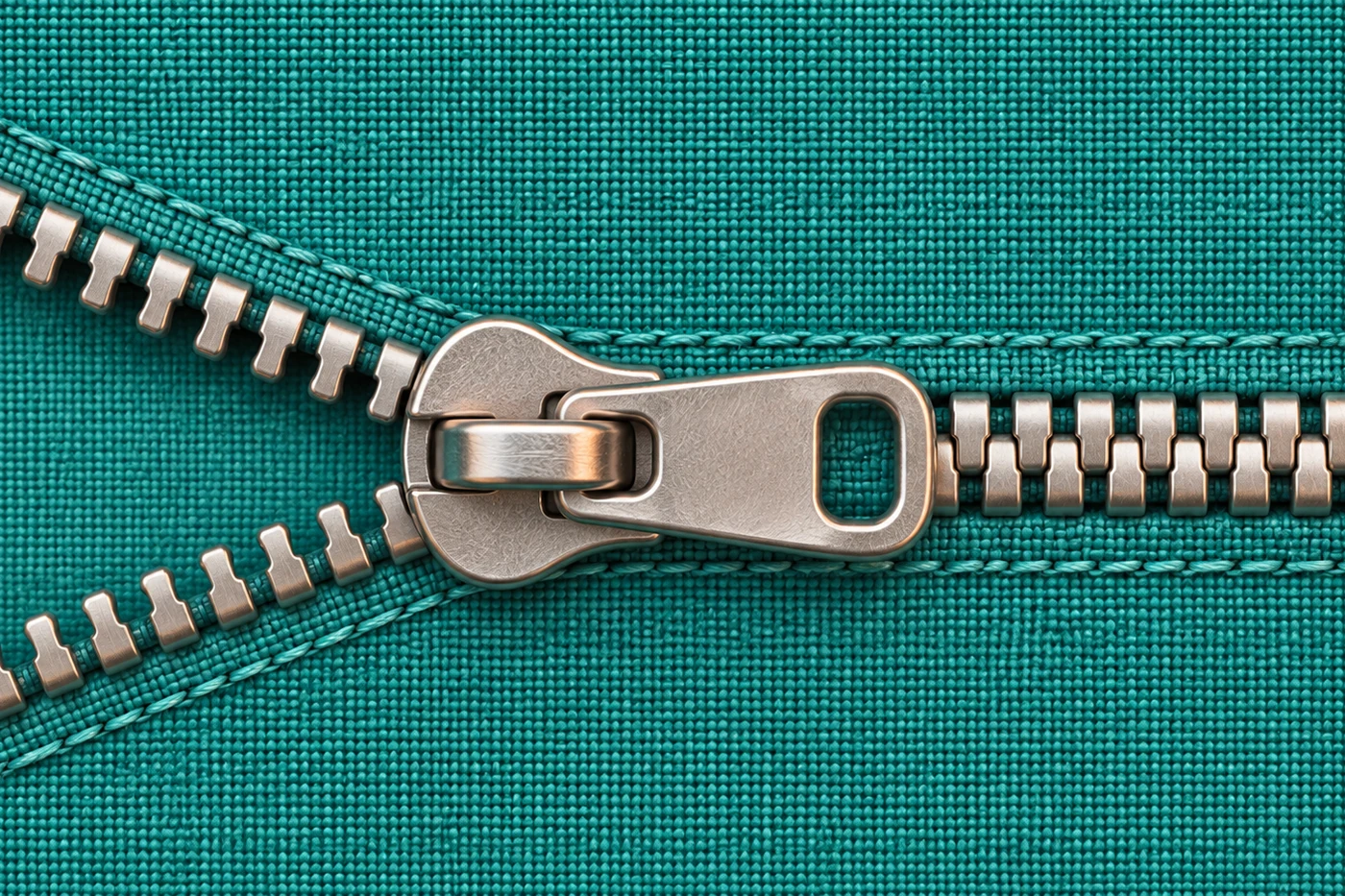
The slider brings the two rows of teeth together. The teeth are staggered and shaped to interlock. Moving the slider the other way guides the two rows apart again.
The cover is an illustration. With a real zipper, you can watch where the two rows join.
Two fabric strips hold the teeth
Each side of the opening has a fabric strip with a row of tiny teeth. The pull tab moves the slider. The teeth stay attached to their strips as the slider passes over them one by one.
Two paths meet inside the slider
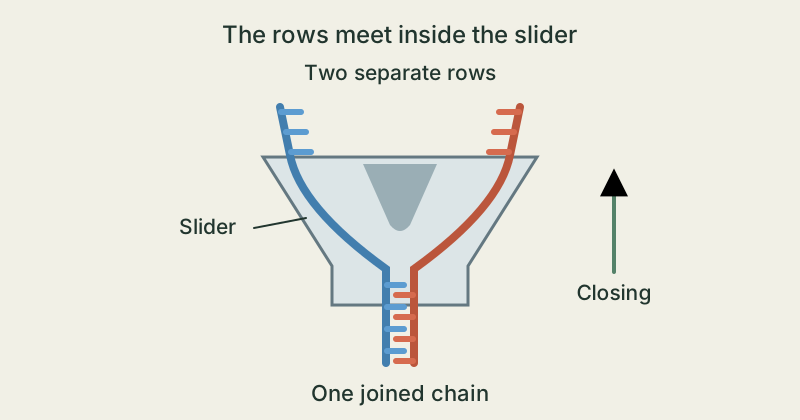
The slider has two narrow channels that meet like the arms of a Y. As you close it, the separate rows enter at the wide end. They leave the narrow end as one chain. Opening reverses the process. A divider inside the slider guides the rows apart.
The shape holds the rows together
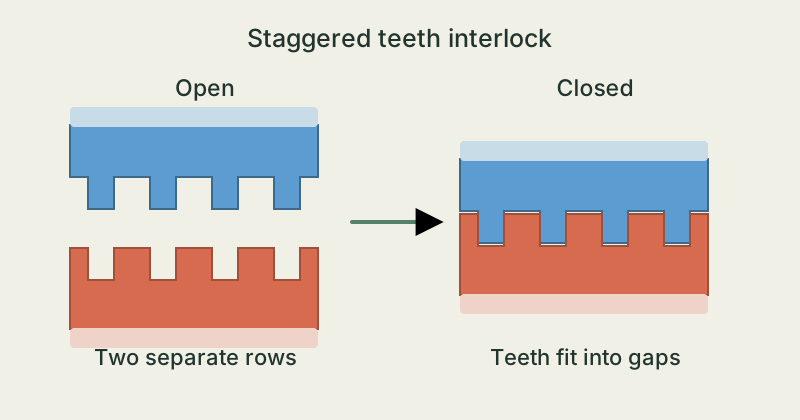
The teeth on one side sit in the gaps between teeth on the other. In a typical metal zipper, a small raised part of one tooth fits into a hollow in its neighbour. Tug gently sideways on the fabric strips and the interlocking teeth hold the two strips together.
The zipper closes one tooth at a time
The slider only joins the few teeth passing through its channel at any given moment. The teeth behind it stay joined. If fabric slips into the slider, it can block the narrow channel. Stop pulling and gently free the fabric.
Watch a zipper slider at work
- Lay an empty pencil case or a jacket flat on a table. Choose a zipper whose individual teeth are easy to see.
- Close it about halfway. Look for the two separate rows on one side of the slider and the joined chain on the other.
- Move the slider a short way back and forth. Watch where the teeth meet or separate. Sketch which end of the slider takes in the two rows.
Pull slowly and keep your fingers clear of the slider opening. Stop if it jams.
The takeaway
The slider guides two rows of teeth together or apart. The shape of the teeth holds the closed chain together.
What keeps the teeth together after they leave the slider?
Sources & further reading
YKK · What's the structure of a zipper? ↗U.S. Patent Office · Gideon Sundback, Separable Fastener (US1219881A) ↗Our stories explain the main idea in our own words. Pictures and models simplify reality and are not drawn to scale.