Plucking a stretched rubber band sets it moving rapidly back and forth. These vibrations disturb the air. Small pressure changes spread out as sound and reach your ear.
A rubber band can act like a simple musical string. The key is what keeps moving after you let go.
Why does it keep moving?
Pulling the band a little to one side deforms it and stores extra elastic energy. When you release it, tension pulls it back.
Its inertia carries it past its resting position. It therefore moves back and forth several times. Your hand supplies the energy when you pluck it.
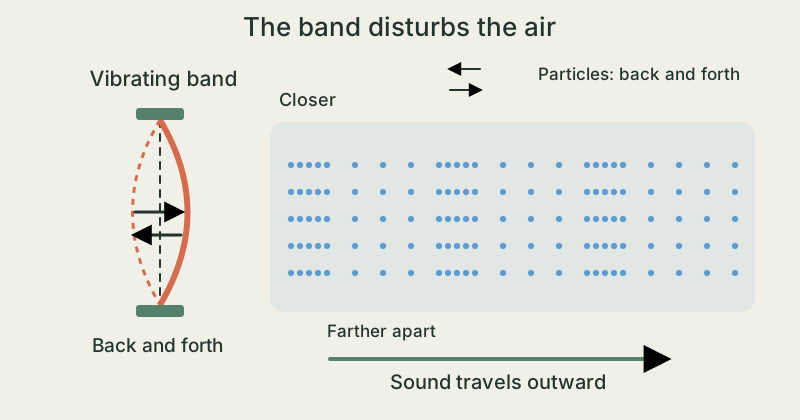
The air passes the disturbance along
The moving surface creates tiny regions of higher and lower air pressure. These changes travel outward. At your ear, they make your eardrum vibrate too.
No parcel of air travels all the way from the band to your ear. Air particles move back and forth locally; the disturbance passes along.
Higher pitch is different from louder sound
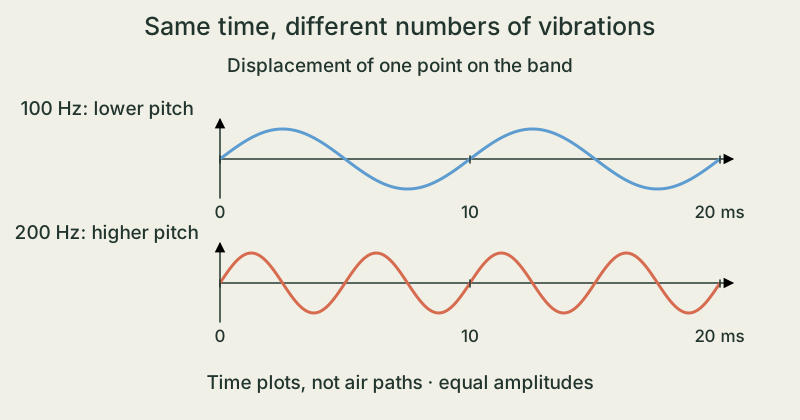
The number of complete vibrations per second is called frequency. For a regular vibration, a higher frequency means a higher pitch. 100 hertz means 100 vibrations per second.
The size of the movement is called amplitude. A slightly stronger pluck usually makes the initial sound louder. It is not a reliable way to set a precisely higher pitch.
Why does the sound fade?
The band does not vibrate forever. Energy transfers to its surroundings and also changes into heat. The movement gets smaller and the sound grows quieter.
Resting a finger on the band damps the vibration further. The twang usually ends much sooner. You can observe the movement and the sound together.
Pluck, watch and gently damp the vibration
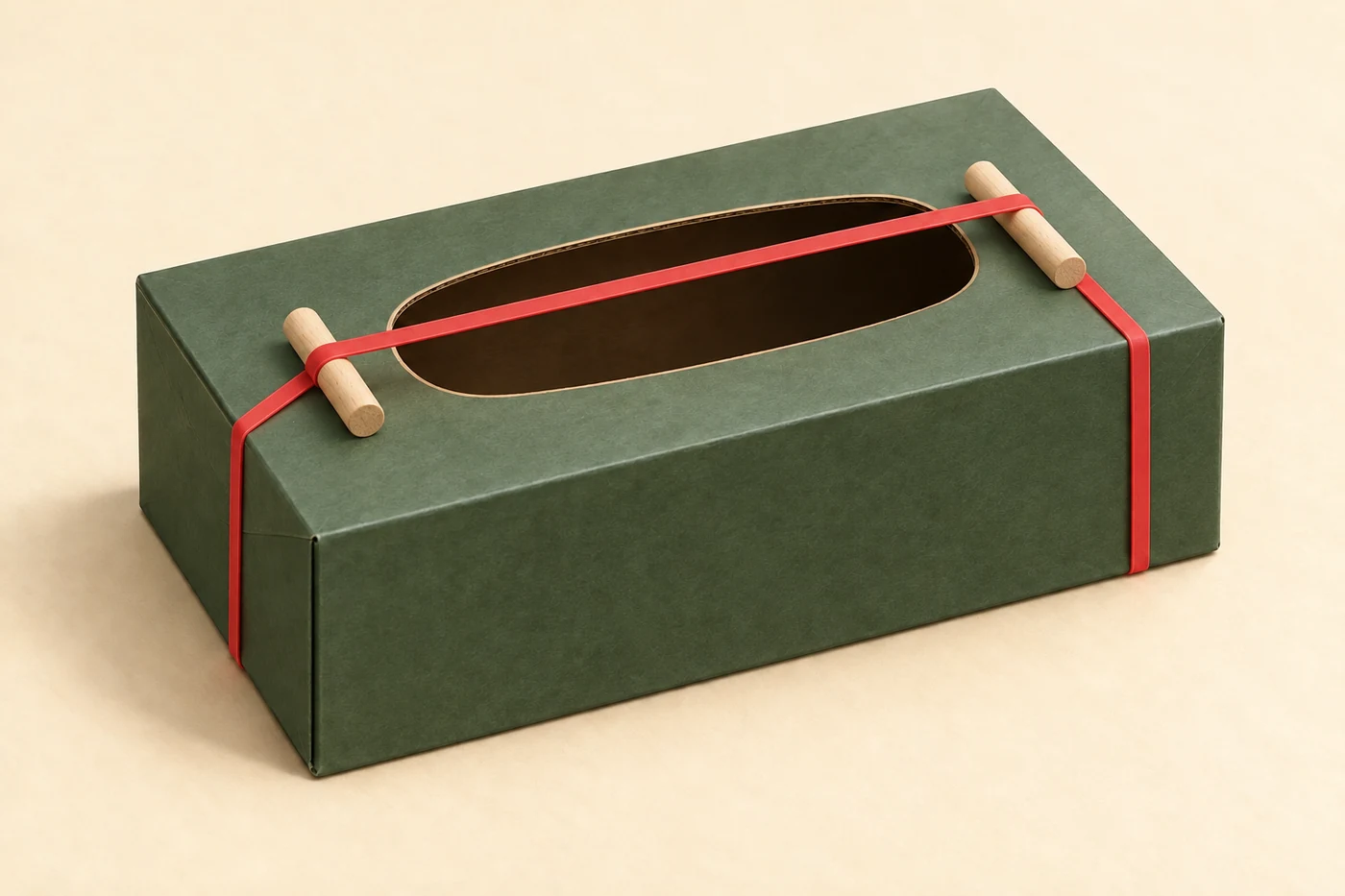
- An adult fits an intact, suitably sized rubber band lengthwise around an empty, sturdy tissue box with only moderate tension. Two smooth, blunt wooden sticks sit crosswise under the band on the solid edges beside the opening. The upper span hangs freely over the hole. Keep the box on the table.
- Steady the box and pluck the middle of the band just a few millimeters to one side. Release it. Watch from a safe distance and listen to the sound. Repeat three times, keeping the same band, support points and listening distance.
- Pluck just as gently again. Shortly afterward, rest a fingertip lightly on the middle of the band and hold it still. Compare how long the twang lasts. Record little visible movement or no clear difference too. This does not measure frequency or the speed of sound.
An adult should check the band and setup. Avoid brittle or tightly stretched bands; use a suitable latex-free band if a latex allergy is known. Keep faces and other people out of a possible snapping path. Do not put the band near your ear or in your mouth, shoot it or pull it far. Keep small parts away from toddlers.
The takeaway
The plucked band vibrates and creates sound in the air. Frequency mainly determines pitch. Damping the vibration shortens the twang.
Why does the rubber band's twang usually end sooner when you hold it still with a fingertip?
Sources & further reading
Science World · Elastic Energy ↗OpenStax / Rice University · Physics 14.1: Sound, Frequency and Wavelength ↗Science World · Sound ↗Science Learning Hub / University of Waikato · Exploring sound ↗Our stories explain the main idea in our own words. Pictures and models simplify reality and are not drawn to scale.