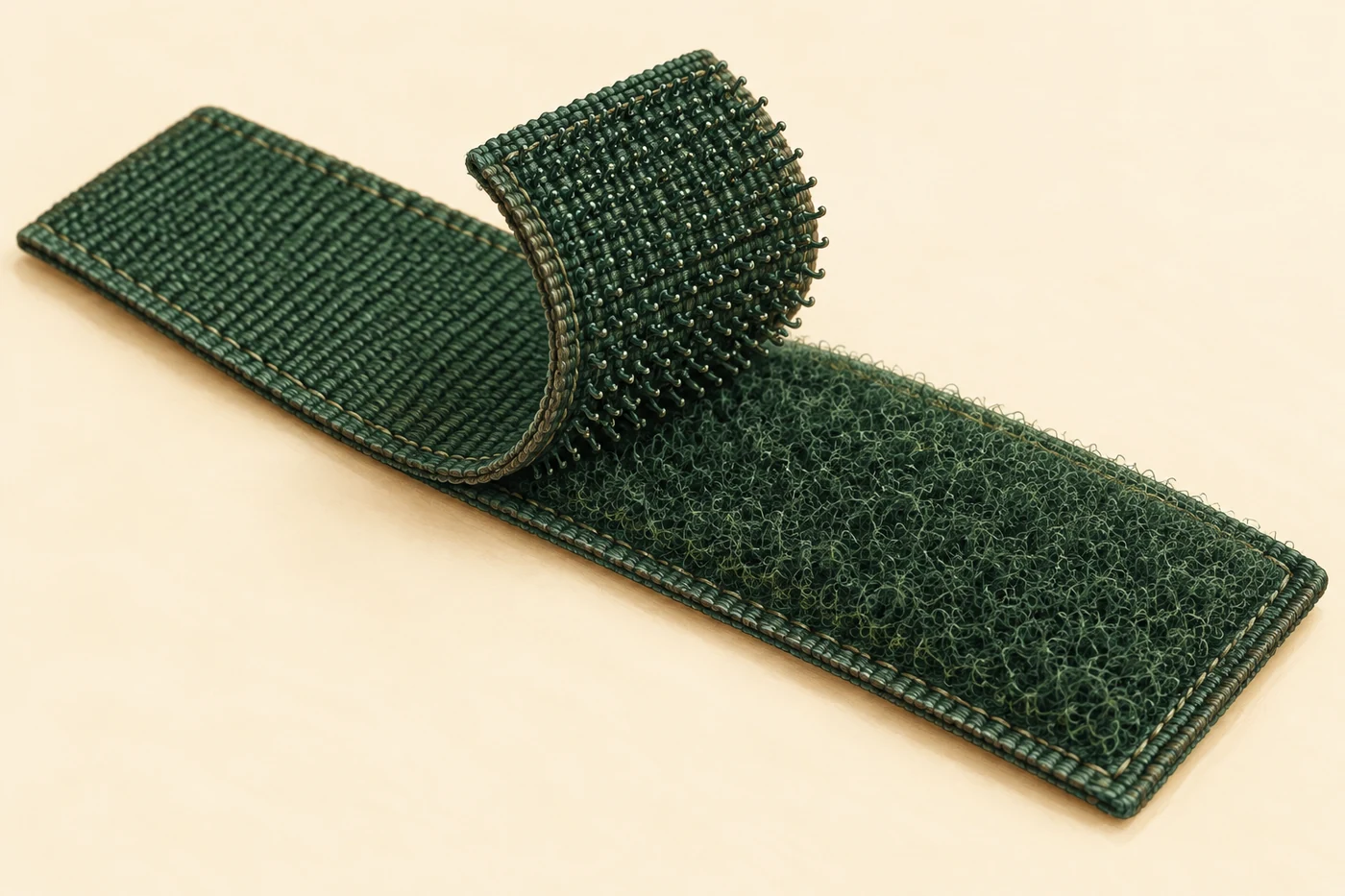
An ordinary hook-and-loop fastener has tiny hooks on one side and soft loops on the other. Pressing them together lets hooks catch some loops. Many connections hold together. Peeling from an edge releases them gradually.
We meet this simple technology on shoes, bags and cable straps. The cover is an illustration; its enlarged textures are not a microscope image.
Two sides do different jobs
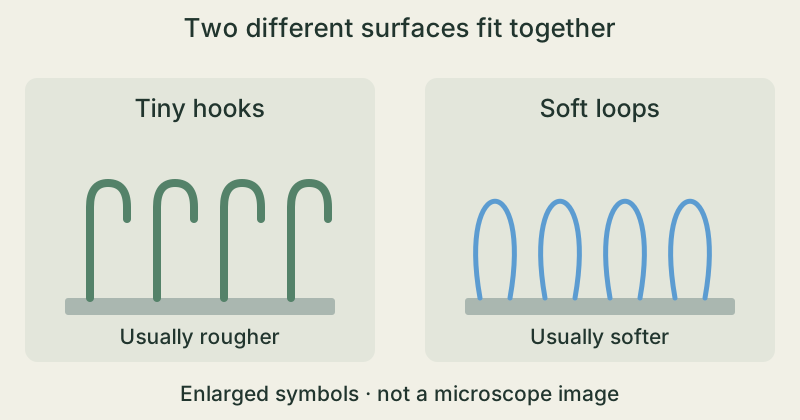
The hook side usually feels rougher. The other side has many flexible fibre loops and feels softer. The parts are often made from plastics such as nylon or polyester.
The hooks need suitable places to catch. This kind of fastener therefore does not grip a smooth tabletop in the same way.
Many connections share the job
Pressing brings the surfaces close together so that many hooks can catch loops. These contacts spread the load over an area.
Every hook need not engage. The design, overlapping area and direction of pull all help determine how well the fastener holds.

Peeling opens it from an edge
Peeling lifts one strip from an edge. Connections release in the moving opening region. Flexible loops and hooks can give way as this happens.
Many contacts can close again, although fibres can wear over time. Some tapes also have an adhesive backing to attach them to an object; hooks and loops hold the two fastening faces together.
A plant inspired the idea
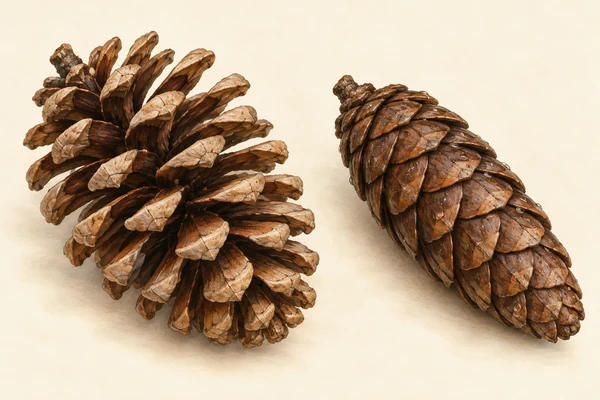
Burdock burrs have little hooks that can catch on fur or fabric. Their shape inspired the engineer Georges de Mestral.
Using a useful structure from nature in technology is an example of biomimicry. The fastener borrows the principle of hooking on.
Watch the opening edge
- With an adult, find a clean fastener that is not carrying a load, perhaps on an empty bag or a shoe you have taken off. Open it gently. Compare the faces in good light, using a magnifier if available. Which looks rough and which soft?
- Press the same area together again. Hold the lower part still and slowly lift the upper part from a corner. Watch where the gap grows and which part remains closed.
- Close and open it no more than three times. Note what you see on the surfaces and at the opening edge. Check only whether it closes again; this does not measure its holding strength.
Ask permission before using an existing fastener. Keep it away from hair, eyes and delicate fabric. Avoid sudden pulls. Hang nothing from it and do not attach heavy objects.
The takeaway
Many tiny hooks catch loops and hold together. Peeling from an edge releases contacts gradually. The shapes of the surfaces make this reusable connection possible.
What holds the two fastening faces together?
Sources & further reading
American Chemical Society · Investigate a Nature-inspired Invention ↗New Mexico State University · Fasteners Made Easy ↗Canadian Conservation Institute · Velcro Support System for Textiles ↗Velcro Companies · How Hook and Loop Works ↗NASA · Quick-Release Hook-and-Loop Fastener ↗Our stories explain the main idea in our own words. Pictures and models simplify reality and are not drawn to scale.