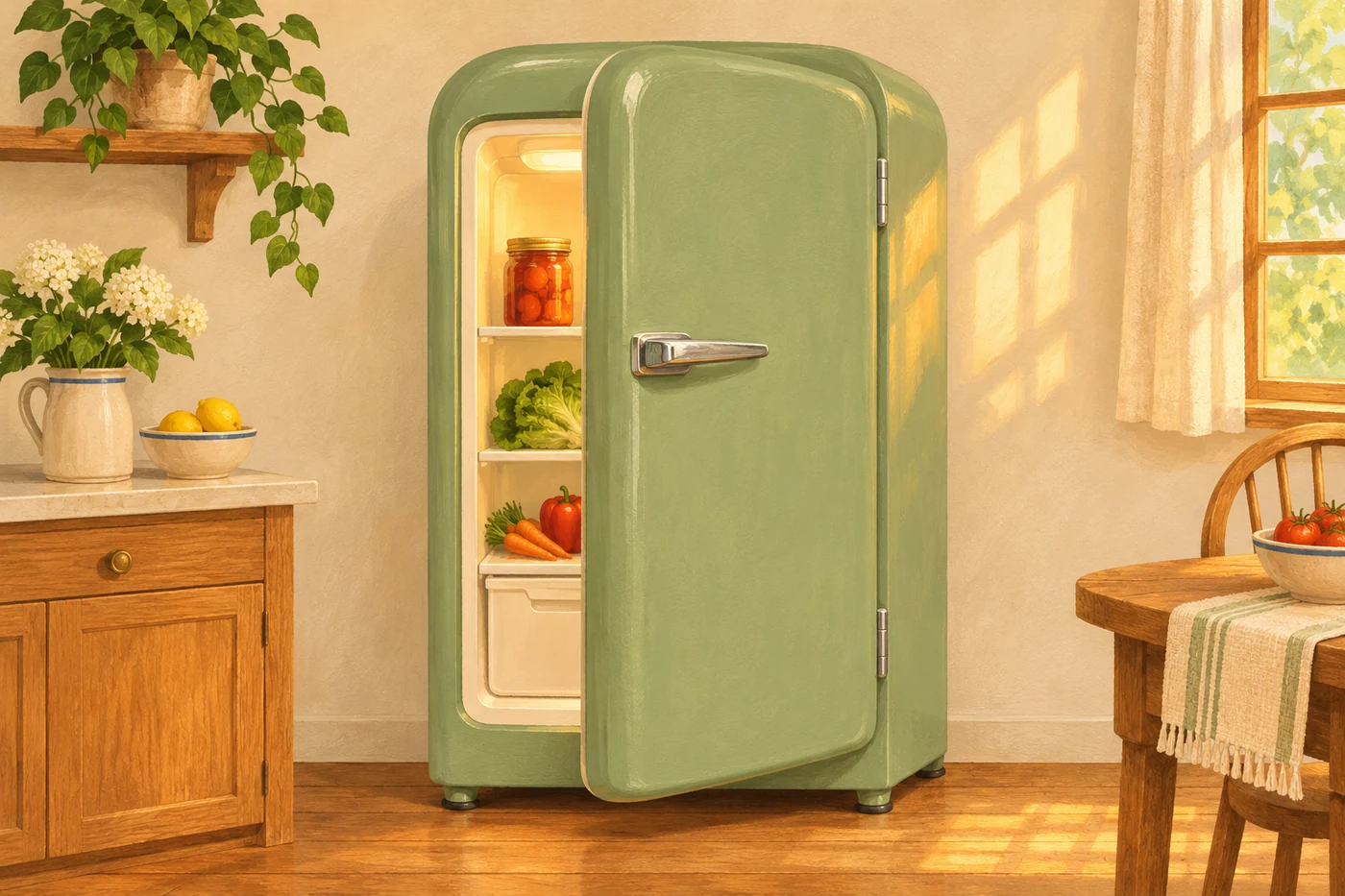
A refrigerator moves heat out of its cold compartment. A substance called a refrigerant picks up heat inside and releases it outside. The pump that keeps it moving uses electricity. That energy ends up as heat in the room too.
You take a cold bottle out of the fridge. The outside wall next to you might feel warm. Both are part of the same process. The fridge takes heat from the inside and releases it outside.
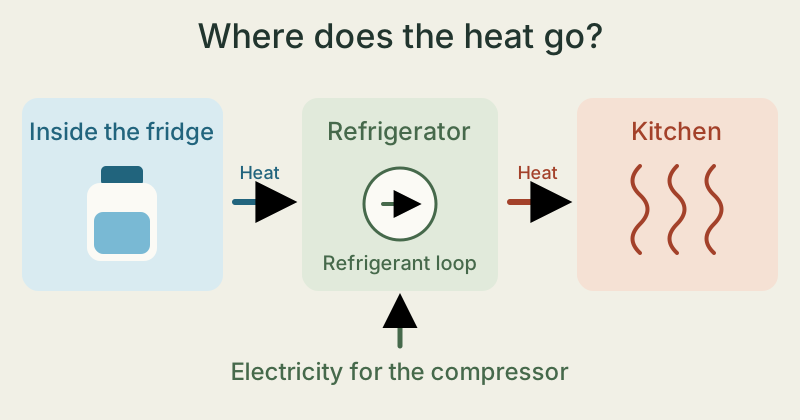
Heat moves from inside the fridge into the kitchen
When you put a bottle of water in the fridge, it starts out warmer than the air inside. The bottle gives off heat to its cooler surroundings. A tube in the fridge picks up this heat. A substance called a refrigerant flows through the tube.
An electric pump called a compressor keeps the cycle going. The kitchen receives the heat from inside the fridge plus the energy that the compressor uses. Depending on the model, you might notice warmth at the back, underneath or along a side.
The refrigerant travels in a loop
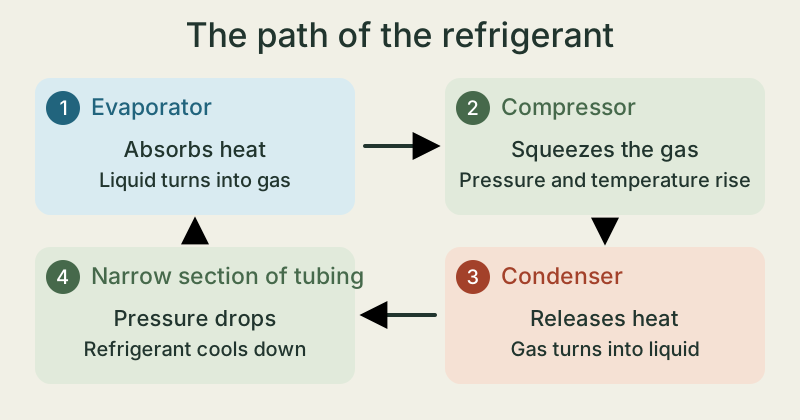
Inside the fridge, the refrigerant flows through a cold section of tubing called the evaporator. It absorbs heat and turns into a gas. The compressor then squeezes the gas, raising its pressure and temperature.
The hot gas flows through tubing outside the cold compartment. There it releases heat into the kitchen air and turns back into a liquid. This section of tubing is called the condenser.
The pressure drops as the refrigerant passes through a narrow spot in the tubing. Some of it evaporates, and the mixture cools. It can now absorb heat inside the fridge again. The refrigerant stays inside the tubing throughout the cycle.
Why does keeping the door closed help?
When the door is open, warmer kitchen air enters the fridge. The fridge then has to remove heat from that air.
When the door is closed, the insulated walls and the door seal slow down heat transfer. This keeps the inside cool between cooling cycles.
Watch water cool down
- Fill two identical water bottles with about 150 milliliters of water each, using water from the same jug. Measure the starting temperature with a kitchen thermometer, then cap both bottles.
- Put one bottle in the fridge and the other in a shady spot in the kitchen. Leave them for 45 minutes and keep the fridge door closed as much as possible during that time.
- Measure the temperature in both bottles again. Which bottle lost more heat? Think about where that heat went.
Leave the fridge in place and keep its panels closed. You only need to use the main compartment for this activity.
The takeaway
The refrigerant absorbs heat inside and releases it outside. The compressor uses electricity to keep this cycle going.
What does the fridge release into the room while cooling?
Sources & further reading
LEIFIphysik / FWU · Kühlschrank ↗Washington State University · How does our refrigerator work? ↗Penn State University · Refrigerators ↗LG Support · Why does the exterior of my refrigerator feel warm? ↗Our stories explain the main idea in our own words. Pictures and models simplify reality and are not drawn to scale.