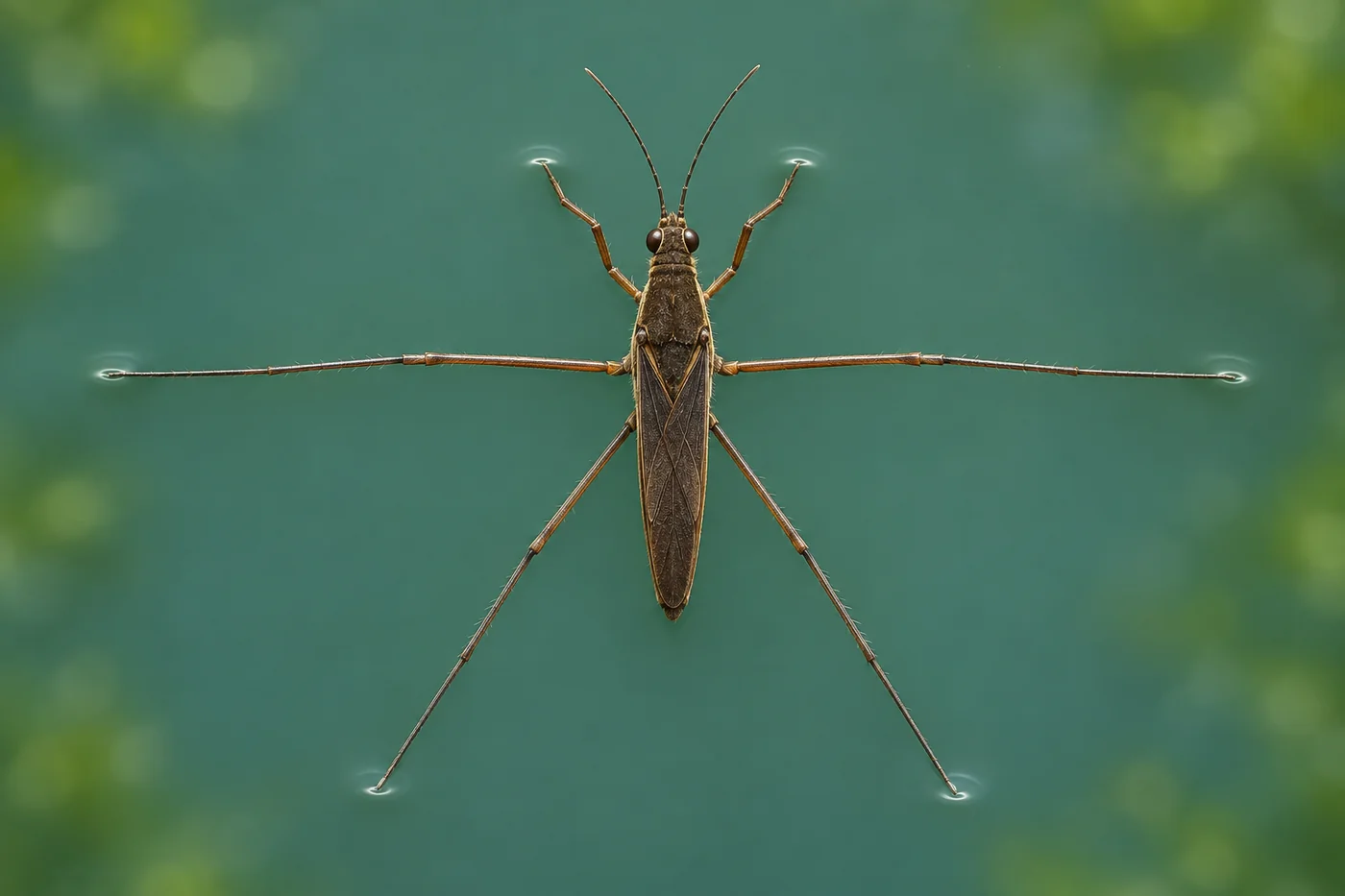
A light water strider presses tiny dimples into the surface with its water-repellent legs. Surface tension pulls partly upwards around each dimple. Together, those forces support most of its weight.
On a quiet pond, a slender insect shoots forwards and suddenly stops. Look closely and you can see little dips beneath its long legs. It’s a water strider.
The surface bends under the legs
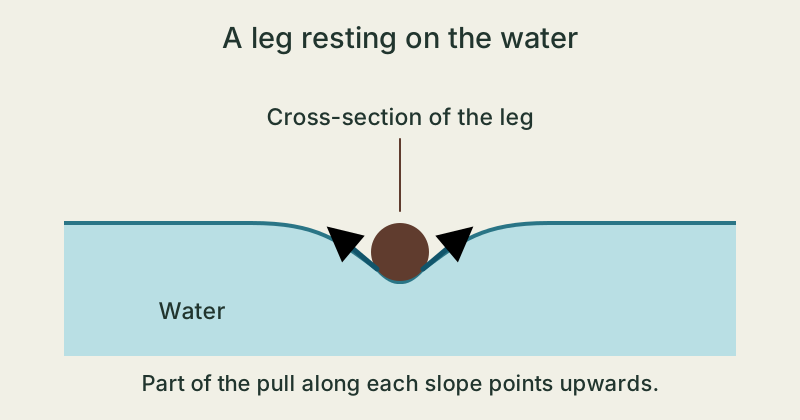
The particles in water attract one another. That makes the exposed surface pull tight. This effect is called surface tension.
Where a leg rests on the water, it presses the surface down a little. The surface slopes upwards from that spot. Surface tension pulls along that slope, so part of its pull is upwards. Together, these forces at several legs help hold up the insect.
Tiny hairs keep water at bay
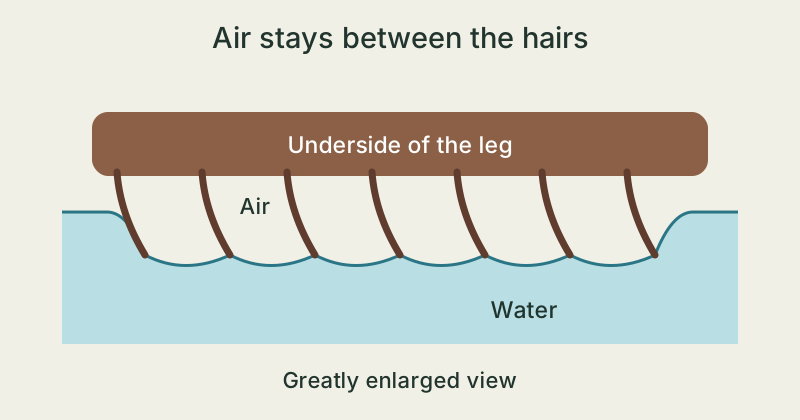
The legs are covered with tiny water-repellent hairs. Air can stay between them, making it hard for water to spread over the legs.
The long legs rest on the water at several spots far apart. The insect’s weight is spread across those spots. The water can bend under the legs while the body stays above it.
The middle pair of legs rows
To dart forwards, the insect sweeps its middle pair of legs back. The legs push water backwards and the insect glides forwards. You can often see small ripples as it goes.
Look for the dimples from the bank
- With an adult, find a dry path beside a quiet pond. Pick a spot near the bank and wait for the water to settle.
- If you spot a water strider, look at the places where its legs rest. In good light, you might see small dimples with bright edges.
- Compare a pause with the next burst of movement. Can you see dimples first and ripples as it pushes off? If you don’t spot a water strider, look for the dimples in the photos in the linked field guide.
Stay on the dry path and leave the insects undisturbed.
The takeaway
Water-repellent legs press small dimples into the water. Around those dimples, surface tension pulls partly upwards and helps hold the insect up.
What mainly supports a water strider that is standing still?
Sources & further reading
Hu, Chan & Bush · The hydrodynamics of water strider locomotion ↗Hu & Bush · The hydrodynamics of water-walking arthropods ↗Missouri Department of Conservation · Water Striders ↗Our stories explain the main idea in our own words. Pictures and models simplify reality and are not drawn to scale.