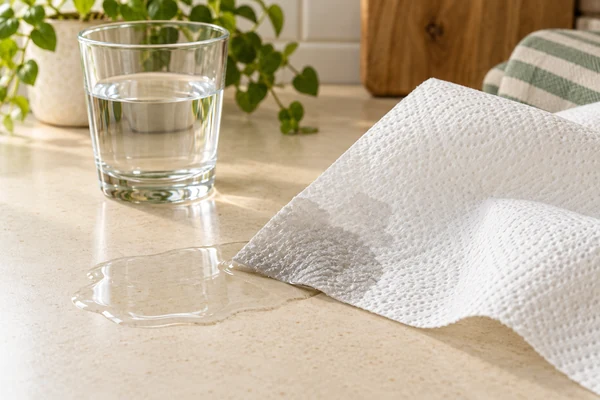
Water can change into invisible water vapor at its surface without boiling. This is evaporation. It does not need direct sunshine. Energy can also come from the water and its surroundings.
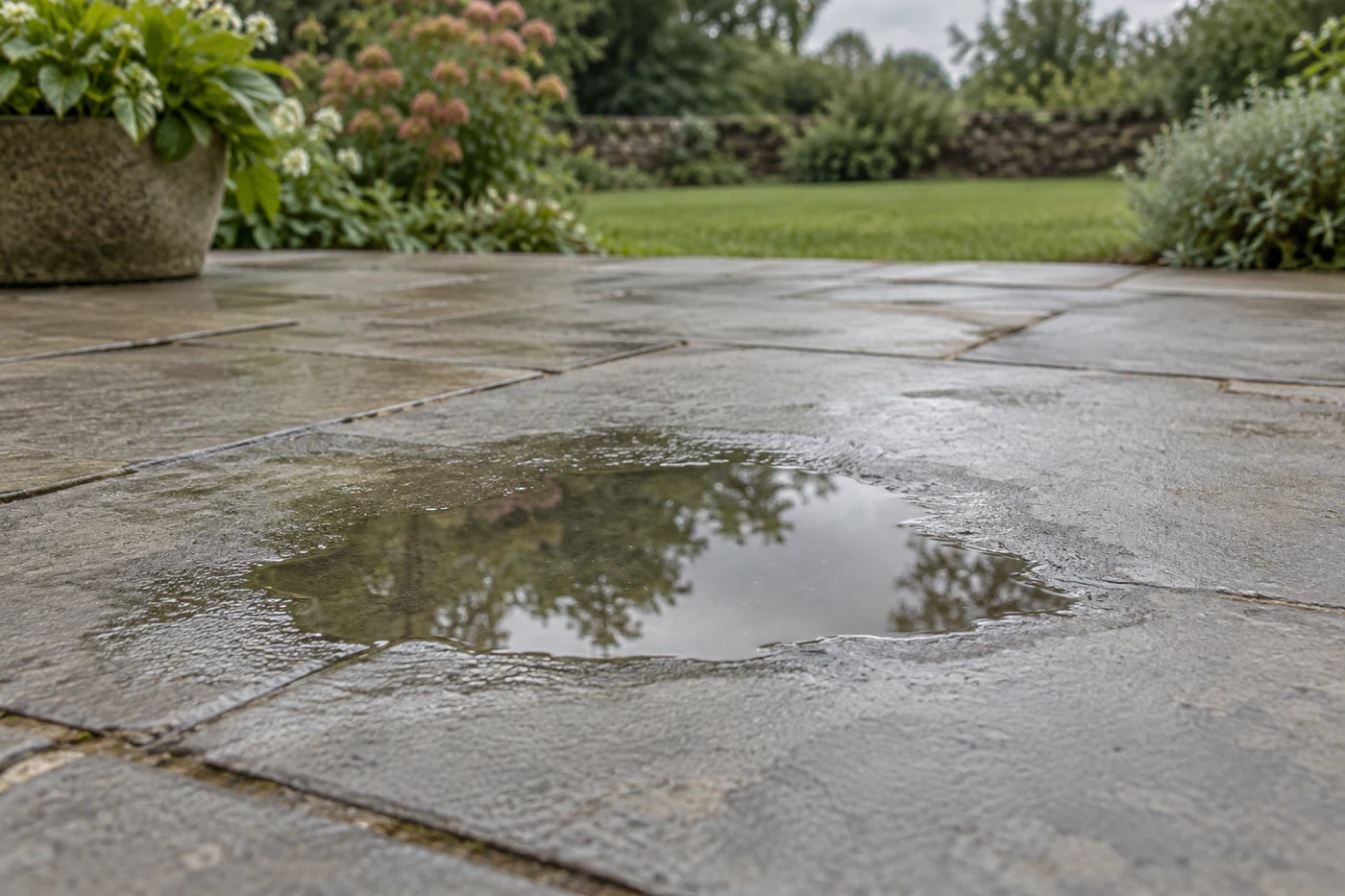
After rain, a puddle sits in the shade. Hours later, the ground is drier. Some of the water is now a gas in the air. It has not been destroyed or turned into air: it is still water.
Evaporating is different from boiling
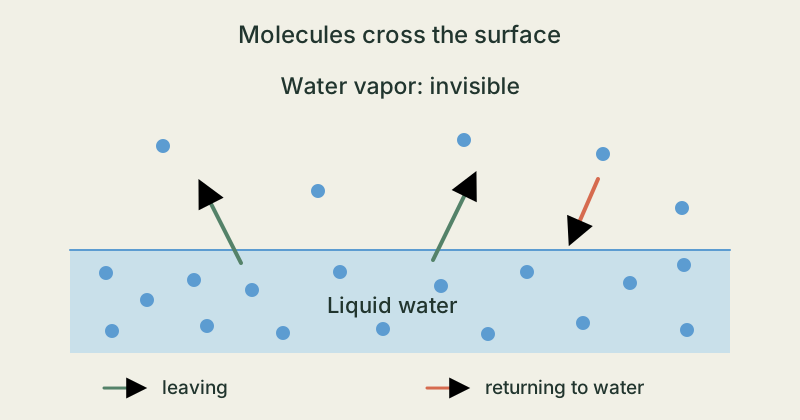
Water consists of tiny molecules that keep moving. At the surface, some have enough energy of motion to escape from the liquid. They spread through the surroundings as water vapor.
This happens at ordinary everyday temperatures. Boiling, by contrast, produces vapor bubbles inside the liquid. Invisible water vapor is not a white cloud: visible mist consists of many tiny liquid droplets.
Wind and humidity matter
Water molecules can leave the surface, and molecules from the gas can return to the water. At the same temperature, having more water vapor above the water usually reduces the loss through evaporation.
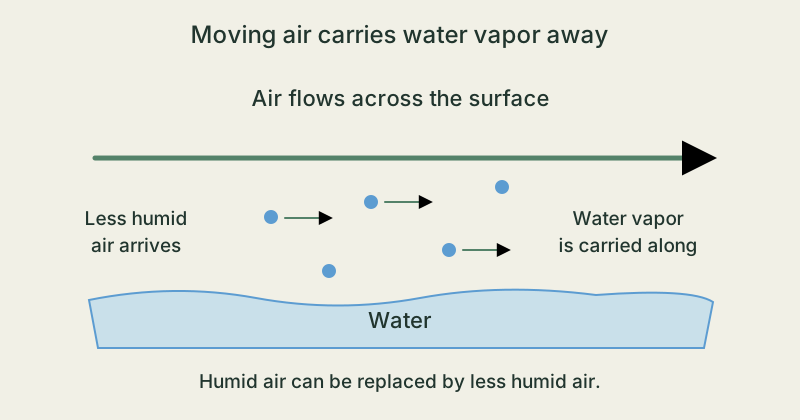
Wind carries humid air away from the surface. Less humid air can replace it, helping the puddle dry faster. A lid makes this exchange harder, so the air beneath it becomes more humid.
There is energy in the shade too
Evaporation needs energy. Some initially comes from the water itself, which can cool as a result. Heat can flow in from the surrounding air and ground. Sunshine often warms the water and ground and can speed up drying.
The time needed depends on temperature, humidity, air movement and the area of the water surface, among other things. Outdoors, water can also soak into the ground or flow away. A shrinking puddle alone does not tell you how much has evaporated.
Two small water samples in the shade
- Put two identical, leak-free shallow dishes on a tray. Add equal amounts of room-temperature water, such as two tablespoons each. Leave one open and cover the other with a well-fitting lid. Place them side by side, away from direct sunshine and heaters.
- Note the time and observe the amount of water after a few hours and the next day. Keep the covered dish closed until the end. If you have a kitchen scale, weigh each sample at the start and finish: include the same lid both times for the covered sample.
- Compare each sample with its own starting value. The open sample often loses more water. If the change is too small to see, watch for longer. A leaky lid also allows water vapor to escape; this comparison does not give a universal drying time.
Use small amounts of water, stable dishes and a secure place away from electrical devices. Do not heat the water or drink the samples. Children should observe with an adult.
The takeaway
Evaporation turns liquid water into invisible water vapor. Sunshine can help, but the water does not need to boil or stand in direct sunlight.
Can room-temperature water evaporate in the shade?
Sources & further reading
USGS Water Science School · Evaporation and the Water Cycle ↗OpenStax College Physics 2e · Humidity, Evaporation, and Boiling ↗UCAR Center for Science Education · Humidity ↗Our stories explain the main idea in our own words. Pictures and models simplify reality and are not drawn to scale.