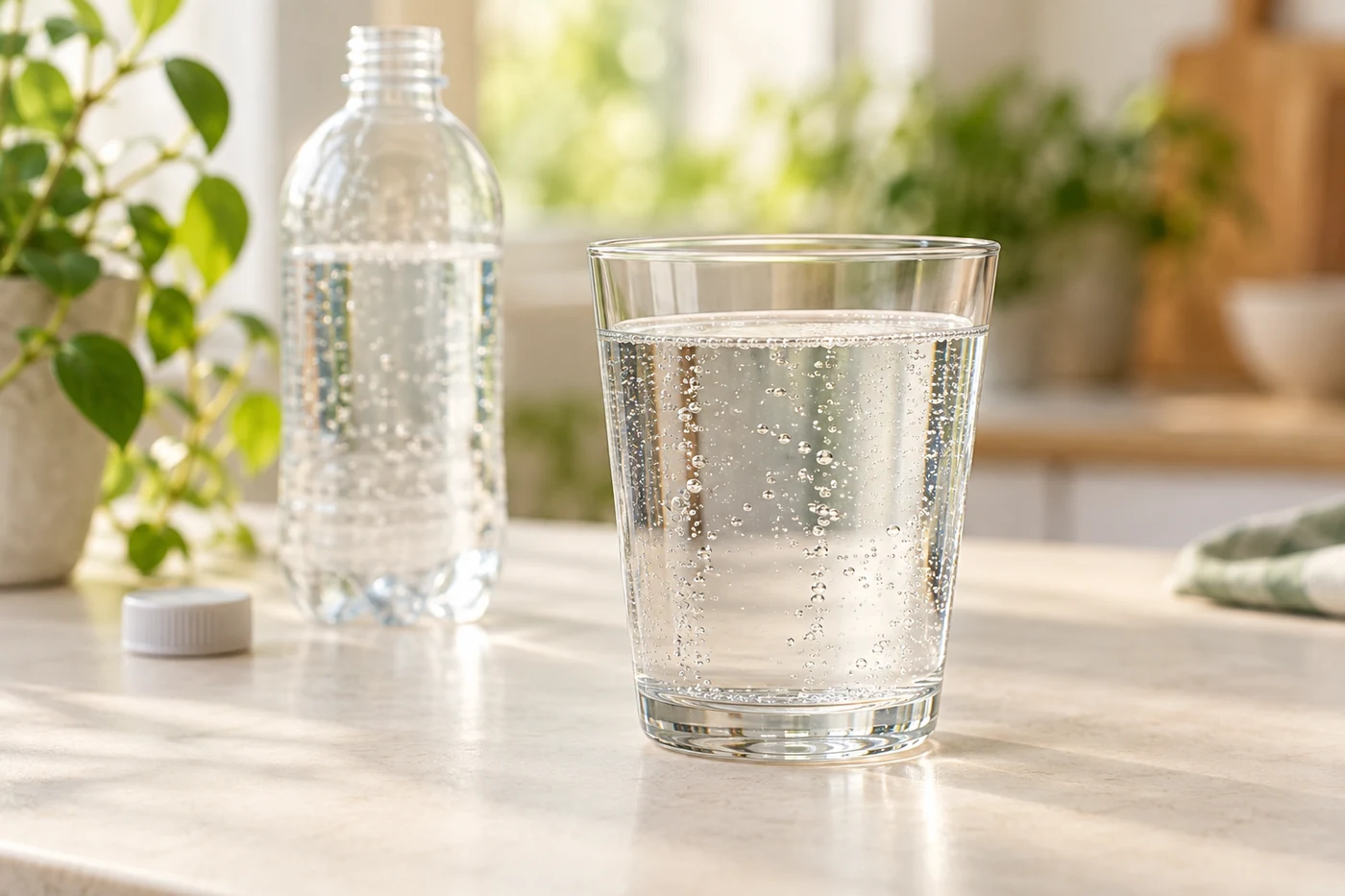
Sparkling water contains dissolved carbon dioxide, or CO₂. In a sealed bottle, this gas above the water is under increased pressure. Opening the bottle lowers the CO₂ pressure. Excess dissolved CO₂ can then escape, including in rising bubbles.
An undisturbed, sealed bottle of sparkling water can look almost bubble-free. Yet there is gas in the water. It becomes visible when many molecules gather in a bubble.
Gas can dissolve in water
Dissolved CO₂ consists of individual molecules spread among water molecules. They are far too small to see. They are not tiny, ready-made gas bubbles.
During production, water is exposed to CO₂ under pressure. At the same temperature, a higher CO₂ pressure allows more of it to remain dissolved. More precisely, what matters is carbon dioxide's share of the pressure above the water: its partial pressure.
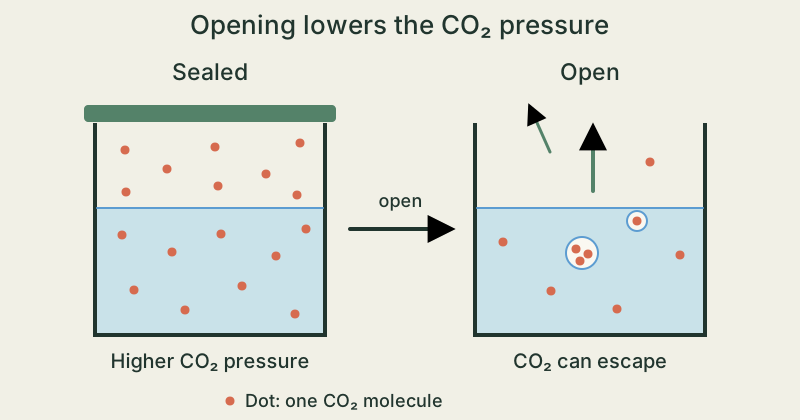
Opening changes the CO₂ pressure
As you slowly loosen the cap, gas first escapes from the space above the water. This makes the hiss. The surrounding air contains little CO₂, so its share of the pressure is much lower than in the sealed sparkling-water bottle.
Just after opening, the water still contains more dissolved CO₂ than can stay dissolved in the long run under the new conditions. For a while, more CO₂ therefore leaves the water than enters it. Some escapes across the water surface, and some through bubbles.
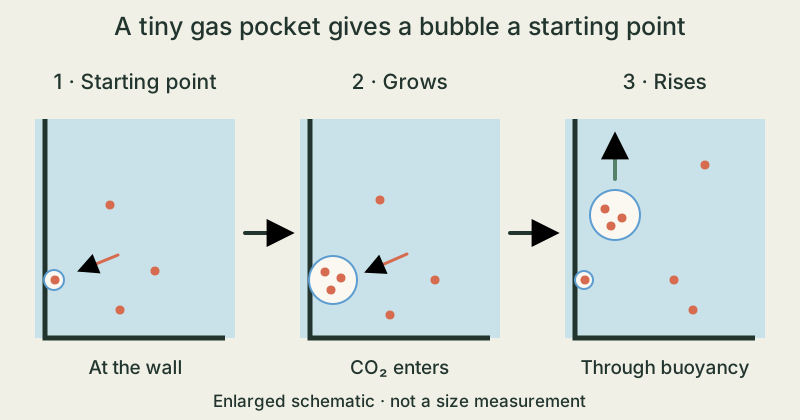
Bubbles grow at tiny starting points
Tiny irregularities or fibers on a container wall can trap small pockets of gas. Dissolved CO₂ can enter a gas bubble there, making it grow. These starting points are called nucleation sites.
A bubble contains very many gas molecules. Once large enough, it can detach and rise through buoyancy. More bubbles may follow from the same spot. The visible bubbles contain mainly CO₂; the water does not have to boil.
The water gradually loses its fizz
In an open container, the amount of dissolved CO₂ falls. Bubbling may slow down. The rate depends on temperature, movement and the container surface, among other things.
At the same CO₂ pressure, cold water can hold more dissolved CO₂ than warm water. Water with very little visible fizz can still contain dissolved gas. Counting bubbles alone therefore cannot tell you the total amount of gas.
Watch two open cups
- Place two matching, clean, clear plastic cups on a tray. Label them “still” and “sparkling.” Use still water and fresh, unsweetened sparkling water at similar temperatures. Ask an adult to open the unshaken sparkling-water bottle slowly and upright, keeping the opening away from faces.
- Pour the same amount into each cup: about 100 ml, filling each no more than halfway. Leave both open side by side. Watch from the side for 30 seconds straight away: where do bubbles start, and do they rise? Pouring can briefly introduce air bubbles into still water too.
- After five and ten minutes, watch again for 30 seconds without stirring. Record “none,” “a few” or “many” rising bubbles, and sketch their starting points. Record unchanged results too. This is an observational comparison, not a measurement of all the dissolved CO₂; sight alone cannot identify the gas.
Ask an adult to help with opening and pouring. Use only drinking water, leave the cups open, do not heat anything, and add nothing. Do not drink the experiment samples. Wipe up spilled water.
The takeaway
Higher CO₂ pressure keeps more carbon dioxide dissolved in water. After opening, it can escape. Visible bubbles contain many molecules that were previously spread individually through the water.
Where does most of the gas in the fizzing bubbles come from?
Sources & further reading
American Chemical Society · Can Gases Dissolve in Water? (Lesson 5.8) ↗OpenStax / Rice University · Chemistry 2e: Solubility ↗OpenStax / Rice University · Chemistry 2e: Shifting Equilibria — Equilibrium and Soft Drinks ↗American Chemical Society · The Secret Science of Soda Pop ↗Our stories explain the main idea in our own words. Pictures and models simplify reality and are not drawn to scale.