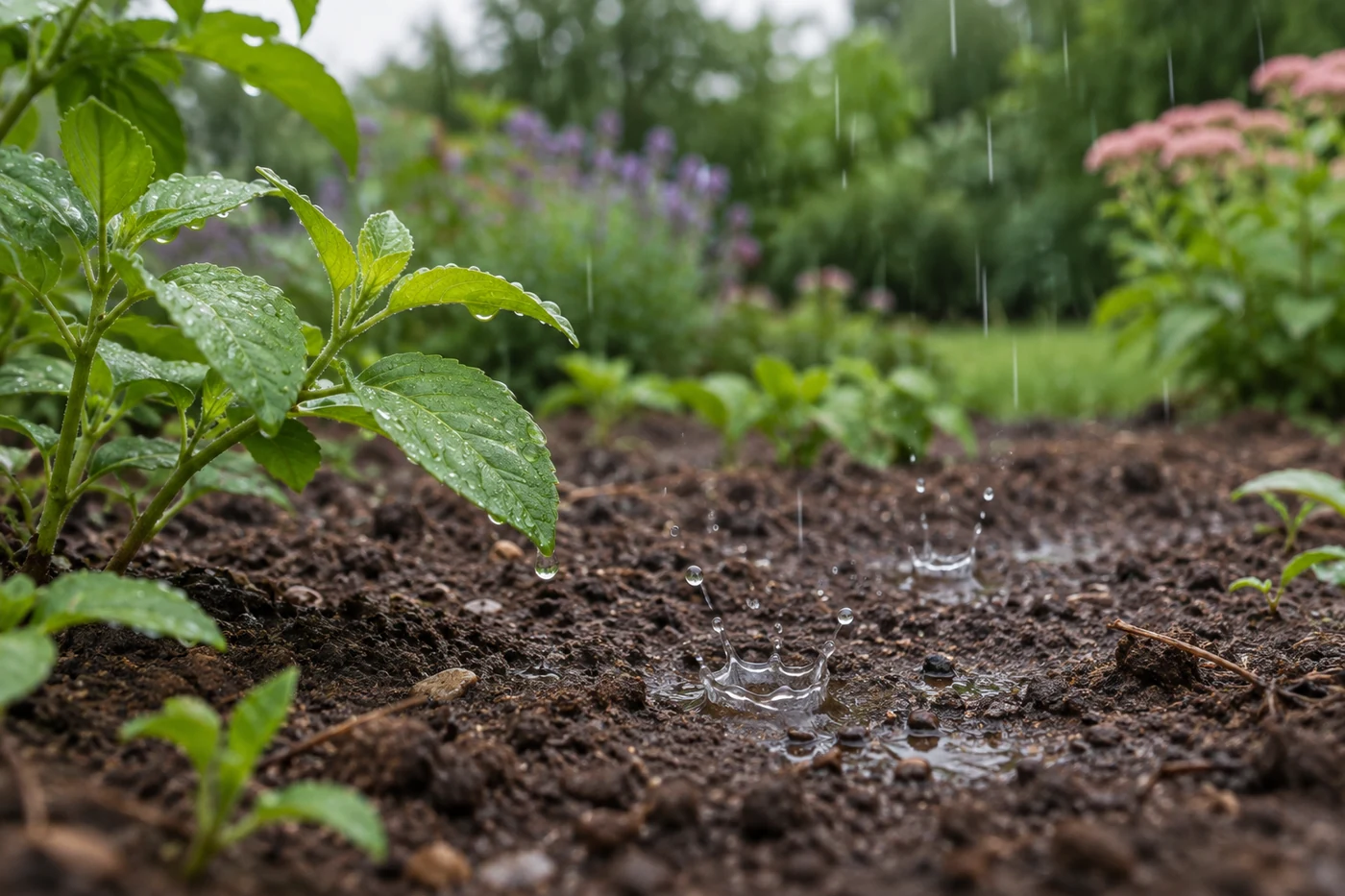
Rain itself usually has no characteristic earthy smell. Drops hitting dry ground can bring scent compounds from soil and plant remains into the air. One is geosmin, made by some soil bacteria. The earthy mixture after rain is called petrichor.
The cover is an illustration of rain falling on dry ground. The diagrams are simplified models, not photographs of scent molecules or real drops under a microscope.
Petrichor is a scent mixture
The earthy smell stands out when the first drops hit the ground after a dry spell. It has a name: petrichor. The word describes the smell, not one single substance.
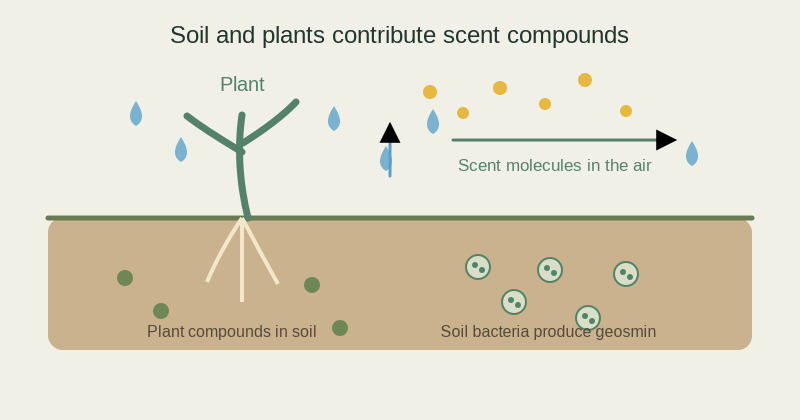
Plants leave compounds in the soil. There, they can change and form new scent compounds. Together with other ingredients, they create the familiar smell after a rain shower.
Geosmin comes from soil bacteria
One important earthy-smelling compound is geosmin. It is made by certain bacteria in soil, including actinomycetes. Many people can smell geosmin at very low concentrations.
Plant compounds and geosmin are different ingredients. Petrichor is therefore more like a scent mix than the aroma of one “rain chemical.” The mixture also depends on the place and the plants nearby.
Raindrops can carry scents into the air
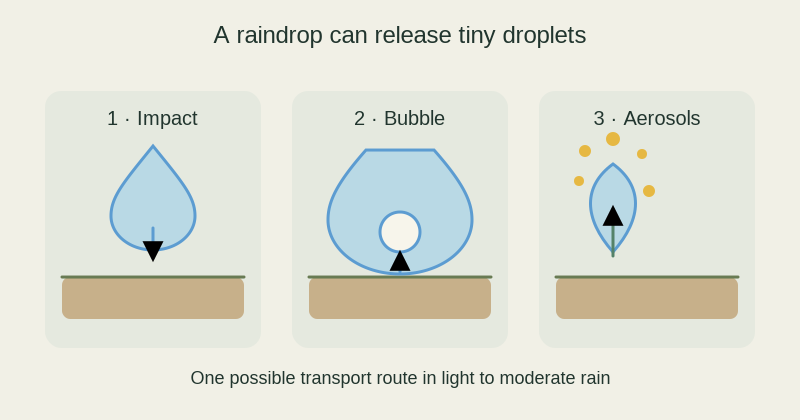
In laboratory experiments with porous soil, researchers used high-speed cameras to see that an impact can trap tiny air bubbles inside a drop. As the bubbles rise through the water and burst, tiny droplets called aerosols can enter the air.
Those aerosols may carry scent compounds from the soil. The researchers proposed that this could explain part of the smell after rain. It is one possible transport route, not a complete explanation for every scent after every shower.
Observe a rain shower closely
- During a future light rain, choose a safe place such as under a roof. Do not go outside during a thunderstorm, and stay away from roads and puddles.
- Note whether the nearby surface is soil, grass or mostly paving, and whether the ground was dry beforehand. Gently fan a little air towards yourself from a distance and notice any smell. Do not sniff the ground.
- Later, compare your notes with another shower: Was the scent stronger after a longer dry spell? Did wind, surface type or rain intensity change what you noticed? This is a nature observation, not a controlled laboratory test.
Observe only from a sheltered place in safe weather. Avoid thunderstorms, traffic and flooded areas. Do not touch unknown soil or smell it directly. Stay indoors if you have allergies or breathing problems.
The takeaway
Petrichor is a mixture of earthy scent compounds. Geosmin from soil bacteria and compounds from plants contribute; raindrops can launch tiny aerosols that carry scents into the air.
What is petrichor?
Sources & further reading
American Chemical Society · What’s in the smell of first rain? ↗MIT News · Rainfall can release aerosols, study finds ↗University of Illinois Extension · Breathe in that sweet smell of rain ↗Our stories explain the main idea in our own words. Pictures and models simplify reality and are not drawn to scale.