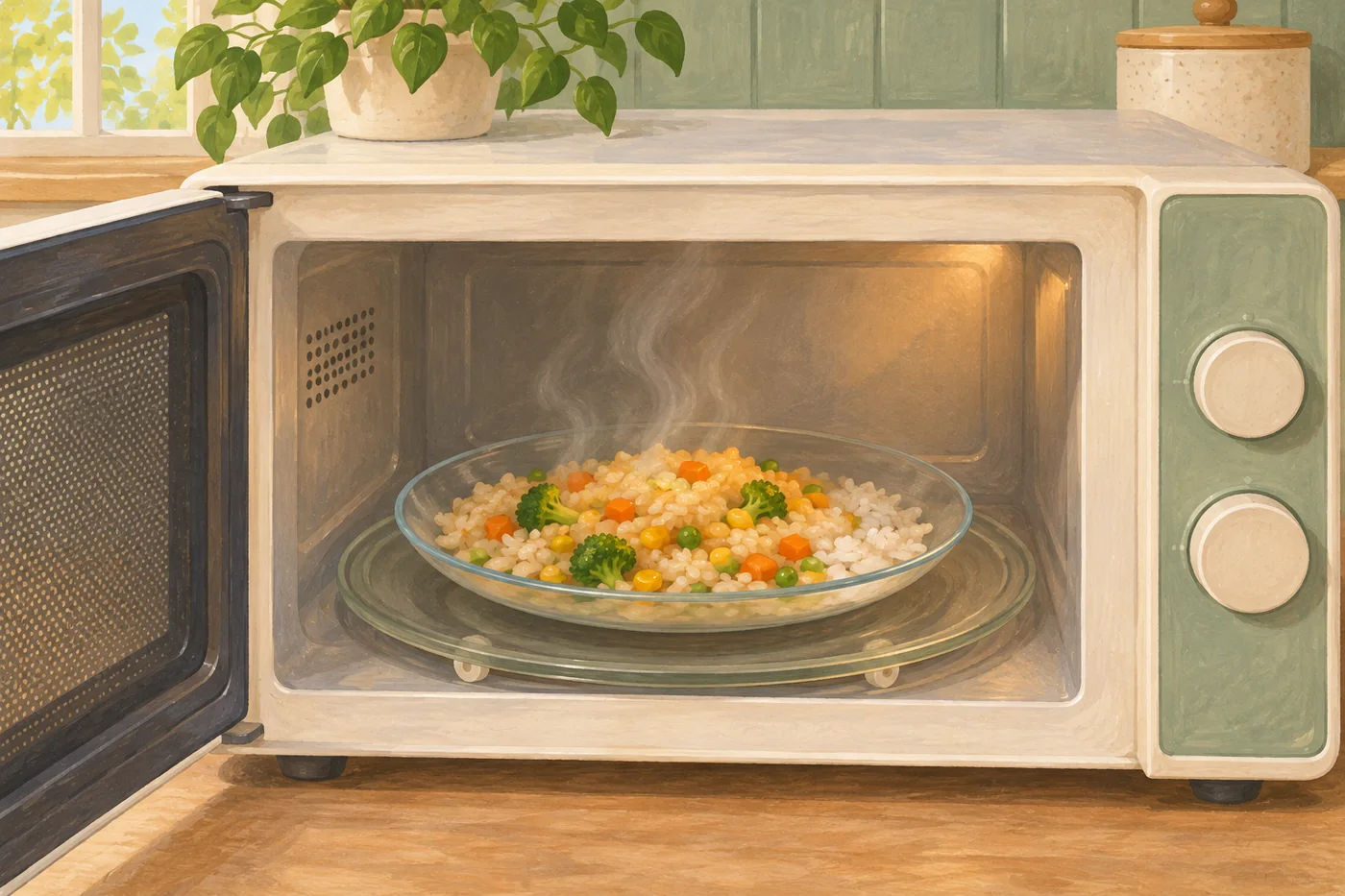
Microwave energy is not distributed equally throughout the oven. Thick foods also warm more directly near the outside; heat travels toward the centre as well.
You take a plate out of the microwave: the edge is very hot, but the middle may still be lukewarm. That seems odd because the plate has been turning. The explanation involves the waves, the food itself, and how heat moves from one place to another.
Waves do not reach every spot equally
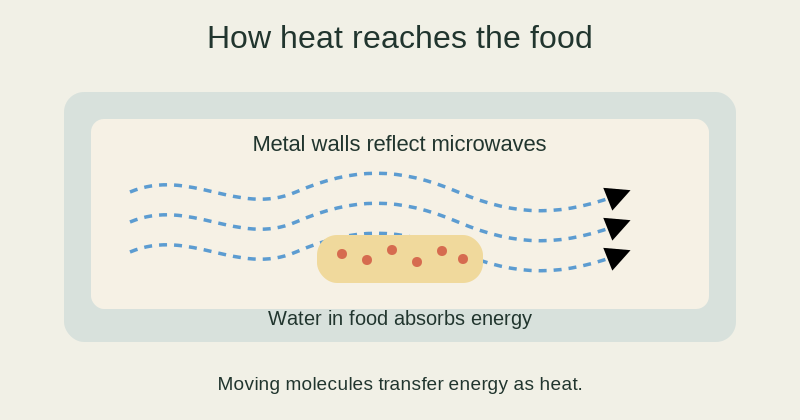
A part inside the oven produces microwaves. The metal walls reflect them until some of their energy is absorbed by the food. Molecules in the food move, and that motion is converted into heat. The waves do not make food radioactive.
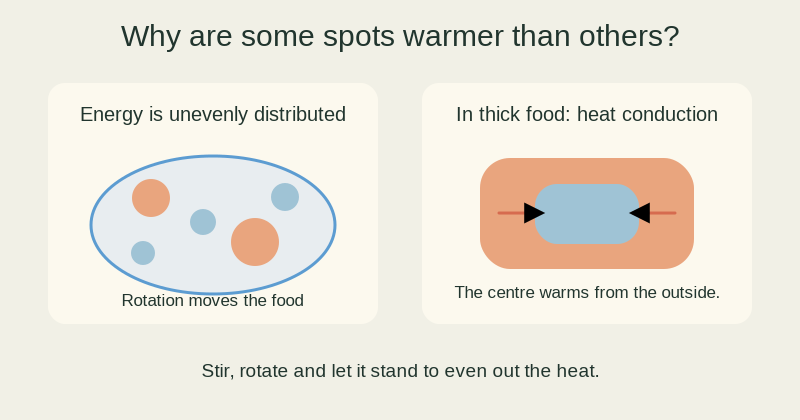
Energy is not spread evenly at every point inside the oven. Some areas receive more, and others less. A turntable moves food through different areas. This helps, but it cannot always remove every difference.
Shape and ingredients matter too
Food contains different ingredients and does not have a perfect shape. Water content, thickness and size affect how energy is absorbed and how heat is passed along. That is why two parts on the same plate can warm at different speeds.
In a thick piece of food, microwaves heat the outer layers more directly. Heat also travels from there toward the centre. This slower movement is called conduction. A microwave does not simply cook a thick piece from the inside out.
Stirring helps even things out
A turntable, a cover and stirring help distribute heat more evenly. A short standing time helps too: while the food rests, heat continues to move from warmer spots toward cooler ones. The U.S. Department of Agriculture recommends covering, stirring or rotating leftovers and letting them stand after reheating.
For leftovers that will be eaten, safety matters too: USDA recommends reheating them to at least 165°F (about 74°C) throughout. A food thermometer can check several places. Also follow the food package and your oven’s instructions.
Look for warmer and cooler spots
- Ask an adult to reheat a small portion of safely stored leftovers in a microwave-safe dish, following the package and oven instructions.
- Before stirring, look together to see whether the portion looks equally hot or steamy throughout. Do not taste it; the dish and food may be very hot.
- The adult stirs the food, lets it stand briefly, and checks several places with a food thermometer. Are the readings similar?
Do this only with an adult. Do not handle hot dishes yourself; taste the food only after the adult has checked that it was reheated safely.
The takeaway
Microwave energy and heat are not distributed equally everywhere. Rotating, stirring, covering and resting help even things out.
Why can the middle of a thick food stay cooler?
Sources & further reading
U.S. Food and Drug Administration · Microwave Ovens ↗USDA Food Safety and Inspection Service · What methods of reheating food are safe? ↗Our stories explain the main idea in our own words. Pictures and models simplify reality and are not drawn to scale.